





Spotlights
Actor, Actress, Comedian, Comic, Community Theater Actor, Ensemble Member, Narrator, Performer, Tour Actor, Voice-Over Artist
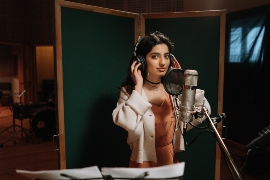
The explainer video, audiobook chapter, and animated character that stick in your head—someone recorded those lines in a booth, one take at a time. Voice Over Artists use voice, mic technique, and storytelling to bring scripts to life for commercials, games, e-learning, and more!
Voice Over Artists audition for roles, interpret scripts, record clean dialogue in home or studio booths, edit breaths and pacing, and deliver files meeting client specs. They may specialize in commercial reads, narration, animation, video games, IVR phone systems, or corporate training modules. Many work freelance from home studios; others affiliate with talent agencies, casting directories, and production houses.
They use condenser microphones, audio interfaces, DAW software, and acoustic treatment while directing themselves or taking live direction from producers over Source Connect or ipDTL. Whether voicing a national ad campaign or a medical e-learning module, professional Voice Over Artists combine performance skill with reliable business operations.
- Read the written script aloud with contextual emotions.
- Record your voice using appropriate recording software.
- Possess the technical expertise to create quality sound.
- Convey excitement and enjoyment.
Working Schedule
Voice Over Artists set flexible schedules but must meet client deadlines—often same-day or 24-hour turnaround for commercials and revisions. Session blocks cluster in mornings when vocal stamina is highest. Agency talent may travel to city studios for directed sessions during business hours.
Typical Duties
- Record and maintain updated voice demos by genre and style
- Audition via online casting platforms and agent submissions
- Analyze scripts for tone, pace, pronunciation, and audience
- Record clean takes with consistent levels and minimal mouth noise
- Apply direction from producers during live remote sessions
- Edit recordings—de-ess, compress, trim, and export to spec
- Deliver WAV/MP3 files via FTP, email, or client portals
- Quote projects and negotiate usage fees and buyout terms
- Maintain home studio equipment and acoustic treatment
- Invoice clients and track royalty or residual agreements when applicable
- Warm up voice and protect vocal health daily
- Market services through websites, LinkedIn, and casting profiles
Additional Responsibilities
- Learn accent and dialect coaching for specialized roles
- Provide multilingual reads when fluent in other languages
- Offer live-directed session hosting via Source Connect
- Create character voice libraries for animation and games
- Attend VO conferences and coach workshops for skill growth
- Update contracts and LLC business registrations
- Collaborate with video editors on scratch tracks and timing
Morning starts with vocal warmups and reviewing audition breakdowns—three commercial specs due by noon, each needing a different energy level and tag.
Midday recording block: stand at the mic, read scripts on a tablet, punch in corrections, and send a directed session link to a Los Angeles producer who listens live and asks for alternate emphasis on key words.
Afternoon includes editing today's sessions, uploading finals to a corporate client portal, updating bookkeeping, and posting a new animation demo clip online. Evening is quiet—vocal rest before tomorrow's long audiobook chapter record.
Soft Skills
- Acting and script interpretation ability
- Self-direction in home studio without a director present
- Rejection resilience—most auditions do not book
- Client service and fast revision turnaround
- Business negotiation on rates and usage rights
- Consistency—same quality on take one and take twenty
- Adaptability across genres from warm narration to hard sell
- Time management for simultaneous deadlines
- Professional communication via email and remote sessions
- Vocal stamina and health discipline
Technical Skills
- Microphone technique—distance, pop filter, plosive control
- Home studio acoustics and sound isolation basics
- DAW recording and editing (Audition, Reaper, Studio One)
- Source Connect, ipDTL, or Zoom for directed sessions
- Audio processing—EQ, compression, de-essing, limiting
- File formats, loudness standards (-16 LUFS for many platforms)
- Demo reel production and tagging for casting sites
- Script marking and cold reading skills
- Basic video sync for ADR and explainer timing
- Backup power and file redundancy for client reliability
- Commercial VO Artists: TV, radio, streaming, and digital ads
- Narration Specialists: Documentaries, e-learning, and corporate explainers
- Animation and Character Voice Actors: Cartoons and animated series
- Video Game Voice Actors: NPC dialogue and player characters
- Audiobook Narrators: Long-form fiction and nonfiction recording
- IVR and Telephony Voice Talent: Phone systems and on-hold messaging
- Promo and Trailer Announcers: Broadcast promos and movie trailers
- Freelance home studios and personal LLCs
- Talent agencies representing voice actors
- Advertising agencies and production companies
- Audiobook publishers and ACX/Audible ecosystems
- Animation and game studios
- E-learning and corporate training vendors
- Radio and podcast networks needing promo voices
- Localization studios for multilingual dubbing
- Casting platforms (Voices.com, Voice123, Bodalgo)
- Union environments — SAG-AFTRA signatory productions
Income is feast-or-famine early on—artists invest in coaching, demos, and studio gear before steady bookings arrive. Vocal strain requires discipline; smoking and shouting harm careers.
Competition is global on casting sites; quick turnaround and clean audio separate pros from hobbyists. Union work has entry barriers; many start non-union and scale up.
Artists who break through describe joy hearing their voice on a national spot or finishing an audiobook listener's favorite series.
- Remote directed sessions standard post-pandemic
- Explosion of e-learning and corporate narration demand
- AI voice synthesis raising debate—and demand for authentic human VO
- Home studio quality expectations rising with technology access
- Global casting platforms increasing audition volume
- Audiobook market growth via subscription apps
- Video game VO union negotiations and performance capture crossover
- Short-form ad versioning for social platforms at scale
- Coaching and niche demos (medical, legal, tech) winning specialized work
Many Voice Over Artists performed early—school plays, reading aloud, impressions of cartoon characters, or hosting fake radio shows into a tape recorder.
They often loved acting, choir, speech/debate, or podcasting. Comfortable with microphones and curious about recording gear, they discovered VO as a path to perform without pursuing traditional on-screen acting markets.
Voice Over Artists do not require a specific degree—training comes from acting classes, VO coaching, improv, and studio practice. Degrees in theater, communications, or broadcast help but demo quality and booking history matter most. Business skills for freelancing—invoicing, contracts, marketing—are as important as performance.
Students can take courses in relevant subjects such as:
- Acting and improv for voice performance
- Public speaking and diction
- Audio production and home studio setup
- Broadcast journalism or media performance
- Theater arts and script analysis
- Linguistics and accent reduction or acquisition
- Small business and freelance entrepreneurship
- Marketing and personal branding
- Copyright and voice usage licensing basics
Build genre-specific demos only after coaching—agents reject amateur reels. Record practice scripts daily, join workout groups, and book low-stakes local gigs (industrial, regional radio) to refine delivery before national auditions.
ON-THE-JOB TRAINING
Coaches and mentor programs simulate directed sessions and critique deliveries. New talent learns client etiquette, slating, and pickup session efficiency through repeat bookings with production houses.
OPTIONAL CERTIFICATIONS
- SAG-AFTRA membership eligibility through union signatory work
- Adobe Audition or Avid Pro Tools audio certifications
- Gravy for the Brain or similar VO business course completions
- CPR/first aid not required but corporate studio gigs may need basic credentials
- AES or audio engineering workshop certificates for studio tech depth
- Join theater, choir, speech, or debate teams
- Record practice scripts and critique playback weekly
- Take acting or improv classes at community theaters
- Build a quiet closet booth with blankets and a decent mic
- Study successful demos on Voices.com without copying them
- Learn Audition or Reaper through free and paid tutorials
- Avoid smoking and learn vocal warm-up routines
- Create a simple website with contact form and demo players
- Research VO coaches with working booking clients—not only teachers
- Understand usage terms—local, regional, national, perpetuity
- Consider communications or theater degrees if college-bound
- Network at VO meetups and online workout Zoom groups
- Prioritize coaches and workshops over generic media degrees if budget-limited
- Choose acting programs with voice and speech training components
- Look for campus radio or broadcast studios for mic time
- Seek programs in cities with agency and studio ecosystems if relocating
- Compare online VO academies by graduate booking testimonials
- Avoid spending on expensive demos before fundamental coaching
- Select business electives if enrolled in communications bachelor's programs
- Ask alumni about union vs. non-union career paths honestly
- Supplement with improv theaters offering performance reps
- Invest in acoustic treatment before upgrading microphones
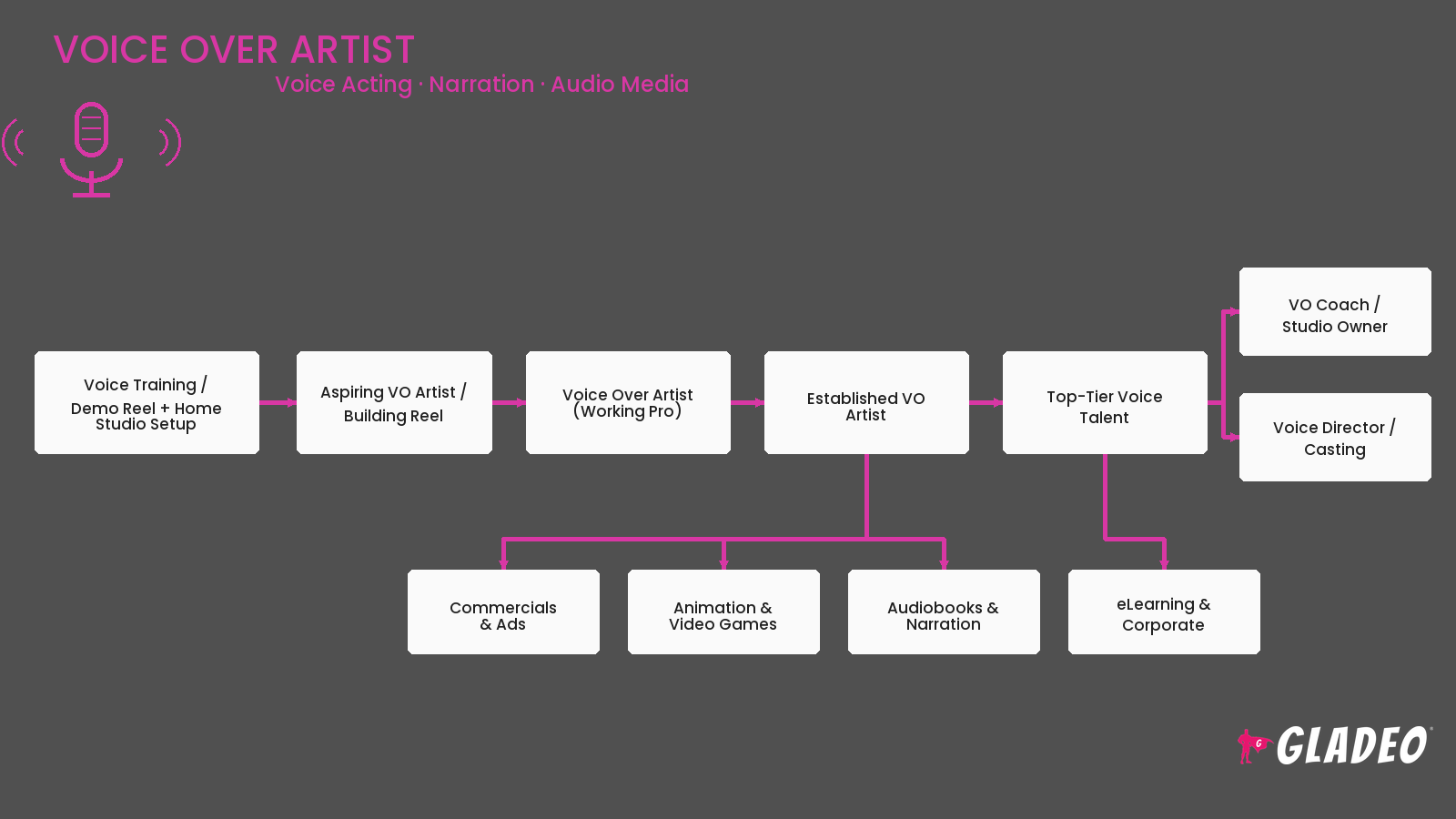
- Create profiles on Voices.com, Voice123, and Backstage with polished demos
- Hire a reputable coach before paying for demo production
- Target regional commercial and industrial clients via local ad agencies
- Apply for e-learning narration gigs with clear pronunciation requirements
- Submit to audiobook publisher rosters and ACX after narration demo ready
- Network with video production companies needing scratch tracks
- Offer fast turnaround and one free revision to build reviews
- Join Facebook VO business groups for casting leads and rate guidance
- Prepare home studio snapshot photos for client confidence
- Track auditions-to-bookings ratio and refresh demos quarterly
- Sign with a regional then national talent agency
- Develop signature niches—finance, medical, character, promo
- Raise rates and require usage-based quoting as credits grow
- Book union projects and join SAG-AFTRA when eligible
- Expand into casting direction, coaching, or studio ownership
- Land recurring franchise roles in games or animation series
Websites:
- Voices.com and Voice123 casting platforms
- SAG-AFTRA voiceover resources
- Gravy for the Brain — VO business education
- World Voices Organization (WoVO)
- Backstage casting listings
- ACX and Audiobook Creation Exchange
- Edge Studio and major VO coaching networks
- Source Elements — remote session tools
- Bureau of Labor Statistics (BLS) — Broadcast Announcers and Radio Disc Jockeys
- Bill DeWees and VO industry business podcasts/resources
Books:
- The Art of Voice Acting by James Alburger
- There's Money Where Your Mouth Is by Elaine Clark
- Voice-Over Voice Actor by DiMaggio and Ciccarelli
- Sound Business by Julian Nieva
- Confessions of a Voice-Over Artist by Dave Courvoisier
Related careers that use overlapping skills include:
- On-Camera Actor
- Podcaster
- Radio Announcer
- Audiobook Producer
- Audio Engineer
- Commercial Copywriter
- Corporate Trainer
- Public Relations Specialist
- Singers and Session Vocalist
- Customer Experience Specialist
Newsfeed

Featured Jobs
Online Courses and Tools