






Spotlights
Stage Director, Artistic Director, Theatrical Director, Production Director, Play Director, Musical Theater Director, Community Theater Director, Resident Director, Associate Director, Creative Director for Theater, Freelance Director, Drama Director
The lights go down, the audience holds its breath, and for the next two hours a story that started as words on a page becomes something alive: actors breathing real emotion into their lines, a world built entirely from imagination and craft. None of it happens by accident. Theater Directors are the artistic visionaries who take a script and shape every single choice, from how an actor delivers a line to where a shadow falls, into one unforgettable experience.
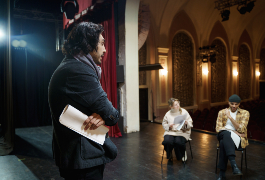
Theater Directors lead a production from the first read-through to opening night. They interpret the script, cast the right actors for each role, and guide performers through rehearsals to find the emotional truth of every scene. They collaborate closely with actors, choreographers, set and lighting designers, costume designers, stage managers, and sound engineers, weaving all of those individual crafts into one unified artistic vision. A director does not just tell people what to do; they inspire a room full of creative people to trust their instincts and take risks together, turning individual talents into a cohesive story.
Using rehearsal schedules, blocking notes, design meetings, and a deep understanding of storytelling, pacing, and stagecraft, Theater Directors shape every element an audience sees and feels. Their work matters because live theater is one of the few art forms that happens in real time, in the same room as its audience, and a great director is the reason that shared moment lands with power.
- Watching a script transform into a living, breathing production you shaped from the start
- Guiding actors to discover performances they did not know they had in them
- Collaborating with a whole team of designers and artists toward one shared vision
- Experiencing the electric energy of opening night after weeks of hard work
Working Schedule
Theater Directors typically work project to project, meaning schedules shift dramatically depending on where a production stands. During pre-production and casting, hours can be more predictable, but once rehearsals begin, evenings and weekends become the norm, especially as opening night approaches and tech rehearsals demand long days. The work happens across rehearsal studios, theaters, and design meeting spaces, and many directors freelance across multiple companies rather than holding one steady job, while others hold resident or artistic director positions at a specific theater.
Typical Duties
- Reading and interpreting scripts to develop a creative vision for the production
- Casting actors through auditions and callbacks
- Leading rehearsals to block scenes and shape performances
- Collaborating with set, lighting, costume, and sound designers on the overall look and feel
- Working with choreographers or music directors on musical productions
- Giving actors feedback and direction to develop character and emotional truth
- Coordinating with stage managers on rehearsal schedules and logistics
- Attending design meetings and production meetings throughout the process
- Overseeing technical and dress rehearsals
- Making final creative decisions on staging, pacing, and interpretation
- Communicating the vision to producers, boards, or theater leadership
- Giving notes to the cast and crew throughout previews and after opening
Additional Responsibilities
- Fundraising or grant writing for independent or nonprofit productions
- Building relationships with playwrights, especially for new work
- Managing a production's budget alongside producers or stage management
- Leading post-show talkbacks or educational outreach events
- Mentoring emerging actors, assistant directors, or student performers
- Researching historical or cultural context relevant to a script
- Adapting or editing scripts in collaboration with playwrights or literary managers
- Staying current with contemporary theater trends and new work
Early in a production, a Theater Director's day might involve auditions, watching dozens of actors read the same scene and imagining how each choice would shape the show. Once casting is set, mornings often shift to script analysis and planning, mapping out blocking and thinking through how a scene should build emotionally.
During the rehearsal period, most of the day is spent in the rehearsal room, working scene by scene with actors, trying different staging choices, and giving detailed notes on performance. A director might pause a scene a dozen times to adjust timing, physicality, or emotional intent, always searching for the version that feels most true. Breaks between scenes often mean quick conversations with the stage manager about scheduling or with a designer about a costume or set piece.
As opening night approaches, days grow longer and more technical. Afternoons and evenings might be spent in tech rehearsals, sitting with the lighting and sound designers to fine-tune cues, then running full scenes to see how everything fits together. After previews, a director often gives final notes to the cast, watches audience reactions closely, and makes last adjustments before the show locks in for its full run.
Soft Skills
- Strong creative vision and storytelling instinct
- Leadership and the ability to inspire a large collaborative team
- Clear, constructive communication and feedback
- Patience and emotional intelligence when working with actors
- Collaboration across many different creative disciplines
- Problem solving under tight deadlines
- Confidence to make final decisions under pressure
- Adaptability when something is not working and needs to change
- Attention to detail across performance, design, and pacing
- Time management to keep a rehearsal process on track
- Resilience in the face of creative disagreement or critical reviews
- Empathy to understand what each actor needs to do their best work
Technical Skills
- Script analysis and dramaturgy
- Blocking and stage composition
- Knowledge of lighting, sound, and set design principles
- Casting and audition evaluation
- Rehearsal scheduling and production planning
- Familiarity with theatrical genres, styles, and historical periods
- Basic budgeting for productions
- Working knowledge of music and choreography for musical theater
- Understanding of technical theater terminology and processes
- Grant writing or fundraising skills for independent productions
- Artistic Director: Leads the overall creative vision and season planning for a theater company
- Resident Director: Holds a steady staff position directing productions for one specific theater
- Freelance Director: Works project to project across multiple theater companies
- Musical Theater Director: Specializes in directing shows that combine acting, music, and dance
- New Play Director: Focuses on developing and premiering brand-new, unproduced scripts
- Community Theater Director: Directs productions for volunteer or amateur theater companies
- Educational Theater Director: Directs productions in schools, universities, or youth theater programs
- Devised Theater Director: Creates original work collaboratively with a cast rather than from an existing script
- Regional and repertory theater companies
- Broadway and commercial theater productions
- Off-Broadway and independent theater companies
- Community and amateur theater groups
- University and college theater departments
- High school and youth theater programs
- Touring theater companies
- Theme parks and immersive entertainment experiences
- Opera and musical theater companies
- Nonprofit arts organizations
- Summer stock and festival theaters
- Corporate or educational theater and training programs
Theater Directing is an unpredictable, often freelance career, and financial stability can take years to build. Many directors piece together income from multiple productions, teaching, or side work, especially early in their careers, and steady, well-paid directing positions are competitive and limited.
The rehearsal and production schedule demands significant sacrifice of personal time. Evenings and weekends belong to rehearsals for months at a time, and the intensity only increases as opening night nears, with tech week in particular often meaning twelve-hour days. This schedule can make it difficult to maintain a consistent routine or be available for events outside the theater.
The emotional demands are real as well. Directors have to hold a clear creative vision while staying open to collaboration, manage the emotions and egos of a full creative team, and absorb public criticism when reviews come in. Building the resilience to keep creating after a show does not land the way you hoped is one of the quieter, harder parts of the job.
- Growing use of immersive and site-specific staging beyond the traditional proscenium stage
- Increased integration of projection design and digital technology into live productions
- Rising demand for diverse, inclusive casting and storytelling
- Growth of devised and collaboratively created theater alongside traditional scripted work
- Expansion of hybrid and livestreamed performances reaching wider audiences
- Increased focus on new play development and supporting emerging playwrights
- Greater emphasis on intimacy coordination and safe rehearsal room practices
- Growth of regional theater partnerships and co-productions to share costs
- Rising interest in bringing theater into nontraditional and community spaces
- Increased use of social media and digital marketing to reach younger audiences
Many Theater Directors grew up performing in school plays, community theater, or dance recitals, often gravitating toward organizing games, writing scripts for friends, or directing the neighborhood kids in backyard productions. They tended to love storytelling in every form, whether through books, movies, or imaginative play.
Others found their spark backstage rather than onstage, drawn to building sets, running lights, or helping stage manage a school production. A fascination with how all the pieces of a story come together, combined with natural leadership among peers, often marked this path early.
Many Theater Directors hold a bachelor's degree in theater, directing, drama, or a related field, and some pursue a Master of Fine Arts in directing for advanced training and stronger industry connections, though the field also has a long history of directors who built careers through hands-on experience rather than formal degrees. What matters most is a proven body of directing work, so aspiring directors often start by directing student, community, or small independent productions to build a portfolio and reputation.
Students can take courses in relevant subjects such as:
- Directing Theory and Practice
- Script Analysis and Dramaturgy
- Acting Technique
- Theater History
- Stagecraft and Technical Theater
- Design for Theater, including Lighting and Set Design
- Voice and Movement for Performers
- Playwriting
- Arts Management and Producing
- Music Theory for Musical Theater Directors
Hands-on experience is the single most important part of becoming a director. Directing student productions, assistant directing for a professional company, and working other theater jobs like stage managing or acting all build the practical knowledge that no classroom alone can teach. Many directors also build their networks and skills through internships or fellowships with regional theaters and directing labs.
- Get involved in school or community theater in any role, from acting to backstage crew
- Direct a scene, one-act play, or short film to start building experience
- Take theater, film, and literature courses whenever available
- Read plays widely, from classics to contemporary work
- Watch live theater as often as possible and pay attention to directorial choices
- Volunteer to assistant direct or stage manage a school or community production
- Join a drama club or start a student theater company
- Study acting to better understand what performers need from a director
- Take on leadership roles in group projects to build collaborative skills
- Attend theater workshops, summer intensives, or youth theater programs
- Learn the basics of lighting, sound, and set design to understand the full production
- Network with local theater companies and offer to help however they need
- Programs with strong opportunities to direct real productions as a student
- Faculty with active professional directing experience
- Access to fully equipped theaters, rehearsal spaces, and design resources
- Strong connections to regional or professional theater companies
- Coursework balancing directing theory with hands-on practice
- Opportunities to collaborate with acting, design, and stage management students
- A robust season of student-directed productions
- Support for building a professional portfolio and reel of your work
- Alumni working actively in professional theater
- Access to internships, assistant directing, or apprenticeship opportunities
- Programs offering guidance on the freelance and business side of a directing career
- Flexible options for students balancing coursework with outside theater jobs
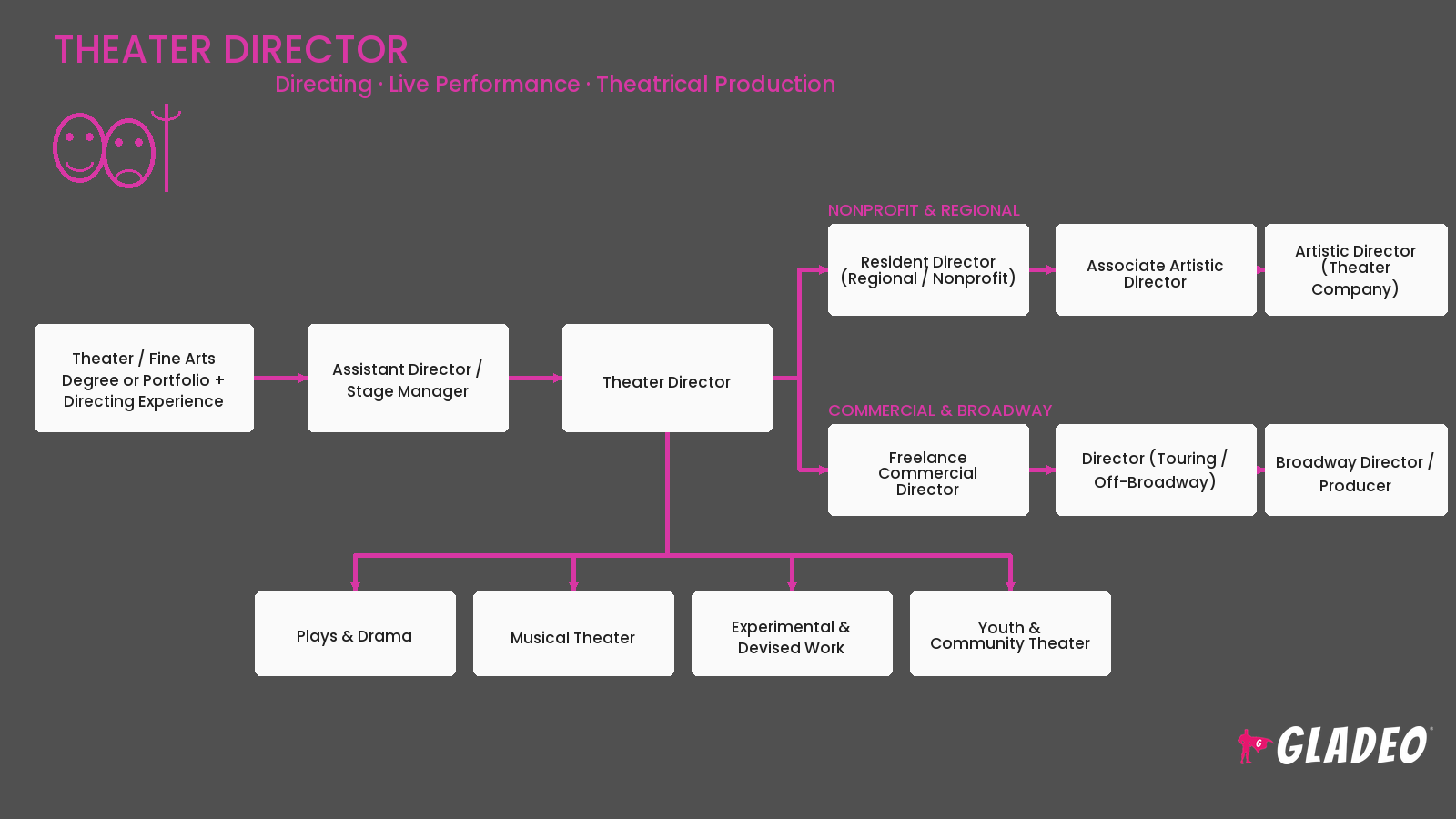
- Direct as many student, community, or independent productions as possible to build a portfolio
- Assistant direct for professional or semi-professional companies to learn the process firsthand
- Apply for directing fellowships, apprenticeships, or artistic associate programs
- Build a director's reel or portfolio with production photos, concept notes, and reviews
- Network relentlessly within your local and regional theater community
- Submit proposals to smaller theaters looking for guest or freelance directors
- Take on related jobs like stage managing or teaching to stay connected to the field
- Attend theater conferences and festivals to meet artistic directors and producers
- Be willing to start with unpaid or low-paid work to build your reputation
- Apply to directing programs or labs offered by major regional theaters
- Practice pitching your creative vision clearly and confidently
- Stay persistent, since building a directing career often takes years of small opportunities
- Build a consistent body of well-reviewed, ambitious directing work
- Develop long-term relationships with theater companies that keep inviting you back
- Take on larger productions with bigger budgets and more complex logistics
- Pursue an MFA or advanced directing training if it strengthens your résumé and network
- Mentor emerging directors or teach directing to give back to the field
- Build a reputation for a distinctive creative voice or specialty
- Seek out artistic associate or resident director positions at established theaters
- Move into artistic director or leadership roles at a theater company over time
Websites:
- Stage Directors and Choreographers Society (SDC) - sdcweb.org
- Theatre Communications Group (TCG) - tcg.org
- American Alliance for Theatre and Education (AATE) - aate.com
- Playbill - playbill.com
- American Theatre Magazine - americantheatre.org
- National New Play Network - newplaynetwork.org
- Backstage - backstage.com
- Dramatists Guild of America - dramatistsguild.com
- HowlRound Theatre Commons - howlround.com
- Regional Theatre Directory - theatrefaces.com
- Educational Theatre Association - schooltheatre.org
- Off-Off Broadway Alliance - offoffbroadwayalliance.org
Books:
- The Director's Craft by Katie Mitchell
- On Directing by Harold Clurman
- A Sense of Direction by William Ball
- Directors on Directing by Toby Cole and Helen Krich Chinoy
- The Empty Space by Peter Brook
If you find that being a Theater Director isn't the right fit, your creative vision, leadership, and collaboration skills transfer well to many related careers.
- Film or Television Director
- Producer
- Stage Manager
- Drama Teacher
- Choreographer
- Casting Director
- Arts Administrator
- Playwright
- Creative Director
- Event Producer
Newsfeed

Featured Jobs
Online Courses and Tools