







Spotlights
Environmental Sustainability Specialist, Corporate Sustainability Coordinator, Sustainability Analyst, Sustainability Consultant, Environmental Compliance Specialist, Green Program Manager, Sustainability Project Manager, Eco-efficiency Specialist, Renewable Energy Consultant, Climate Change Analyst, Sustainable Development Officer, Environmental Policy Advisor
Every day, people around the world rely on clean air, safe water, and healthy ecosystems, but these resources are under threat. Sustainability Specialists play a critical role in preserving the planet’s future by helping organizations reduce their environmental impact and operate responsibly.
Sustainability Specialists analyze a company’s operations and policies to identify ways to improve energy use, waste management, and resource conservation. They collaborate with engineers, environmental scientists, business leaders, and government officials to develop sustainability plans that meet regulatory standards and community expectations. Their work involves conducting audits, preparing reports, and educating staff on best practices to create measurable environmental improvements.
Using tools like environmental impact software, data analytics, and reporting frameworks such as GRI or LEED, Sustainability Specialists guide organizations toward greener, more efficient operations. Their role is vital in shaping decisions that balance economic goals with ecological responsibility, ensuring a healthier planet for future generations.
- Helping businesses reduce pollution and conserve natural resources for a better world.
- Contributing to global efforts against climate change and environmental degradation.
- Collaborating with diverse teams to create innovative, practical sustainability solutions.
- Seeing tangible results like energy savings, waste reduction, and improved community health from your recommendations.
Working Schedule
Sustainability Specialists typically work full-time during regular business hours in office settings, but their schedules can vary depending on project deadlines or site visits. Some roles involve travel to factories, construction sites, or community meetings to assess conditions firsthand. Many Sustainability Specialists work for consulting firms, corporations, or government agencies, and some operate as independent consultants balancing multiple clients. While the work is usually steady, it can become intense when preparing reports or responding to new regulations.
Typical Duties
- Conduct environmental audits and assess organizational sustainability performance.
- Develop and implement sustainability policies and programs tailored to company goals.
- Analyze energy consumption, waste production, and water use to identify improvement opportunities.
- Collaborate with engineers, management, and external stakeholders on sustainability initiatives.
- Prepare detailed reports for leadership, regulatory bodies, and public disclosure.
- Monitor compliance with environmental laws and industry standards.
- Design employee training sessions to promote sustainable practices.
- Research emerging sustainability technologies and best practices.
- Coordinate certification processes such as LEED or ISO 14001.
- Advise on sustainable supply chain and procurement strategies.
- Track progress toward sustainability goals and update action plans accordingly.
- Engage with community groups and environmental organizations to build partnerships.
Additional Responsibilities
- Stay current on environmental regulations and sustainability trends.
- Support corporate social responsibility (CSR) reporting and communications.
- Assist in grant writing or funding proposals for green initiatives.
- Manage budgets related to sustainability projects.
- Organize events and campaigns to raise awareness internally and externally.
- Facilitate cross-departmental task forces focused on sustainability goals.
- Evaluate environmental risks associated with new projects or policies.
- Contribute to sustainability certifications and awards applications.
Mornings often begin by reviewing recent environmental data and progress reports from different departments to identify areas needing attention or improvement.
Midday involves meetings with internal teams like operations, procurement, and facilities to discuss ongoing projects and troubleshoot challenges in implementing sustainability plans.
Afternoons are frequently spent preparing presentations or reports for management, conducting site visits to verify compliance, or researching new sustainability technologies and regulations to advise leadership on potential impacts.
Soft Skills
- Strong communication to explain complex environmental concepts clearly.
- Problem-solving to find practical, cost-effective sustainability solutions.
- Collaboration and teamwork across diverse departments and stakeholders.
- Attention to detail in data analysis and reporting accuracy.
- Adaptability to evolving regulations and company priorities.
- Critical thinking to evaluate environmental risks and opportunities.
- Leadership to motivate teams and drive change.
- Project management to coordinate initiatives from start to finish.
- Empathy to understand community and employee perspectives.
- Negotiation skills for vendor and stakeholder agreements.
- Time management to balance multiple projects effectively.
- Curiosity and passion for environmental issues and innovation.
Technical Skills
- Proficiency with sustainability reporting software and frameworks (e.g., GRI, CDP).
- Data analysis using spreadsheets and specialized environmental tools.
- Understanding of environmental regulations and compliance standards.
- Knowledge of energy management systems and renewable technologies.
- Familiarity with Life Cycle Assessment (LCA) methods.
- Ability to conduct environmental audits and impact assessments.
- Experience with project management software.
- Competence in preparing technical reports and presentations.
- Skills in GIS and environmental mapping software are helpful.
- Understanding of carbon footprint measurement and reduction techniques.
- Corporate Sustainability Specialist: Focuses on implementing sustainability strategies within private companies to improve environmental performance and social responsibility.
- Environmental Compliance Specialist: Ensures organizations meet all environmental regulations and permits to avoid legal penalties.
- Sustainability Consultant: Provides expert advice to multiple clients on how to develop and execute sustainability initiatives.
- Energy Efficiency Analyst: Specializes in analyzing and improving energy use to reduce costs and emissions.
- Green Building Specialist: Works on construction projects to achieve sustainable design and certification standards.
- Climate Change Analyst: Studies environmental data to understand and mitigate climate-related risks.
- Sustainable Supply Chain Manager: Oversees procurement and logistics to ensure sourcing aligns with sustainability goals.
- Public Sector Sustainability Officer: Develops and enforces environmental policies within government agencies.
- Environmental consulting firms
- Renewable energy companies
- Manufacturing corporations
- Government environmental agencies
- Nonprofit environmental organizations
- Universities and research institutions
- Construction and architecture firms
- Agricultural and food production companies
- Corporate social responsibility departments
- Utility companies
- Waste management and recycling firms
- Transportation and logistics companies
Sustainability Specialists often work under tight deadlines to meet regulatory reporting requirements or project milestones, which can create pressure to deliver accurate and timely outcomes.
The role requires balancing scientific knowledge with business realities, meaning they must navigate complex organizational dynamics and sometimes resistance to change.
While most work is during standard office hours, site visits or events may require occasional early mornings, evenings, or travel. The job demands persistence, patience, and continuous learning to keep up with evolving environmental laws and technologies.
- Growing corporate commitment to net-zero emissions targets.
- Increased use of data analytics and AI to measure sustainability impacts.
- Expansion of renewable energy solutions across industries.
- Greater focus on circular economy principles to reduce waste.
- Integration of sustainability into supply chain management.
- Rising importance of ESG (Environmental, Social, Governance) reporting.
- Advancements in green building certifications and standards.
- Development of carbon offset programs and markets.
- Emphasis on social equity in sustainability initiatives.
- Collaborations between public, private, and nonprofit sectors for environmental goals.
Kids who enjoy exploring nature, collecting rocks or plants, and worrying about pollution often show early interest in sustainability.
Being curious about how things work, asking questions about why waste exists, or participating in school recycling programs are common childhood activities that hint at a future in this field.
Becoming a Sustainability Specialist usually involves earning a bachelor’s degree in environmental science, sustainability, engineering, or a related field. Some roles may require or benefit from a master’s degree or specialized certifications. Hands-on experience through internships or volunteer work is essential to build practical skills and industry knowledge.
Students can take courses in relevant subjects such as:
- Environmental Science
- Sustainable Development
- Energy Management
- Environmental Policy and Law
- Climate Change Science
- Ecology and Conservation
- Renewable Energy Technologies
- Environmental Ethics
- Data Analysis and Statistics
- Project Management
Students should seek opportunities to participate in sustainability projects, internships, or clubs to build real-world experience. Developing a portfolio of work, such as reports or case studies, strengthens career prospects. Continuing education and certifications in sustainability frameworks can advance one’s expertise and job opportunities.
- Join environmental or science clubs at school.
- Volunteer for local clean-up or conservation projects.
- Take advanced science and math courses.
- Participate in community recycling or sustainability initiatives.
- Attend workshops or summer camps focused on environmental topics.
- Complete internships with environmental organizations or government agencies.
- Develop skills in data analysis and computer software.
- Build communication and leadership abilities through group projects.
- Research colleges with strong environmental or sustainability programs.
- Create a portfolio of related projects or papers.
- Look for programs accredited by recognized environmental or sustainability organizations.
- Choose courses that combine science, policy, and business aspects of sustainability.
- Seek programs offering hands-on lab work and field experience.
- Consider schools with active sustainability research centers or partnerships.
- Verify availability of internships and cooperative education opportunities.
- Explore options for learning about environmental law and ethics.
- Check for certification preparation like LEED or GRI training.
- Look for faculty with industry experience in sustainability.
- Ensure the program teaches current data analysis and reporting tools.
- Prioritize programs that encourage interdisciplinary learning and teamwork.
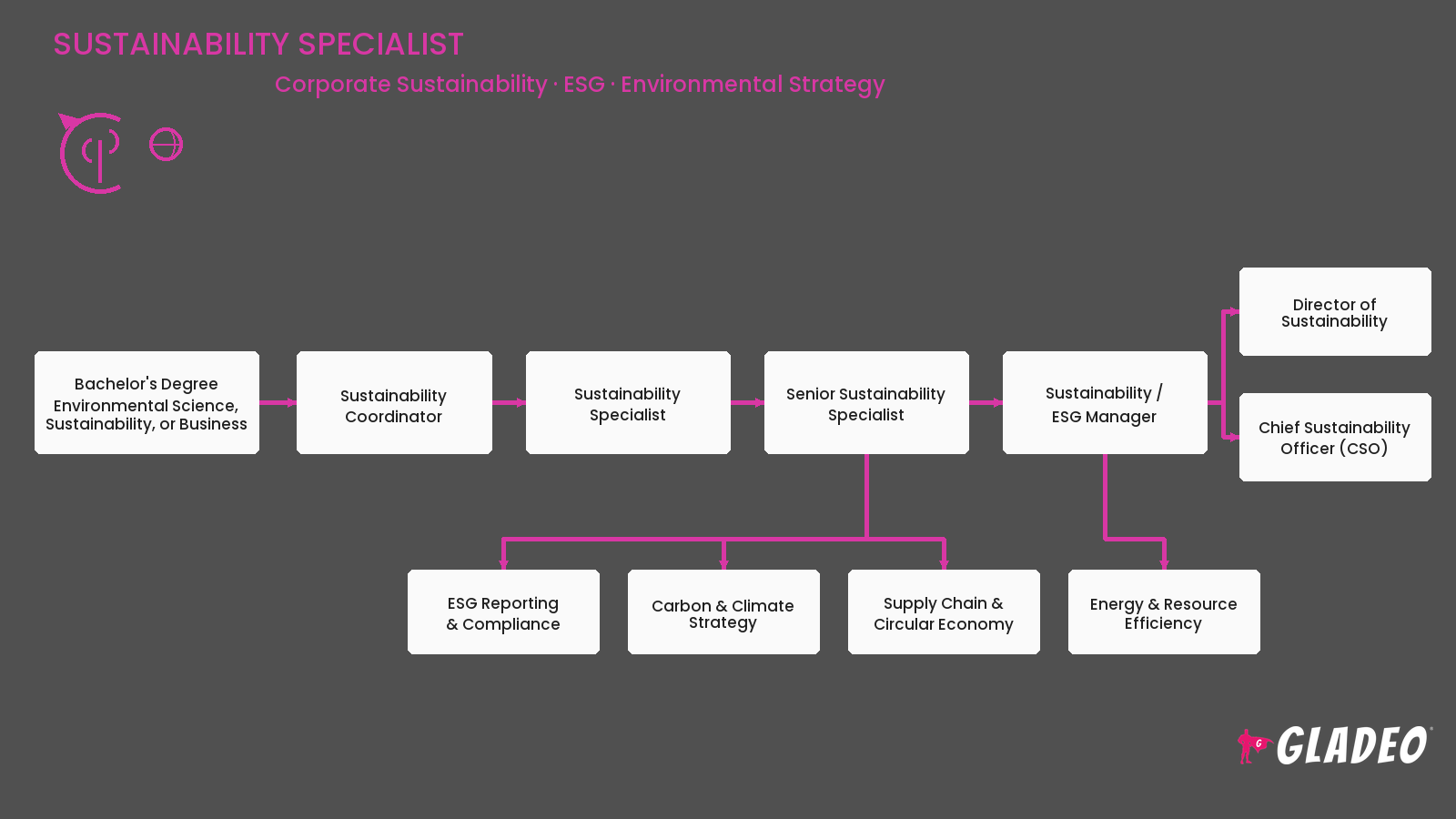
- Apply for internships or entry-level roles in environmental consulting firms or corporate sustainability departments.
- Build a professional portfolio showcasing coursework, projects, and volunteer work.
- Network with professionals through LinkedIn, industry events, or environmental organizations.
- Seek mentorship from experienced Sustainability Specialists.
- Gain proficiency in sustainability reporting software and data tools.
- Attend workshops and conferences to stay updated on industry trends.
- Volunteer for sustainability initiatives to demonstrate commitment.
- Develop strong communication skills to explain findings clearly.
- Pursue certifications like LEED Green Associate or Sustainability Excellence.
- Prepare for interviews by researching companies’ sustainability goals and challenges.
- Be open to temporary or contract positions to gain experience.
- Document successes and lessons learned to build credibility.
- Gain expertise in specialized areas such as renewable energy, carbon management, or sustainable supply chains.
- Take leadership roles on projects or within teams to develop management skills.
- Earn advanced degrees or professional certifications to enhance qualifications.
- Build a professional network through industry associations and conferences.
- Publish articles or case studies to establish thought leadership.
- Mentor junior specialists and interns to grow your influence.
- Stay current with evolving regulations and technologies to advise strategically.
- Seek cross-functional experience to understand business operations deeply.
Websites:
- International Society of Sustainability Professionals (issp.org)
- U.S. Green Building Council (usgbc.org)
- Global Reporting Initiative (globalreporting.org)
- Sustainable Brands (sustainablebrands.com)
- Environmental Protection Agency (epa.gov)
- GreenBiz (greenbiz.com)
- The Climate Reality Project (climaterealityproject.org)
- Carbon Disclosure Project (cdp.net)
- Society for Human Resource Management – Sustainability Resources (shrm.org)
- Renewable Energy World (renewableenergyworld.com)
- Environmental Defense Fund (edf.org)
- World Resources Institute (wri.org)
- Clean Energy Council (cleanenergycouncil.org.au)
- National Renewable Energy Laboratory (nrel.gov)
Books:
- The Sustainability Handbook by William R. Blackburn
- Cradle to Cradle by William McDonough and Michael Braungart
- Natural Capitalism by Paul Hawken, Amory Lovins, and L. Hunter Lovins
- The Ecology of Commerce by Paul Hawken
- Drawdown by Paul Hawken
If a career as a Sustainability Specialist doesn’t pan out or you want to explore related paths, there are many greener but connected options that still focus on solving environmental challenges.
- Environmental Scientist
- Energy Manager
- Conservation Scientist
- Environmental Engineer
- Urban Planner
- Policy Analyst
- Corporate Social Responsibility Manager
- Climate Change Analyst
- Renewable Energy Technician
- Waste Management Specialist
Click here to download the infographic
Newsfeed

Featured Jobs
Online Courses and Tools