






Spotlights
Student Support Specialist, Academic Advisor, Student Success Coach, College Success Counselor, Educational Support Worker, Retention Coordinator, Student Engagement Specialist, Academic Success Coach, Student Services Coordinator, Learning Specialist, Student Advocate
Every student’s journey through school is full of challenges and opportunities, and Student Success Workers are the dedicated guides who help students navigate this path toward graduation and personal growth. They make a difference by ensuring students feel supported, empowered, and ready to overcome obstacles that might stand in the way of their academic and personal goals.
Student Success Workers spend their days connecting with students individually and in groups to identify barriers to success, such as academic struggles, social challenges, or personal issues. They collaborate closely with teachers, counselors, families, and community organizations to develop tailored support plans, organize workshops, and provide resources that boost student confidence and skills. Their work often involves tracking student progress and adjusting strategies to make sure each student stays on the right track.
Using communication tools, data management software, and counseling techniques, Student Success Workers gather and analyze information to provide timely interventions. Their role is crucial because they bridge the gap between students and the resources they need, creating a safe space where students can thrive academically and emotionally. Their efforts help reduce dropout rates and build stronger, more resilient school communities.
- Making a tangible difference in students’ lives by helping them overcome hurdles and succeed.
- Building meaningful relationships with students and witnessing their growth firsthand.
- Collaborating with educators and families to create supportive learning environments.
- Contributing to a positive school culture that values every student’s potential.
Working Schedule
Student Success Workers typically work during regular school hours, Monday through Friday, spending most of their time on campus. The role may involve attending meetings, workshops, and occasional after-school events or trainings. While many Student Success Workers are employed full-time by schools or educational agencies, some work part-time or as contractors. The job often requires adapting to the needs of students, which can mean a flexible approach to scheduling and responsiveness during busy periods such as the start or end of semesters.
Typical Duties
- Meet with students to assess academic, social, or personal challenges affecting their success.
- Develop and implement individualized support plans to address student needs.
- Coordinate with teachers, counselors, and parents to monitor student progress and share updates.
- Organize workshops or programs focused on study skills, time management, or stress reduction.
- Refer students to community resources such as tutoring, counseling, or health services.
- Maintain accurate records of student interactions and outcomes using database software.
- Participate in school-wide meetings to discuss strategies and student support policies.
- Advocate for students’ needs within the school system to ensure equitable access to resources.
- Assist with enrollment, orientation, and transition activities for new or transferring students.
- Help students develop goal-setting and decision-making skills.
- Track attendance and intervene when students show signs of disengagement.
- Provide crisis intervention or referrals when students face urgent challenges.
Additional Responsibilities
- Attend professional development and training sessions to stay current on best practices.
- Support school initiatives related to student retention and engagement.
- Collaborate on grant writing or funding proposals to expand student services.
- Help coordinate peer mentoring or tutoring programs.
- Participate in data collection and analysis to evaluate program effectiveness.
- Assist in creating outreach materials and communications for students and families.
- Serve as a liaison between the school and community organizations.
- Support students’ transitions from high school to college, work, or other paths.
A Student Success Worker’s day often begins by reviewing the schedule of student meetings and checking emails for urgent requests or updates from teachers and counselors. They might prepare materials for workshops or gather resources tailored to particular students’ needs before heading to their first appointments.
Midday is usually filled with one-on-one meetings, where the Student Success Worker listens carefully to students’ concerns and helps them brainstorm solutions. They document progress and collaborate with colleagues to adjust support strategies. Lunch might be a quick break between sessions or an opportunity to connect informally with students or staff.
Afternoons often involve group sessions, planning for upcoming events, or attending team meetings to discuss student cases and school-wide initiatives. The day might wrap up with follow-ups on referrals, updating records, or preparing reports to ensure all students are receiving the support they need before heading home.
Soft Skills
- Empathy and active listening
- Strong communication and interpersonal skills
- Problem-solving and critical thinking
- Patience and adaptability
- Cultural sensitivity and inclusivity
- Organization and time management
- Collaboration and teamwork
- Conflict resolution and mediation
- Motivational and coaching abilities
- Discretion and confidentiality
- Emotional intelligence
- Positive attitude and resilience
Technical Skills
- Data management and student information systems
- Basic counseling and interviewing techniques
- Workshop and program planning
- Microsoft Office suite (Word, Excel, PowerPoint)
- Email and calendar management tools
- Crisis intervention protocols
- Report writing and documentation
- Use of communication platforms (Zoom, Teams, etc.)
- Familiarity with community resource databases
- Basic knowledge of educational policies and regulations
- High School Student Success Worker: Focuses on supporting high school students with academic and social challenges to promote graduation.
- College Student Success Coach: Works with college students to improve retention and completion rates through academic advising and mentorship.
- Early Childhood Success Worker: Supports young children and families to encourage early learning and development.
- Special Education Support Worker: Helps students with disabilities access resources and accommodations for success.
- Career and Technical Education (CTE) Success Worker: Assists students in vocational programs with career planning and skill development.
- Transition Specialist: Focuses on helping students move from school to employment or higher education.
- Mental Health Student Worker: Provides support related to students’ emotional and psychological well-being.
- Peer Support Coordinator: Organizes peer mentoring programs to enhance student engagement and support.
- Public school districts
- Charter schools
- Community colleges
- Universities
- Nonprofit educational organizations
- Youth development agencies
- Government education departments
- Community health centers
- After-school programs
- Career and technical education centers
- Counseling and mental health services
- Faith-based organizations
Student Success Workers often face the pressure of balancing the needs of many students, which requires strong multitasking and prioritization skills. They must respond quickly to urgent student issues, sometimes outside normal hours, which can be emotionally demanding but rewarding.
Work hours are generally during the school day, but occasional evening or weekend events, meetings, or trainings may be required. The role involves sitting for long periods during meetings and administrative work, as well as standing and moving around when working directly with students or facilitating workshops.
This career demands emotional resilience because workers often support students facing difficult life situations. They must maintain professional boundaries while showing compassion, and they may need to handle confidential information carefully. The job can require ongoing learning and adaptability to new policies, student populations, and challenges.
- Growing focus on mental health and social-emotional learning in schools.
- Increased use of data analytics to track student progress and improve interventions.
- Expansion of virtual and hybrid support services using online platforms.
- Greater emphasis on equity and inclusion in student support programs.
- Integration of career readiness and life skills into student success planning.
- Collaboration with community organizations to provide holistic support.
- Use of technology to streamline communication with students and families.
- Rising importance of trauma-informed approaches in education.
- More funding opportunities for student retention and engagement programs.
- Development of peer mentoring and student leadership initiatives.
Many Student Success Workers were drawn to helping professions from a young age, enjoying activities like mentoring younger siblings, volunteering in community programs, or supporting classmates who struggled with schoolwork or personal challenges.
They often showed strong empathy and leadership skills early on, thriving in group settings where they could listen, encourage, and problem-solve. A natural interest in education, social justice, or counseling frequently pointed them toward this career path.
Becoming a Student Success Worker usually involves earning a degree or certificate in education, social work, counseling, psychology, or a related field. Some positions require specialized training or certifications in student support or academic advising.
Students can take courses in relevant subjects such as:
- Psychology
- Sociology
- Education Foundations
- Child and Adolescent Development
- Counseling Techniques
- Conflict Resolution
- Diversity and Inclusion
- Career Development
- Program Planning and Evaluation
- Communication Skills
Hands-on experience through internships, volunteer work, or part-time jobs in schools or youth organizations is essential to build practical skills and a professional network. Many Student Success Workers continue their education with workshops or certifications in areas like trauma-informed care or student retention strategies to stay effective and current.
- Volunteer with youth organizations or school clubs focused on mentoring or peer support.
- Take courses in psychology, sociology, or education if available.
- Participate in student government or leadership programs to develop communication and organizational skills.
- Seek internships or part-time work in schools, community centers, or counseling offices.
- Attend workshops or seminars on mental health, diversity, and inclusion.
- Develop strong writing and computer skills for record keeping and communication.
- Practice active listening and empathy in everyday interactions.
- Join college readiness or tutoring programs to gain experience helping others.
- Explore career counseling or guidance office volunteer opportunities.
- Network with school counselors, social workers, and educators for mentorship.
- Look for programs with hands-on internships or practicum experiences in schools.
- Choose programs that offer courses in counseling, social work, or education.
- Find schools with strong support for diversity, equity, and inclusion.
- Seek programs that teach data management and student information systems.
- Consider certifications in academic advising or student affairs.
- Look for faculty with experience in student services or social work.
- Ensure the program covers mental health and crisis intervention basics.
- Find courses that include career development and life skills education.
- Select programs with partnerships with local schools or community organizations.
- Check for flexible scheduling options if working while studying.
- Apply for internships or volunteer roles in school counseling offices or youth programs.
- Create a portfolio showcasing any mentoring, tutoring, or support experience.
- Prepare for interviews by practicing answers that highlight your empathy and problem-solving skills.
- Attend job fairs focused on education or social services careers.
- Network with educators, counselors, and social workers to learn about openings.
- Seek entry-level roles such as student support aide or academic advisor assistant.
- Be ready to demonstrate your knowledge of student challenges and support strategies.
- Consider substitute teaching or tutoring to gain classroom experience.
- Pursue certifications or workshops relevant to student success work.
- Stay informed about local school district job postings and application deadlines.
- Build relationships with mentors who can provide references and guidance.
- Volunteer to assist with school events or programs that support student engagement.
- Develop advanced skills in counseling and crisis intervention to handle complex student needs.
- Pursue higher education such as a master’s degree in counseling, social work, or education administration.
- Gain leadership experience by coordinating programs or supervising junior staff.
- Build a strong professional network within education and community organizations.
- Take on roles that involve data analysis and program evaluation to demonstrate impact.
- Seek opportunities to specialize in areas like mental health, special education, or college transitions.
- Lead initiatives that improve school-wide student retention and success rates.
- Stay current with educational policies and best practices through continuous learning.
Websites:
- National Association of Student Personnel Administrators (NASPA) - https://www.naspa.org
- American School Counselor Association (ASCA) - https://www.schoolcounselor.org
- National Academic Advising Association (NACADA) - https://www.nacada.ksu.edu
- Council for the Advancement of Standards in Higher Education (CAS) - https://www.cas.edu
- Edutopia - https://www.edutopia.org
- The Jed Foundation (mental health) - https://www.jedfoundation.org
- National Dropout Prevention Center - https://dropoutprevention.org
- The College Board - https://www.collegeboard.org
- Association for Student Conduct Administration (ASCA) - https://www.theasca.org
- Society for Human Resource Management (SHRM) - https://www.shrm.org
- National Student Clearinghouse Research Center - https://nscresearchcenter.org
- Community College Research Center - https://ccrc.tc.columbia.edu
- National Center for Learning Disabilities - https://www.ncld.org
Books:
- Student Success in College: Creating Conditions That Matter by George D. Kuh
- The Skillful Teacher: On Technique, Trust, and Responsiveness in the Classroom by Stephen D. Brookfield
- Helping Students Become Successful Learners by Linda B. Ross
- The First-Year Experience: Facilitating Student Learning and Success by John N. Gardner
- Motivating Students Who Don’t Care: Successful Techniques for Educators by Allen N. Mendler
If you find that being a Student Success Worker isn’t the right fit, many related careers still allow you to support students and make a positive impact in education and social services.
- School Counselor
- Social Worker
- Academic Advisor
- Youth Program Coordinator
- Mental Health Counselor
- Career Counselor
- Special Education Teacher
- Community Outreach Coordinator
- Tutoring Specialist
- College Admissions Advisor
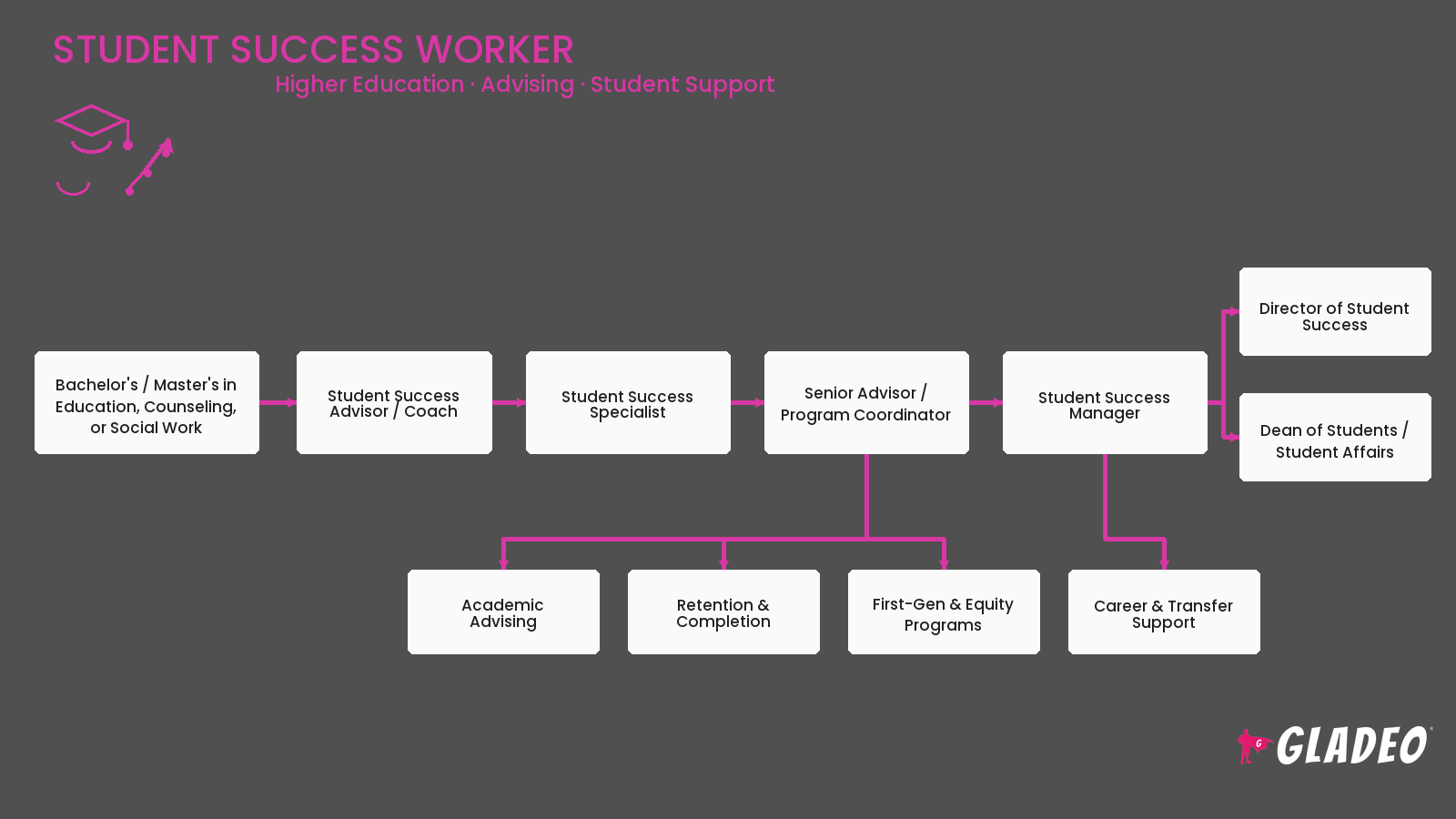
Click here to download the infographic
Newsfeed

Featured Jobs
Online Courses and Tools