





Spotlights
Materials Scientist, Micro Electrical/Mechanical Systems Device Scientist (MEMS Device Scientist), Polymer Materials Consultant, Research and Development Scientist (R and D Scientist), Research Scientist, Scientist
New medicines, cleaner materials, and breakthrough technologies start in research labs—and Research Scientists are the investigators who design experiments, analyze data, and push knowledge forward! Their work fuels biotech startups, university discoveries, and Fortune 500 innovation pipelines.
Research Scientists plan and conduct experiments, maintain lab protocols, collect and interpret data, and document findings in lab notebooks, reports, and peer-reviewed publications. They may specialize in biology, chemistry, materials science, neuroscience, or engineering R&D—working in academia, pharmaceutical companies, government labs, or industrial research centers. They collaborate with cross-functional teams including statisticians, engineers, regulatory affairs, and manufacturing.
They use pipettes, spectrometers, cell culture hoods, chromatography systems, and computational tools while adhering to GLP, GCP, or ISO standards where required. Whether optimizing a polymer blend or screening drug candidates, skilled Research Scientists combine curiosity, rigor, and reproducible methods.
- Contributing to discoveries that may improve health, sustainability, or technology
- Intellectual challenge and continuous learning at the frontier of a field
- Collaboration with talented interdisciplinary teams
- Career paths in academia, industry, patents, and entrepreneurship
Working Schedule
Research Scientists in industry usually work weekday hours with occasional deadline-driven evenings during project milestones. Academic postdocs and faculty face flexible but long hours balancing experiments, grants, and publishing. Shift work appears in some manufacturing-adjacent R&D and QC labs supporting production timelines.
Typical Duties
- Design experiments and define hypotheses with clear controls
- Prepare reagents, cultures, and samples following SOPs
- Operate analytical instruments and collect quantitative data
- Maintain detailed lab notebooks and electronic records
- Analyze datasets with statistical and visualization software
- Interpret results and troubleshoot failed or ambiguous experiments
- Present findings at team meetings and scientific conferences
- Write manuscripts, patents, and technical reports
- Review literature to inform experimental design
- Ensure lab safety, chemical hygiene, and waste disposal compliance
- Calibrate and qualify equipment per validation protocols
- Mentor junior scientists, interns, and technicians
Additional Responsibilities
- Write grant proposals and manage project budgets in academic roles
- Collaborate with regulatory affairs on IND or FDA submission data
- Scale processes from bench to pilot manufacturing
- Participate in intellectual property disclosures and patent drafting
- Serve on institutional biosafety or ethics committees
- Develop new SOPs when methods are novel or proprietary
- Engage in outreach, teaching, or science communication activities
Morning in a biotech lab starts with checking cell cultures and planning today's assay plate layout. The scientist runs a ELISA, records OD readings, and notes an unexpected signal worth repeating.
Midday includes a cross-functional meeting on lead compound selection, then hours at the bench purifying samples for mass spec. A colleague asks for help optimizing a PCR protocol before afternoon runs.
Late afternoon is data analysis in Python or GraphPad, drafting figure panels for an internal report, and ordering reagents for next week. Before leaving, they update the LIMS and set overnight instrument sequences.
Soft Skills
- Scientific curiosity and hypothesis-driven thinking
- Patience with iterative failure and reproducibility checks
- Attention to detail in protocols and documentation
- Communication of complex results to diverse audiences
- Collaboration across disciplines and global teams
- Time management balancing bench work and writing
- Ethical judgment in data integrity and authorship
- Project management for multi-month research plans
- Openness to feedback in peer review and team critique
- Resilience during funding cycles and competitive hiring
Technical Skills
- Experimental design and statistical analysis
- Laboratory techniques specific to discipline—PCR, chromatography, microscopy
- Spectroscopy, calorimetry, and materials characterization tools
- Cell culture, sterile technique, and biosafety level practices
- Python, R, or MATLAB for data analysis and automation
- Literature search and reference management tools
- GLP/GMP documentation and audit readiness
- Chromatography and mass spectrometry method development
- Lab information management systems (LIMS)
- Scientific writing for journals and regulatory submissions
- Biomedical Research Scientists: Drug discovery, genomics, and translational medicine
- Materials Scientists: Polymers, coatings, batteries, and advanced manufacturing
- Chemical R&D Scientists: Process chemistry and formulation development
- Academic Research Scientists: University labs pursuing grant-funded questions
- Government Lab Scientists: NIH, DOE, NIST, and agency research divisions
- Computational Research Scientists: Modeling, bioinformatics, and simulation-heavy R&D
- Principal Scientists: Senior IC leaders guiding programs and mentoring teams
- Pharmaceutical and biotech companies
- University research labs and medical centers
- National laboratories and federal research agencies
- Chemical and materials manufacturing corporations
- Medical device and diagnostics companies
- Contract research organizations (CROs)
- Agricultural and food science research institutes
- Environmental and energy research nonprofits
- Startup incubators and venture-backed science firms
- Hospital translational research departments
Research careers require advanced education—often a master's or Ph.D. for independent roles—with years of postdoctoral training in academia. Industry R&D can be deadline-driven with project cancellations when pipelines shift.
Bench work involves repetitive protocols, long instrument runs, and pressure to publish or hit milestone gates. Job markets vary by specialty and geography.
Scientists who persist often describe thrill at a reproducible result, a published paper, or a product reaching patients because of their experiments.
- AI and machine learning accelerating drug discovery and materials design
- CRISPR and gene therapy expanding biomedical research hiring
- Open science, preprints, and reproducibility initiatives
- Remote collaboration and cloud lab data platforms
- Sustainability R&D—green chemistry and circular materials
- Biomanufacturing and mRNA platform technology growth
- Interdisciplinary convergence of biology, engineering, and data science
- Increased industry-academic partnership and tech transfer
- Workforce demand in biotech hubs beyond traditional coastal cities
Many Research Scientists loved science fair projects, chemistry sets, coding experiments, or nature documentaries—asking 'why' and 'how' about everything.
They often excelled in AP biology and chemistry, robotics, math teams, or internships in university labs. Persistence through failed experiments felt worth it when something finally worked.
Research Scientists typically need at least a bachelor's degree in a relevant science or engineering field; independent research roles in academia and senior industry positions usually require a Ph.D. and postdoctoral experience. Undergraduate research, honors theses, and co-op placements are critical for graduate school admission and industry scientist I hiring.
Students can take courses in relevant subjects such as:
- General and organic chemistry
- Biology, genetics, and biochemistry
- Calculus, statistics, and linear algebra
- Physics for science and engineering majors
- Research methods and experimental design
- Scientific writing and technical communication
- Instrumental analysis and laboratory techniques
- Computer science or bioinformatics electives
- Ethics in research and responsible conduct
Undergraduate research in faculty labs, REU programs, and industry co-ops provide the bench credentials graduate programs and employers expect. Document techniques mastered—cell culture, HPLC, coding pipelines—in CVs with publication or poster presentations when available.
ON-THE-JOB TRAINING
Industry hires learn company-specific SOPs, LIMS, and safety systems during onboarding. Postdocs receive mentorship on grant writing, lab management, and publishing strategy over multi-year appointments.
OPTIONAL CERTIFICATIONS
- Good Laboratory Practice (GLP) training certificates
- Biosafety (IBC) and bloodborne pathogen training
- Project Management Professional (PMP) for R&D program leads
- ASQ Certified Quality Engineer for manufacturing-adjacent R&D
- Software certifications (Python, R) for computational research tracks
- Take AP/IB biology, chemistry, physics, and math courses
- Compete in science olympiad, regeneron STS, or local fair circuits
- Email professors to volunteer in university labs early in college
- Apply to NSF REU and summer internship programs freshman/sophomore years
- Learn Python or R for data analysis before graduate school
- Maintain excellent GPA and strong faculty recommendation relationships
- Present posters at undergraduate research symposia
- Read primary literature in your interest area monthly
- Join Society for Advancement of Chicanos/Hispanics (SACNAS) or similar networks
- Study for GRE only if target programs still require it
- Explore co-op programs at universities partnered with biotech employers
- Build a CV listing techniques, not just coursework titles
- Choose universities with active research funding in your specialty
- Prioritize programs requiring undergraduate thesis or capstone lab work
- Look for NIH T32 or funded graduate programs with stipends
- Compare academia vs. industry placement rates for master's programs
- Seek interdisciplinary centers—bioengineering, materials, chemical biology
- Verify core facilities—mass spec, imaging, sequencing—are accessible
- Ask about time-to-degree and alumni career paths honestly
- Select advisors with active grants and good trainee mentorship reputations
- Consider geographic hubs—Boston, SF, San Diego, RTP—for industry access
- Evaluate teaching assistant requirements vs. research time in Ph.D. programs
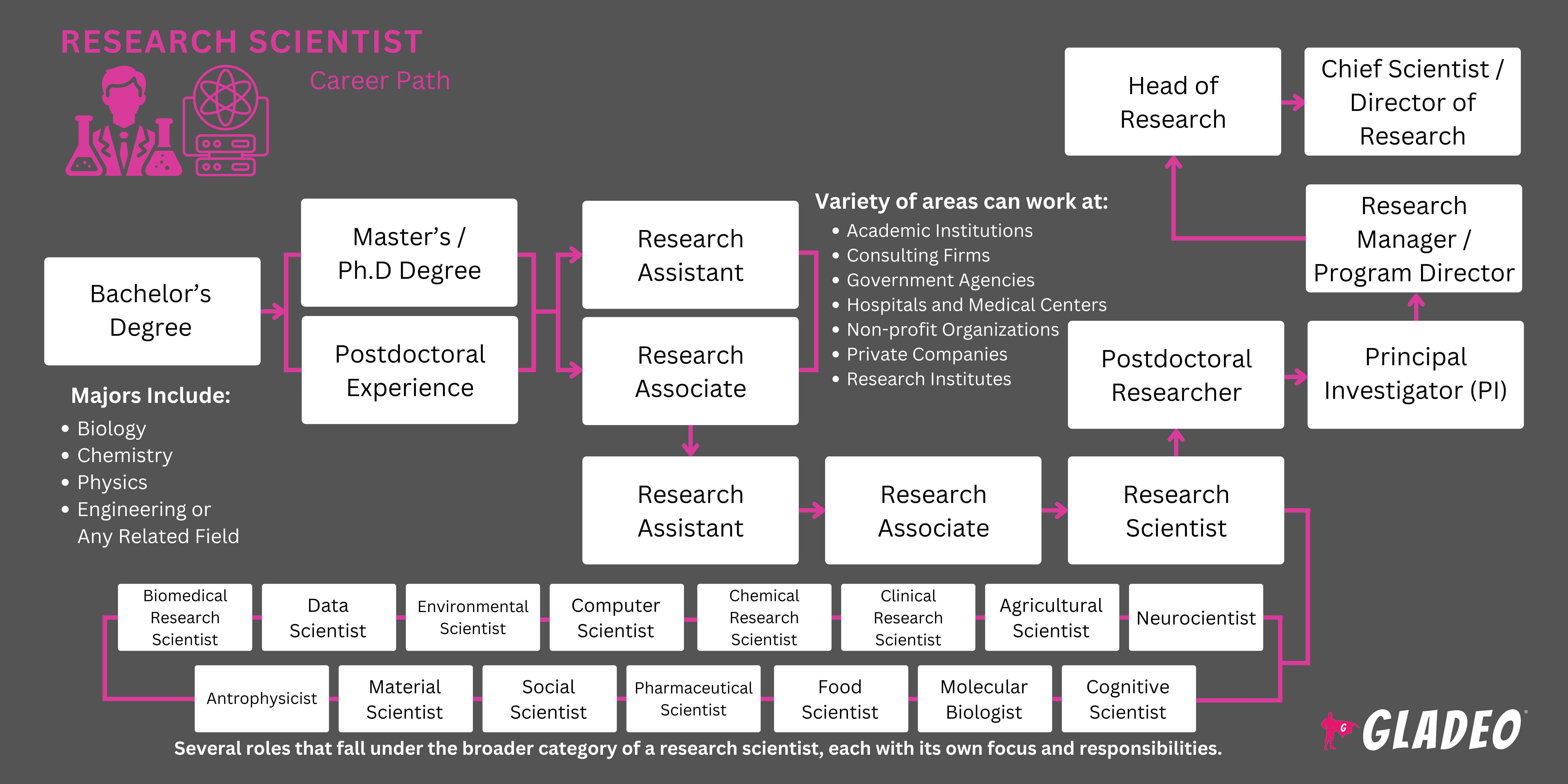
- Apply to Research Associate and Scientist I roles on LinkedIn and biotech job boards
- Use university career fairs and recruiter relationships from internships
- Target titles: Research Associate, Associate Scientist, Laboratory Technician III
- Tailor resume to techniques listed in each job description
- Network at ACS, AAAS, and discipline-specific society meetings
- Consider CRO and startup roles for broad bench exposure early
- Prepare to discuss failed experiments and troubleshooting stories in interviews
- Apply to postdoctoral fellowships if pursuing academic PI tracks
- Highlight publications, posters, and GitHub repos for computational roles
- Relocate to biotech clusters if local academic market is saturated
- Publish high-impact papers and file patents in industry settings
- Advance to Senior Scientist, Principal Scientist, and team lead roles
- Transition to program management or director of research positions
- Move from postdoc to assistant professor or staff scientist at national labs
- Found or join startup companies based on translational discoveries
- Specialize in high-value modalities—immunology, ADCs, computational chemistry
Websites:
- Nature Careers and Science Careers job boards
- American Chemical Society (ACS) Careers
- Biotech Bay and regional cluster job networks
- NIH Office of Intramural Training and Education
- Federation of American Societies for Experimental Biology (FASEB)
- LinkedIn and Indeed biotech listings
- Glassdoor company research for R&D culture
- PubMed and Google Scholar for literature and lab discovery
- Grants.gov and NSF REU program search
- Addgene and protocol.io open science resources
Books:
- The Craft of Research by Booth, Colomb, and Williams
- At the Bench by Kathy Barker
- Bad Science by Ben Goldacre
- The Immortal Life of Henrietta Lacks by Rebecca Skloot
- Lab Girl by Hope Jahren
Related careers that use overlapping skills include:
- Clinical Research Coordinator
- Quality Control Analyst
- Patent Agent or Patent Examiner
- Science Teacher or Professor
- Medical Science Liaison
- Regulatory Affairs Specialist
- Data Scientist
- Technical Writer
- Sales Engineer — life science tools
- Environmental Scientist
Newsfeed

Featured Jobs
Online Courses and Tools