






Spotlights
Talent Acquisition Specialist, Hiring Manager, Staffing Coordinator, Recruitment Consultant, Talent Scout, Employment Specialist, Recruiting Officer, Human Resources Recruiter, Staffing Specialist, Candidate Sourcer, Talent Partner, Recruitment Manager
Every job opening is a puzzle waiting to be solved, and Recruiters are the masterminds who connect the perfect people with the right opportunities. They shape the workforce of companies and help people find careers that can change their lives.
Recruiters spend their days sourcing, interviewing, and evaluating candidates to fill open positions. They collaborate closely with hiring managers, HR teams, and company leaders to understand exactly what skills and qualities are needed. Their goal is to find candidates who not only fit the job description but also the company culture, ensuring a successful long-term match.
Using applicant tracking systems, social media platforms, and networking tools, Recruiters manage the entire hiring process from outreach to offer negotiation. Their work is crucial because the right hire can drive a company’s success, while a poor fit can hurt morale and productivity.
- Helping candidates land jobs that transform their lives and careers.
- Being the person who brings top talent into companies and shapes team success.
- Building strong relationships with both candidates and employers.
- Seeing a hiring process through from start to finish and celebrating a perfect match.
Working Schedule
Recruiters often work full-time in office settings, though remote and hybrid options are increasingly common. Their schedules can be fast-paced and deadline-driven, especially when multiple positions need to be filled quickly. While typical business hours are common, some evening or weekend work may be needed to connect with candidates or attend job fairs.
Typical Duties
- Develop job descriptions and specifications with hiring managers.
- Source candidates through job boards, social media, and networking events.
- Screen resumes and applications to identify qualified candidates.
- Conduct phone or video interviews to assess candidate skills and fit.
- Coordinate and schedule interviews between candidates and hiring teams.
- Manage applicant tracking systems and maintain candidate records.
- Negotiate salary offers and employment terms with candidates.
- Provide feedback and status updates to candidates and hiring managers.
- Attend career fairs and recruitment events to attract talent.
- Stay updated on industry hiring trends and labor market conditions.
Additional Responsibilities
- Build and maintain talent pipelines for future openings.
- Advise hiring managers on recruitment best practices and legal requirements.
- Develop employer branding strategies to attract top talent.
- Collaborate with HR on onboarding and new hire integration.
- Analyze recruitment metrics to improve hiring processes.
- Handle candidate rejections with professionalism and care.
- Facilitate background checks and employment verifications.
- Support diversity and inclusion initiatives in recruitment.
Mornings often start with reviewing new applications and prioritizing which candidates to contact first. Recruiters check emails and messages from candidates and hiring managers to plan the day’s outreach.
Midday is filled with active candidate engagement—conducting screening calls, scheduling interviews, and discussing job requirements with hiring teams. They may also analyze recruitment data to track progress toward hiring goals.
Afternoons and evenings might include attending virtual or in-person job fairs, networking with industry professionals, or negotiating offers with potential hires. Recruiters also spend time updating applicant tracking systems and preparing reports for management.
Soft Skills
- Strong communication and interpersonal skills
- Active listening and empathy
- Persuasion and negotiation abilities
- Organization and time management
- Problem-solving and critical thinking
- Adaptability to fast-changing priorities
- Attention to detail
- Discretion and confidentiality
- Team collaboration
- Resilience under pressure
- Customer service orientation
- Cultural awareness and inclusivity
Technical Skills
- Proficiency with applicant tracking systems (ATS)
- Social media recruiting techniques
- Boolean search for candidate sourcing
- Interviewing and assessment methods
- Data analysis for recruitment metrics
- Knowledge of labor laws and compliance
- Use of video interviewing platforms
- CRM and recruitment marketing tools
- Microsoft Office or Google Workspace proficiency
- Resume screening software
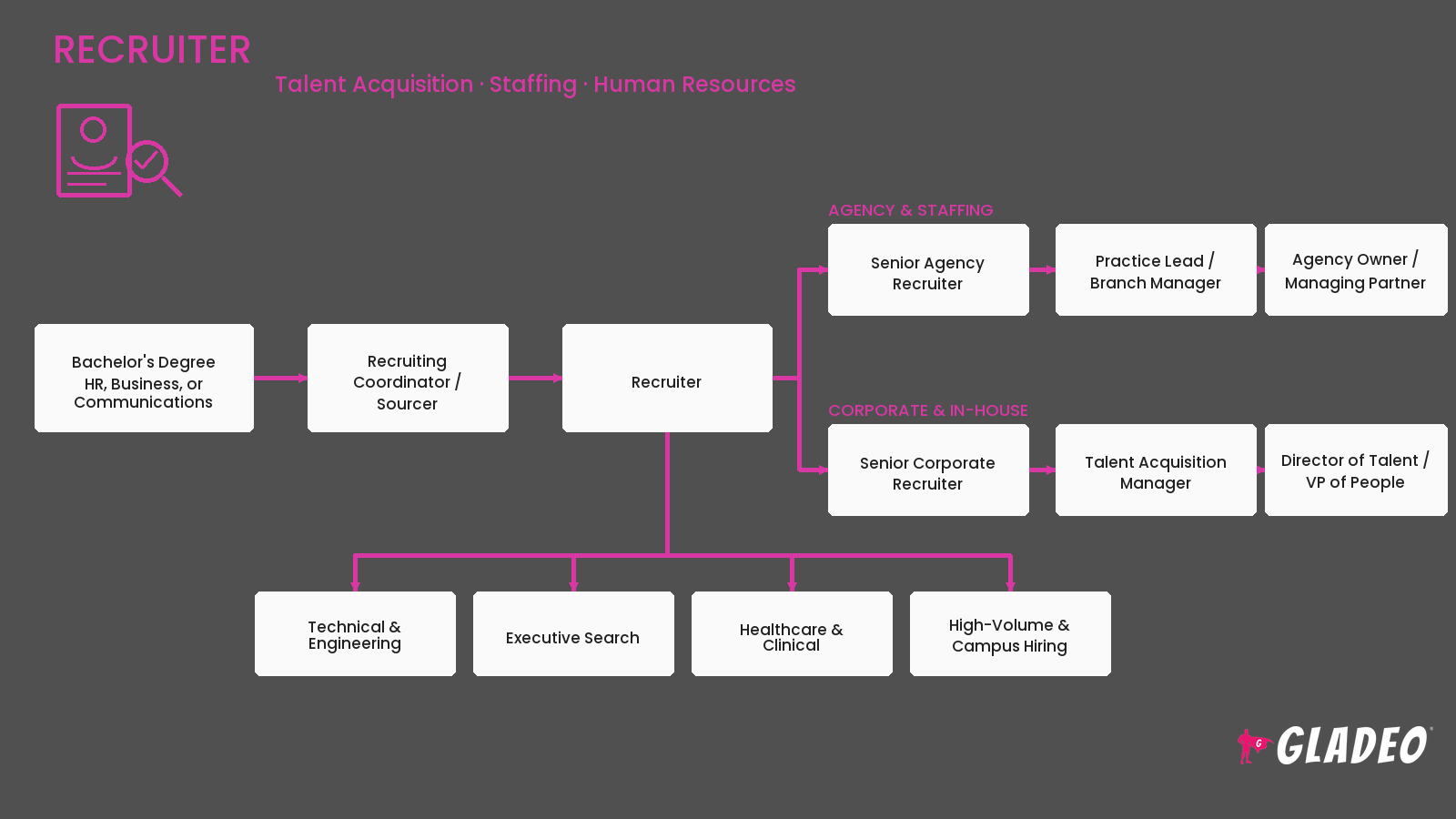
- Corporate Recruiter: works within a company to fill internal job openings.
- Agency Recruiter: hires candidates on behalf of multiple client companies.
- Technical Recruiter: specializes in sourcing candidates for IT and engineering roles.
- Executive Recruiter: focuses on hiring top-level management and executives.
- Campus Recruiter: targets recent graduates and interns from colleges.
- Contract Recruiter: hired temporarily to manage recruitment during busy periods.
- Diversity Recruiter: emphasizes hiring candidates from underrepresented groups.
- Healthcare Recruiter: specializes in recruiting medical and healthcare professionals.
- Large corporations with in-house HR departments
- Recruitment agencies and staffing firms
- Nonprofit organizations
- Government agencies
- Startups and small businesses
- Educational institutions
- Healthcare providers and hospitals
- Technology companies
- Retail chains
- Manufacturing companies
- Consulting firms
- Financial institutions
Recruiters often face pressure to fill positions quickly while ensuring the quality and fit of candidates. Meeting hiring deadlines and managing multiple openings can create a fast-paced, high-stakes environment.
The workday typically aligns with standard business hours but may extend into evenings or weekends to accommodate candidate schedules or attend events. Balancing responsiveness with thorough evaluation is a constant challenge.
Recruiters must navigate rejection and disappointment professionally, managing candidates’ emotions and expectations while maintaining a positive employer brand. The role requires emotional resilience and a commitment to fairness.
- Increasing use of AI-powered recruitment software for candidate screening.
- Remote and virtual recruiting events becoming the norm.
- Greater emphasis on diversity, equity, and inclusion in hiring practices.
- Data-driven recruitment decisions using analytics and metrics.
- Focus on employer branding to attract top talent.
- Integration of social media platforms for sourcing candidates.
- Use of video interviews to speed up the hiring process.
- Candidate experience as a key factor in recruitment strategies.
- Growing demand for specialized recruiters in tech and healthcare.
- Flexible work arrangements influencing recruitment approaches.
Many recruiters enjoyed playing team sports or group activities, showing early skills in motivating others and understanding group dynamics. They often liked talking to people and helping friends solve problems, hinting at their future role as connectors.
They might have been drawn to roles like class president, student council, or organizing events, demonstrating leadership and communication skills. Early interest in psychology, communication, or business also aligns well with recruitment.
Becoming a Recruiter typically starts with a bachelor’s degree in human resources, business administration, psychology, or a related field. Some Recruiters begin with associate degrees or certifications and gain experience through internships or entry-level HR roles.
Students can take courses in relevant subjects such as:
- Human Resources Management
- Organizational Behavior
- Psychology
- Business Communication
- Employment Law
- Marketing and Social Media
- Data Analysis and Statistics
- Negotiation and Conflict Resolution
- Public Speaking
- Information Technology for HR
Hands-on experience through internships, cooperative education, or part-time jobs in HR departments is invaluable. Building a strong portfolio of recruitment successes and developing excellent communication skills are key steps toward a successful recruiting career.
- Join or lead student clubs and organizations to develop leadership skills.
- Take courses in business, psychology, and communication.
- Participate in mock interviews and debate teams to boost confidence.
- Volunteer for school hiring events or career fairs.
- Learn to use office software like Word and Excel.
- Explore social media platforms and learn professional networking.
- Attend workshops on resume writing and interview skills.
- Seek internships or job shadowing in HR or staffing firms.
- Practice public speaking and presentation skills.
- Build a habit of organizing events or group projects.
- Look for programs with strong HR or business curricula.
- Choose schools offering internships or co-op placements in recruiting.
- Find programs with courses on labor law and employment practices.
- Seek training in applicant tracking systems and HR software.
- Prioritize programs with diversity and inclusion education.
- Select schools with career services supporting recruitment careers.
- Consider certifications like SHRM-CP or PHR.
- Look for classes teaching negotiation and conflict resolution.
- Choose programs emphasizing communication and interpersonal skills.
- Find opportunities to work on real-world projects or case studies.
- Research faculty with industry experience in recruitment.
- Attend seminars and networking events hosted by the program.
- Apply for internships or entry-level HR assistant roles to gain experience.
- Build a professional LinkedIn profile highlighting communication skills.
- Volunteer to help organize hiring events or job fairs.
- Practice phone screening and interview techniques with peers.
- Network with HR professionals through school or community events.
- Create a portfolio documenting recruitment activities and successes.
- Familiarize yourself with applicant tracking systems and job boards.
- Seek mentorship from experienced recruiters or HR managers.
- Prepare for behavioral interview questions with real-world examples.
- Stay updated on current labor market trends and recruitment technologies.
- Attend industry conferences or webinars to learn and network.
- Demonstrate a positive attitude and strong work ethic in every role.
- Develop expertise in specific industries or job functions to become a specialist.
- Earn professional HR certifications such as SHRM or HRCI credentials.
- Build a strong network of hiring managers and industry contacts.
- Take on larger recruitment projects or lead recruitment teams.
- Stay current with recruitment technology and best practices.
- Pursue leadership training to move into HR management roles.
- Expand skills into related areas like employee relations or workforce planning.
- Gain experience with international recruitment and global talent acquisition.
Websites:
- Society for Human Resource Management (SHRM) - shrm.org
- Recruiting Daily - recruitingdaily.com
- HR Dive - hrdive.com
- Workable Blog - workable.com/blog
- LinkedIn Talent Solutions - linkedin.com/talent
- Glassdoor for Employers - glassdoor.com/employers
- Undercover Recruiter - undercoverrecruiter.com
- ERE Media - ere.net
- TalentLyft Blog - talentlyft.com/blog
- People Matters - peoplematters.in
- HR Bartender - hrbartender.com
- HRZone - hrzone.com
- The Muse - themuse.com
- Dice Insights - dice.com/career-advice
Books:
- Who: The A Method for Hiring by Geoff Smart and Randy Street
- Recruit Rockstars by Jeff Hyman
- Hiring for Attitude by Mark Murphy
- The Best Team Wins by Adam Robinson
- Talent Magnet by Mark Miller
If recruiting isn’t your final destination, many related careers let you use similar skills in new ways. These options still focus on working with people, understanding organizations, and helping businesses grow.
- Human Resources Specialist
- Career Counselor
- Training and Development Specialist
- Employee Relations Manager
- Talent Development Coordinator
- Workforce Analyst
- Organizational Development Consultant
- Sales Representative
- Public Relations Specialist
- Business Development Manager
Click here to download the infographic
Newsfeed

Featured Jobs
Online Courses and Tools