






Spotlights
Brand Manager, Marketing Director, Product Marketing Manager, Digital Marketing Manager, Marketing Campaign Manager, Growth Marketing Manager, Marketing Strategy Manager, Communications Manager, Advertising Manager, Marketing Operations Manager, Integrated Marketing Manager, Marketing Team Lead
Every product you have ever loved, from a sneaker brand to a snack you crave, had someone behind the scenes deciding how the world would meet it: what story to tell, which channels to use, and how to turn strangers into loyal fans. That someone is usually a Marketing Manager, the person who steers a brand's entire marketing engine and makes sure every campaign, post, and ad actually adds up to something bigger.
Marketing Managers set the strategy for how a company reaches its customers and grows its business. They research audiences and competitors, set goals and budgets, and lead cross-functional teams through digital advertising, social media, email, content, public relations, and sometimes traditional media like TV or print. They work closely with creative teams, data analysts, sales departments, and company leadership to make sure every campaign supports the bigger business goals, whether that is launching a new product, growing brand awareness, or increasing sales in a key market. Marketing Managers do not just come up with ideas; they turn strategy into execution, manage the people and budget behind it, and course-correct when something isn't working.
Using marketing automation platforms, analytics dashboards, project management tools, and consumer research, Marketing Managers combine creativity with hard data to make decisions that move the needle. Their work matters because a great product with no clear story rarely succeeds, and a strong marketing strategy is often the difference between a company that thrives and one that struggles to be noticed.
- Shaping how millions of people perceive and connect with a brand or product
- Leading a team through the full arc of a campaign, from idea to measurable results
- Blending creative storytelling with data-driven decision making
- Seeing your strategy directly influence a company's growth and success
Working Schedule
Marketing Managers typically work full-time, standard business hours, though product launches, campaign deadlines, and reporting periods can require longer days or evening work. Most work in an office or hybrid setting, spending time in meetings with their team, creative partners, and executives, as well as heads-down time reviewing data and planning strategy. Most Marketing Managers are employed directly by a company's in-house marketing department, though some work at advertising or marketing agencies managing campaigns for multiple clients.
Typical Duties
- Developing marketing strategies and annual or campaign-specific plans
- Setting and managing marketing budgets across channels
- Leading and mentoring a team of marketing specialists, coordinators, or associates
- Overseeing digital advertising, social media, email, and content marketing campaigns
- Analyzing market research, customer data, and competitor activity
- Collaborating with product, sales, and executive teams to align marketing with business goals
- Managing relationships with outside agencies, freelancers, and vendors
- Reviewing and approving creative assets, messaging, and campaign materials
- Tracking key performance indicators like reach, engagement, conversion, and return on investment
- Presenting campaign results and strategy recommendations to leadership
- Overseeing product launches and go-to-market plans
- • Ensuring brand consistency across all marketing channels and materials
Additional Responsibilities
- Conducting competitive analysis and market research
- Managing marketing technology platforms and tools
- Negotiating contracts with media outlets, influencers, or agencies
- Forecasting campaign performance and adjusting strategy in real time
- Coordinating with public relations teams on messaging and press
- Supporting sales teams with marketing collateral and lead generation
- Staying current on industry trends, platform changes, and emerging channels
- Hiring, training, and evaluating marketing team members
A Marketing Manager's morning often starts by checking performance dashboards from the previous day's campaigns, noting what is working and what needs adjusting. They might lead a team stand-up to review priorities, then jump into a strategy meeting to plan an upcoming product launch alongside product and sales leaders.
Midday is usually filled with a mix of creative review and data analysis. They might review ad copy and visuals from the creative team, approve a new landing page, or dig into customer data to understand why a recent campaign underperformed. Calls with outside agencies or vendors about upcoming projects often fill in the gaps.
Afternoons frequently involve budget management, presenting updates to executives, or coaching team members through their own projects. A Marketing Manager might close the day by drafting a campaign brief for the next quarter, reviewing analytics reports, or brainstorming a fresh angle for a stalled campaign before heading into tomorrow's priorities.
Soft Skills
- Strategic thinking and big-picture planning
- Strong leadership and team management
- Clear written and verbal communication
- Creativity balanced with analytical thinking
- Adaptability when campaigns need to pivot
- Collaboration across departments
- Confidence presenting to executives and stakeholders
- Time management and prioritization
- Problem solving under pressure
- Negotiation and vendor management
- Attention to detail and brand consistency
- Curiosity about consumer behavior and market trends
Technical Skills
- Marketing analytics tools such as Google Analytics or HubSpot
- Marketing automation and CRM platforms like Salesforce or Marketo
- Social media management and advertising platforms
- Search engine optimization and search engine marketing
- Budget management and financial reporting
- Project management software such as Asana or Monday.com
- Basic understanding of design and content tools like Canva or Adobe Creative Suite
- A/B testing and conversion rate optimization
- Data analysis and interpreting performance metrics
- Familiarity with email marketing platforms
- Brand Marketing Manager: Owns the overall identity, positioning, and voice of a brand
- Product Marketing Manager: Focuses on launching and promoting specific products or features
- Digital Marketing Manager: Leads online channels like search, social, and email campaigns
- Content Marketing Manager: Oversees blogs, videos, and other content that build audience trust
- Growth Marketing Manager: Focuses on data-driven experiments to acquire and retain customers
- Communications Marketing Manager: Manages public-facing messaging and media relationships
- Field or Regional Marketing Manager: Runs localized campaigns for specific markets or regions
- Agency Account Marketing Manager: Manages marketing strategy and campaigns for outside clients
- Consumer goods and retail companies
- Technology and software companies
- Advertising and marketing agencies
- Healthcare and pharmaceutical companies
- Financial services and banking firms
- Media and entertainment companies
- Nonprofit organizations
- Hospitality and travel companies
- Automotive companies
- Higher education institutions
- Startups across every industry
- Government agencies and public sector organizations
Marketing Managers are expected to deliver measurable results, and that pressure never fully lets up. Leadership wants to see growth, engagement, and return on investment, which means campaigns are constantly analyzed, questioned, and sometimes scrapped when the numbers do not add up. Balancing creative instinct with hard data can be a constant tension in the role.
The job often demands flexibility with time. Product launches, seasonal campaigns, and crisis communications can turn a normal week into a stretch of long days and late nights. Marketing Managers also have to stay endlessly current, since platforms, algorithms, and consumer habits shift constantly, and falling behind on trends can mean a campaign flops before it starts.
Leading a team adds another layer of responsibility. Marketing Managers are expected to develop their people, manage conflicting priorities across departments, and stay calm when a campaign underperforms publicly. The role rewards resilience, adaptability, and the ability to keep a team motivated even when a strategy needs to change course midstream.
- Growing reliance on artificial intelligence for content creation and campaign optimization
- Increased focus on first-party data as privacy regulations limit third-party tracking
- Rise of short-form video and creator partnerships across social platforms
- Greater emphasis on personalization powered by customer data platforms
- Shift toward marketing measured by lifetime value, not just single-campaign metrics
- Expansion of omnichannel strategies connecting online and offline customer experiences
- Growth of community-driven and authenticity-focused branding
- Increasing collaboration between marketing and product teams on customer experience
- More companies investing in employer branding and internal marketing
- Continued growth of influencer and affiliate marketing programs
Many Marketing Managers were the kids who noticed which ads made them want to buy something, ran a school club's Instagram account, or organized fundraisers with catchy slogans and homemade flyers. They tended to enjoy being persuasive, whether that meant convincing classmates to support a cause or designing the poster that actually got people to show up.
Others found their interest through student government, debate, journalism, or business clubs, where they got to practice combining a message with a strategy for reaching people. A natural curiosity about brands, trends, and why certain products became popular often carried directly into a marketing career.
Most Marketing Managers hold a bachelor's degree in marketing, business administration, communications, or a related field. Many companies also value an MBA or a master's degree in marketing for more senior roles, though strong campaign experience and measurable results can carry just as much weight. Marketing Managers typically build their way up through entry-level marketing roles, gaining experience across channels before taking on strategy and leadership responsibilities.
Students can take courses in relevant subjects such as:
- Principles of Marketing
- Consumer Behavior
- Digital Marketing and Social Media Strategy
- Market Research and Data Analysis
- Advertising and Brand Management
- Business Communications
- Statistics and Business Analytics
- Public Relations
- Finance and Budgeting for Marketers
- Project and Team Management
Hands-on experience is critical for breaking into and advancing in this field. Internships with marketing or advertising teams, running a club's or small business's social media, or freelancing on small campaigns all build a portfolio that demonstrates real results. Many Marketing Managers also pursue professional certifications in areas like digital marketing, analytics, or project management to sharpen specific skills throughout their careers.
- Take business, marketing, and communications courses whenever offered
- Run social media or promotions for a school club, sports team, or small business
- Join DECA, FBLA, or a similar business and marketing student organization
- Start a blog, YouTube channel, or social account to practice building an audience
- Learn the basics of Google Analytics, Canva, and social media advertising tools
- Seek internships at marketing agencies, in-house marketing teams, or small businesses
- Study campaigns you admire and analyze what makes them effective
- Practice writing persuasively through school newspaper, yearbook, or creative writing
- Build basic data literacy through statistics or business analytics courses
- Volunteer to help a nonprofit or local business with its marketing
- Develop public speaking and presentation skills through clubs or coursework
- Network with marketing professionals through informational interviews or career fairs
- Marketing or business programs with strong internship placement rates
- Courses covering both digital marketing and traditional strategic marketing
- Opportunities to work on real campaigns for real clients or organizations
- Instructors with current industry experience
- Access to marketing software and analytics tools as part of coursework
- Strong alumni network in marketing, advertising, or brand management
- Capstone or portfolio projects that simulate real marketing campaigns
- Career services that connect students with marketing employers
- Coursework in data analysis and measuring campaign performance
- Programs offering electives in specialized areas like content or growth marketing
- Opportunities to pursue relevant certifications alongside your degree
- Flexible options for internships during the school year, not just summer
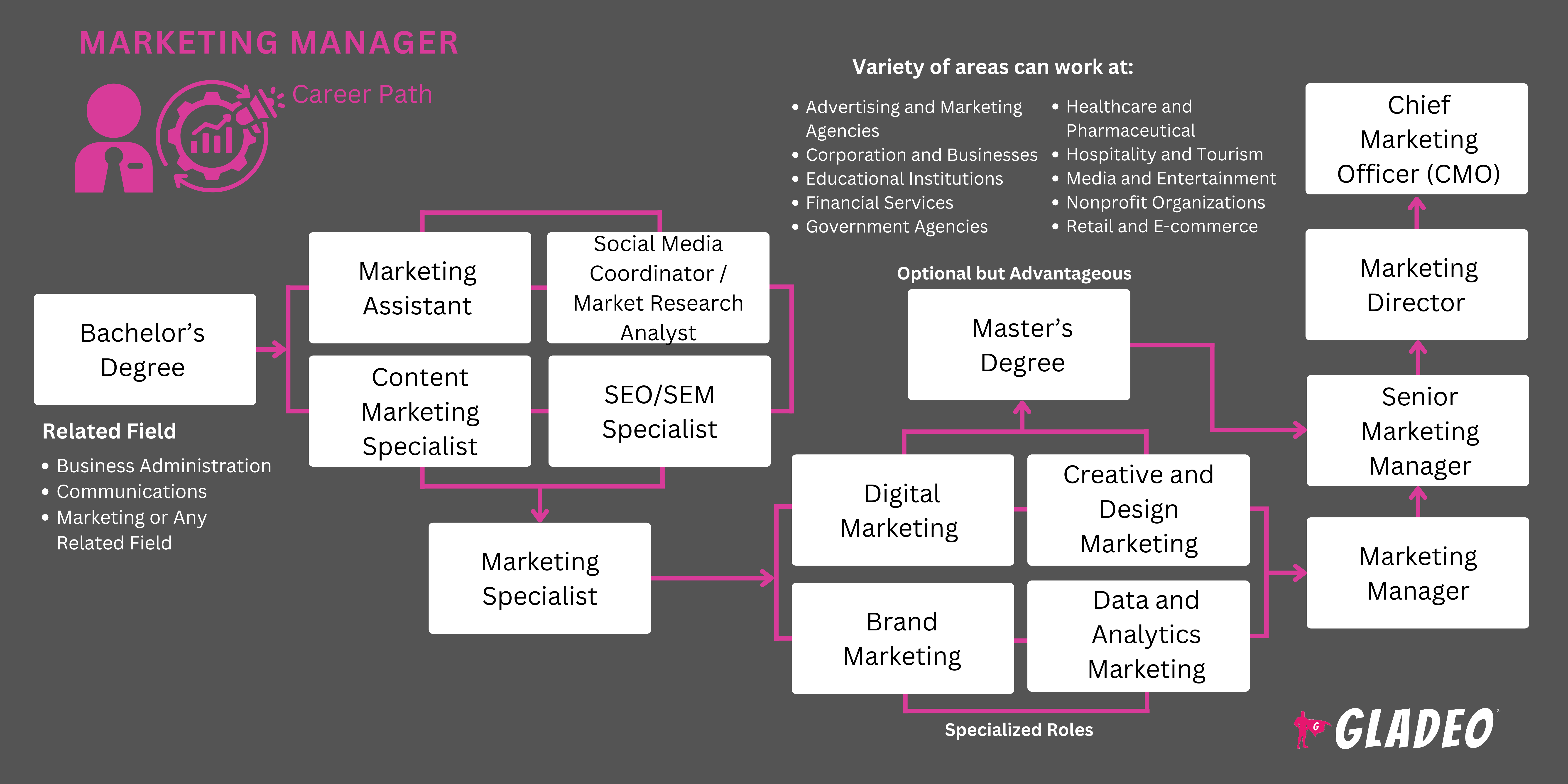
- Build a portfolio of campaigns, social content, or projects you led, even for a club or small business
- Apply for entry-level titles like Marketing Coordinator, Marketing Associate, or Digital Marketing Specialist
- Search job boards like LinkedIn, Indeed, and company career pages
- Complete an internship at a marketing agency or in-house marketing team before graduating
- Earn beginner certifications in Google Analytics, HubSpot, or digital advertising platforms
- Highlight measurable results on your resume, like audience growth or engagement numbers
- Practice explaining a campaign you worked on, including what worked and what you would change
- Network with marketing professionals through LinkedIn, career fairs, and alumni connections
- Be open to starting in a specialized channel role like social media or email before moving into broader strategy
- Follow marketing leaders and brands you admire to study current campaign trends
- Take on freelance or volunteer marketing projects to build real-world experience
- Show curiosity about data and willingness to test and learn during interviews
- Take ownership of larger campaigns and bigger budgets as you prove results
- Develop expertise in a high-demand specialty like growth marketing or product marketing
- Build strong cross-functional relationships with sales, product, and leadership teams
- Pursue an MBA or advanced marketing certifications for senior roles
- Mentor and develop junior marketing team members
- Build a track record of campaigns with clear, measurable business impact
- Get comfortable presenting strategy and results directly to executives
- Move into senior marketing manager, director, or vice president of marketing roles
Websites:
- American Marketing Association (AMA) - ama.org
- HubSpot Marketing Blog - hubspot.com/marketing
- Adweek - adweek.com
- Marketing Week - marketingweek.com
- MarketingProfs - marketingprofs.com
- Content Marketing Institute - contentmarketinginstitute.com
- Search Engine Journal - searchenginejournal.com
- Association of National Advertisers (ANA) - ana.net
- eMarketer - emarketer.com
- DECA - deca.org
- Future Business Leaders of America (FBLA) - fbla.org
- Google Digital Garage - learndigital.withgoogle.com
Books:
- Contagious: Why Things Catch On by Jonah Berger
- Building a StoryBrand by Donald Miller
- Made to Stick by Chip Heath and Dan Heath
- Positioning: The Battle for Your Mind by Al Ries and Jack Trout
- This Is Marketing by Seth Godin
If you find that being a Marketing Manager isn't the right fit, your strategic thinking, communication skills, and leadership experience transfer well to many related careers.
- Brand Strategist
- Public Relations Manager
- Sales Manager
- Product Manager
- Digital Advertising Specialist
- Communications Director
- Market Research Analyst
- Business Development Manager
- Social Media Director
- Content Strategist
Newsfeed

Featured Jobs
Online Courses and Tools