






Spotlights
Product Designer, Kitchenware Designer, Tableware Designer, Home Goods Designer, Consumer Product Designer, Industrial Designer, Culinary Product Designer, Small Appliance Designer, Utensil Designer, Household Product Designer, Domestic Product Designer
Every day, the products that fill our kitchens, dining rooms, and homes shape how we cook, eat, and live. Housewares Designers create the innovative, functional, and beautiful tools and objects that people interact with daily, from sleek coffee makers to ergonomic spatulas.
Housewares Designers focus on designing everyday household products that are practical, stylish, and user-friendly. They collaborate with engineers, marketers, manufacturers, and sometimes consumers to develop new ideas, refine prototypes, and ensure the final products meet safety standards and consumer needs. Their work results in the creation of items that blend aesthetics with utility, making life easier and more enjoyable for users.
Using sketching, computer-aided design (CAD) software, and 3D modeling tools, Housewares Designers bring concepts to life. They apply knowledge of materials, ergonomics, and manufacturing processes to create products that are safe, durable, and affordable. This role is critical because the objects they design influence daily routines, comfort, and even sustainability in homes worldwide.
- Seeing your designs become part of people’s everyday lives and improve their home experiences
- Combining creativity with practical problem-solving to invent new products
- Collaborating with diverse teams including engineers and marketers to bring ideas from concept to shelf
- Contributing to sustainability by designing eco-friendly and reusable household items
Working Schedule
Housewares Designers often work full-time during regular business hours in design studios or offices. Deadlines linked to product launches can create periods of intense work. Many work as part of a team in manufacturing companies or design firms but some are freelance or self-employed, balancing creative freedom with client demands.
Typical Duties
- Research market trends and consumer needs related to household products
- Create initial sketches and concepts for new houseware items
- Develop detailed digital models using CAD software
- Select appropriate materials considering cost, durability, and aesthetics
- Collaborate with engineers on prototype development and testing
- Adjust designs based on usability studies and safety regulations
- Prepare presentations and product specifications for stakeholders
- Work with marketing teams to align product design with brand identity
- Oversee manufacturing processes to ensure design fidelity
- Stay updated on environmental and sustainability standards
- Manage multiple projects and timelines simultaneously
- Incorporate feedback from consumers and retailers to refine products
Additional Responsibilities
- Attend trade shows and industry events to gather inspiration and network
- Maintain documentation for design processes and product revisions
- Coordinate with suppliers to source materials
- Ensure compliance with safety and quality standards
- Assist in developing packaging that protects products and appeals to consumers
- Support cost analysis to keep products affordable
- Train junior designers or interns
- Promote sustainable practices in design and manufacturing
Morning often starts with reviewing client feedback or market research reports to inform design priorities. Designers sketch new ideas or refine existing concepts using tablets or sketchpads.
Midday is usually spent collaborating with engineers and product managers, discussing prototype results or materials testing. They use CAD software to adjust designs and prepare detailed renderings for presentations.
Afternoons involve meetings with marketing or manufacturing teams to ensure the designs meet brand goals and production feasibility. They may also attend video calls with suppliers or clients and finalize specifications ahead of deadlines.
Soft Skills
- Creativity and imagination
- Attention to detail
- Problem-solving mindset
- Strong communication and teamwork
- Adaptability to feedback and changes
- Time management and organization
- Curiosity about trends and materials
- Patience for iterative design processes
- Empathy for user needs
- Collaboration across disciplines
- Critical thinking
- Presentation and persuasion skills
Technical Skills
- Proficiency with CAD software (e.g., SolidWorks, Rhino)
- 3D modeling and rendering
- Sketching and conceptual drawing
- Knowledge of materials and manufacturing methods
- Understanding ergonomics and human factors
- Prototype development and testing
- Familiarity with safety and compliance standards
- Product lifecycle management
- Basic knowledge of sustainability practices
- Packaging design
- Kitchenware Designer: Focuses on tools and utensils used for cooking and food preparation
- Tableware Designer: Specializes in dishes, glassware, and serving pieces
- Small Appliance Designer: Creates compact electrical devices for home use like toasters or blenders
- Eco-friendly Product Designer: Designs housewares with sustainable materials and minimal environmental impact
- Ergonomic Designer: Concentrates on user comfort and ease of use in household products
- Luxury Housewares Designer: Crafts high-end, designer home goods with premium materials and aesthetics
- Mass-market Product Designer: Develops affordable, widely distributed household items
- Custom/Artisan Designer: Produces unique or handcrafted home goods often for niche markets
- Consumer goods manufacturers
- Home appliance companies
- Kitchenware brands
- Design consultancies
- Retail companies with product design teams
- Sustainability-focused product firms
- Furniture and home decor companies
- Startups in smart home technologies
- Advertising and marketing agencies
- Trade associations for industrial design
- Product testing labs
- Educational institutions offering design programs
Housewares Designers face the pressure of balancing creativity with practical constraints like cost, safety, and manufacturability. Deadlines tied to product launches can be demanding, requiring flexible hours and multitasking.
The role often involves sitting for long periods while working on designs but also requires visits to manufacturing sites or meetings with clients. Revisions based on feedback and testing can be time-consuming and require patience.
Sacrifices may include working overtime during critical phases and managing multiple projects simultaneously. However, the satisfaction of seeing a product reach consumers and improve daily living often outweighs these challenges.
- Growing demand for eco-friendly and sustainable materials
- Increased use of 3D printing for rapid prototyping
- Smart and connected housewares integrating technology
- Focus on ergonomic and user-centered design
- Minimalist and multifunctional product trends
- Use of augmented reality (AR) for design visualization
- Customization and personalization of products
- Integration of recycled and biodegradable materials
- Collaborative design platforms and remote teamwork
- Emphasis on local manufacturing and reducing carbon footprint
Many Housewares Designers enjoyed hands-on activities as kids, like crafting, building things, or inventing solutions for everyday problems at home. They often showed interest in art, design, or tinkering with household objects.
They might have been drawn to cooking or organizing spaces, noticing what tools worked best or imagining improvements. Early curiosity about how products are made or how things fit together often hinted at this career path.
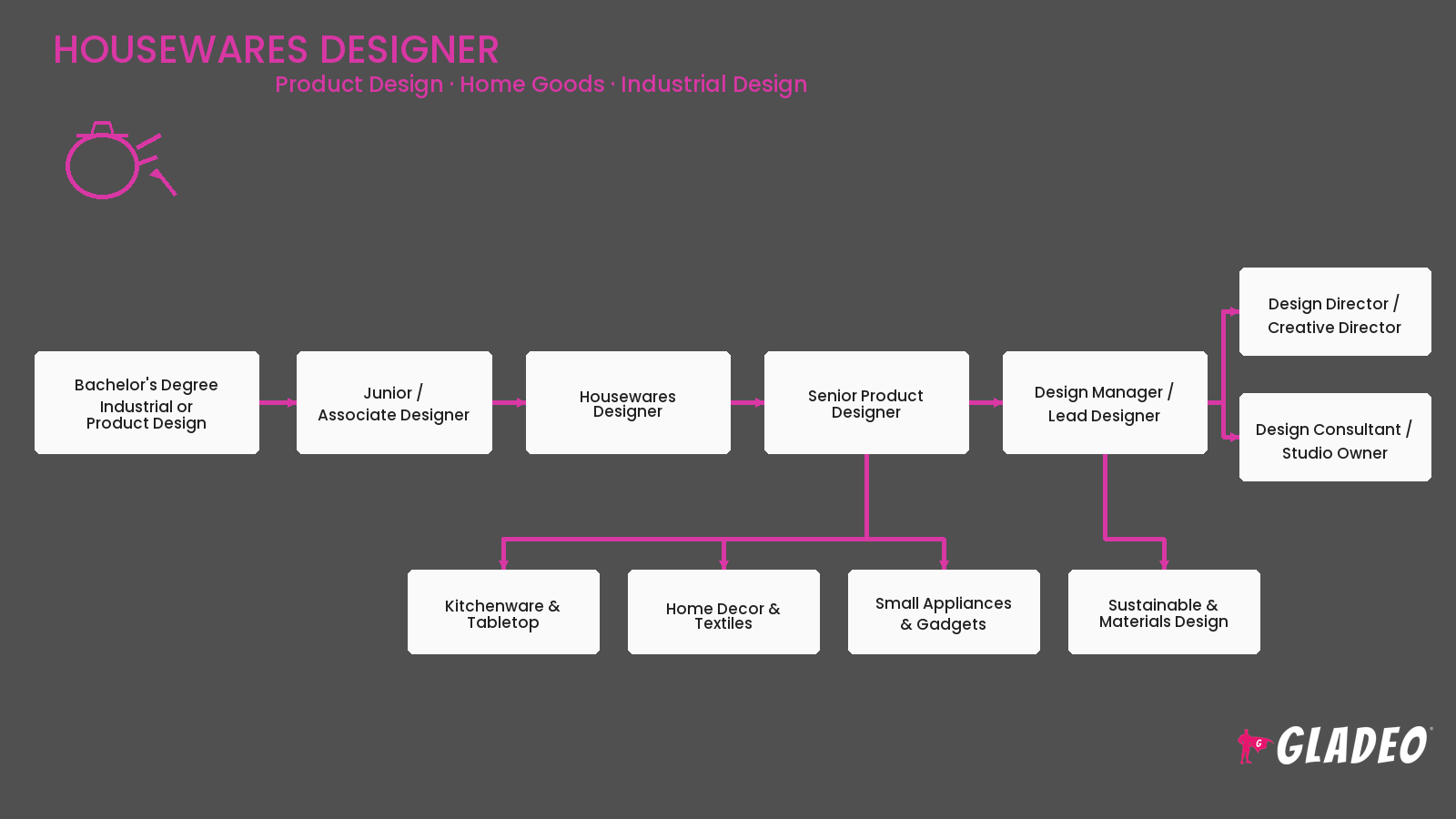
Housewares Designers typically pursue degrees in industrial design, product design, or related fields where they learn about design principles, materials, and manufacturing processes. Specialized courses in ergonomics and sustainability are highly beneficial.
Students can take courses in relevant subjects such as:
- Industrial Design
- Product Development and Prototyping
- Computer-Aided Design (CAD)
- Materials Science
- Ergonomics and Human Factors
- Sustainability in Design
- Sketching and Visual Communication
- Manufacturing Processes
- Marketing and Consumer Behavior
- 3D Modeling and Rendering
Hands-on experience through internships, design competitions, and personal projects is crucial. Building a strong portfolio showcasing creative and functional designs helps gain entry into the industry. Many designers continue learning on the job to stay current with new materials and technologies.
- Take art and design classes to develop creativity and drawing skills
- Enroll in technology and computer classes focusing on CAD software
- Join clubs or workshops related to design, engineering, or crafts
- Participate in science and math courses to understand materials and processes
- Build small projects or prototypes to practice problem-solving
- Seek internships or volunteer with local designers or manufacturers
- Attend career fairs and design expos to learn about the field
- Develop communication skills through presentations and group projects
- Create a digital portfolio of your design work
- Explore sustainability and environmental science classes to understand eco-friendly design
- Learn about business basics to appreciate product marketing and sales
- Take part in competitions that challenge your design and innovation skills
- Choose programs with strong industrial or product design curricula
- Look for schools offering hands-on labs and access to prototyping tools
- Check if the program includes internships or industry partnerships
- Evaluate faculty experience in consumer product design
- Ensure courses cover sustainability and new material technologies
- Seek opportunities to work on real-world design projects
- Find schools with modern CAD and 3D modeling software
- Look for programs that teach business and marketing aspects of design
- Consider programs that emphasize teamwork and collaboration
- Check for access to workshops and maker spaces
- Find schools with strong alumni networks in product design
- Look for opportunities to participate in design competitions and exhibitions
- Build a portfolio showcasing diverse houseware designs and prototypes
- Apply for internships or entry-level design assistant roles at consumer goods companies
- Network with professionals via design events and social media platforms like LinkedIn
- Attend trade shows focused on housewares and kitchen products
- Prepare to discuss your design process and problem-solving approach in interviews
- Learn basic CAD and 3D modeling software to demonstrate technical skills
- Seek freelance or contract work to gain real-world experience
- Volunteer to assist in product testing or user research projects
- Ask for feedback to improve your designs and professional skills
- Stay updated on industry trends and new materials
- Create a personal website or online portfolio
- Connect with design mentors or join professional organizations
- Develop expertise in specific product categories such as kitchenware or small appliances
- Gain project management experience to lead design teams
- Build strong relationships with manufacturing and marketing departments
- Pursue advanced skills in sustainable and smart product design
- Expand your network within the consumer goods industry
- Take leadership roles in design projects and company initiatives
- Stay ahead of technology trends like AR and rapid prototyping
- Consider additional education or certifications to specialize or manage design departments
Websites:
- Industrial Designers Society of America (IDSA) - idsanet.org
- American Society of Furniture Designers - asfd.com
- Core77 - core77.com
- Design Milk - design-milk.com
- Dezeen - dezeen.com
- Behance - behance.net
- Houzz - houzz.com
- Material ConneXion - materialconnexion.com
- The Dieline - thedieline.com
- Smart Design - smartdesignworldwide.com
- Kickstarter - kickstarter.com (for design projects)
- The Housewares Design Council (specific to housewares)
- Sustainable Furnishings Council - sustainablefurnishings.org
- DesignBoom - designboom.com
Books:
- The Design of Everyday Things by Don Norman
- Sketching: Drawing Techniques for Product Designers by Koos Eissen and Roselien Steur
- Materials and Design: The Art and Science of Material Selection in Product Design by Michael F. Ashby and Kara Johnson
- Product Design and Development by Karl T. Ulrich and Steven D. Eppinger
- Designing Interactions by Bill Moggridge
If a career as a Housewares Designer doesn’t work out, there are many related fields that use similar creativity and technical skills. These alternatives still allow you to design products, solve problems, and make a tangible impact.
- Industrial Designer
- Interior Designer
- Graphic Designer
- User Experience (UX) Designer
- Packaging Designer
- Manufacturing Engineer
- Product Development Specialist
- Materials Scientist
- Marketing Specialist for Consumer Goods
- Sustainability Consultant
Newsfeed

Featured Jobs
Online Courses and Tools