





Spotlights
Clinical Informatics Specialist, Health Information Analyst, Medical Informatics Coordinator, Healthcare Data Analyst, Health IT Specialist, Clinical Data Manager, Health Information Systems Analyst, Medical Records Specialist, EHR Specialist, Healthcare Technology Consultant, Health Data Coordinator, Health Information Manager
Imagine walking into a hospital where every patient's medical history, test results, and treatment plans are organized, accessible, and secure — all thanks to the behind-the-scenes work of Health Informatics Specialists. These professionals ensure that healthcare providers have the right information at the right time to make life-saving decisions.
Health Informatics Specialists design, manage, and optimize healthcare information systems that collect and analyze patient data. They collaborate closely with doctors, nurses, IT teams, and administrators to troubleshoot system issues, implement electronic health records (EHRs), and analyze data trends that improve patient care. Their daily work includes reviewing data accuracy, training staff on software, and ensuring compliance with healthcare regulations.
Using specialized software, databases, and data analytics tools, Health Informatics Specialists transform complex medical data into clear, actionable insights. Their role is vital for improving patient outcomes, streamlining hospital operations, and supporting medical research, making healthcare smarter and more efficient.
- Knowing your work directly supports better patient care and safety.
- Solving complex problems that improve how healthcare information flows.
- Collaborating with diverse healthcare and tech professionals.
- Watching healthcare providers use systems you helped create to save lives.
Working Schedule
Health Informatics Specialists usually work full-time in hospitals, clinics, or healthcare organizations. Most have regular business hours, but some may work evenings or weekends during system updates or to troubleshoot urgent issues. Many work in quiet, office-like environments, often with access to computers and collaborative spaces. Freelance or consulting roles also exist, offering flexibility but sometimes requiring travel or remote work.
Typical Duties
- Manage and maintain electronic health record (EHR) systems.
- Analyze healthcare data to identify trends and improve patient outcomes.
- Train healthcare staff on new software and system updates.
- Collaborate with IT teams to implement new health information technologies.
- Ensure compliance with healthcare laws and data privacy regulations.
- Troubleshoot technical issues related to health informatics systems.
- Develop and update documentation and protocols for system use.
- Coordinate with clinical staff to customize software for workflow needs.
- Monitor data quality and integrity within health information systems.
- Support research by providing accurate health data reports.
- Participate in meetings to align informatics projects with organizational goals.
- Evaluate new technologies and recommend improvements.
Additional Responsibilities
- Stay updated on healthcare regulations and technology advances.
- Assist in budget planning for health IT projects.
- Facilitate communication between healthcare providers and IT developers.
- Conduct risk assessments related to health data security.
- Support disaster recovery planning for health information systems.
- Contribute to policy development on data management and sharing.
- Organize training sessions and workshops for continuous staff development.
- Lead or participate in quality improvement initiatives involving data.
Mornings often start by reviewing system performance reports and checking for any overnight issues or alerts about data errors.
Midday involves meetings with clinical staff to gather feedback on current systems and provide hands-on training for new software features or updates.
Afternoons are typically spent analyzing patient data trends, preparing reports for management, and collaborating with IT teams to plan system improvements or troubleshoot problems before deadlines.
Soft Skills
- Problem-solving mindset
- Strong communication skills
- Attention to detail
- Collaboration and teamwork
- Adaptability to new technologies
- Critical thinking
- Patience and persistence
- Empathy towards healthcare providers' needs
- Time management
- Organizational skills
- Curiosity and willingness to learn
- Confidentiality and ethical judgment
Technical Skills
- Proficiency with electronic health record (EHR) systems
- Data analysis and visualization tools
- Knowledge of healthcare regulations (HIPAA, etc.)
- Database management
- Basic programming or scripting (SQL, Python)
- Understanding of system integration
- Health information standards (HL7, FHIR)
- Project management software
- Troubleshooting and technical support
- Cybersecurity basics
- Clinical Informatics Specialist: Focuses on integrating informatics directly into patient care settings to support clinicians.
- Health Data Analyst: Specializes in analyzing large health datasets to find trends and insights.
- Health IT Consultant: Advises healthcare organizations on selecting and implementing technology solutions.
- Medical Records Manager: Oversees the management and security of patient records.
- EHR Implementation Specialist: Leads the rollout and customization of electronic health record systems.
- Research Informatics Specialist: Supports clinical research through data management and analysis.
- Public Health Informatics Specialist: Works with public health data to track trends and improve population health.
- Health Information Privacy Officer: Ensures compliance with laws protecting patient data privacy.
- Hospitals and Medical Centers
- Clinics and Physician Offices
- Health Insurance Companies
- Public Health Agencies
- Medical Research Institutions
- Healthcare IT Companies
- Government Health Departments
- Nonprofit Healthcare Organizations
- Pharmaceutical Companies
- Universities and Training Centers
- Health Data Analytics Firms
- Consulting Firms specializing in Healthcare
Health Informatics Specialists often face pressure to maintain error-free data systems because inaccuracies can impact patient safety. They must juggle multiple projects and tight deadlines, especially during software upgrades or audits.
Work hours are generally standard but can extend during emergencies, system rollouts, or when troubleshooting urgent technical issues. The role requires mental focus and patience to handle complex systems and sensitive information.
Sacrifices may include occasional weekend or evening work and staying current with rapidly evolving healthcare technologies and regulations. Balancing technical demands with communication across diverse teams can also be challenging but rewarding.
- Growing use of artificial intelligence and machine learning in healthcare data analysis.
- Increasing adoption of cloud-based health information systems.
- Focus on interoperability between different health IT systems.
- Rising importance of cybersecurity to protect patient data.
- Expansion of telehealth and remote patient monitoring technologies.
- Development of patient-centered data platforms and mobile apps.
- Greater use of predictive analytics for preventive care.
- Shift toward value-based care models requiring detailed data reporting.
- Emergence of blockchain technology for secure health records.
- Continuous updates to healthcare data privacy regulations.
Many Health Informatics Specialists loved puzzles, organizing information, and working with computers as kids. They often enjoyed problem-solving games, coding basics, or helping others with tech tools.
They showed an early interest in healthcare topics or technology, sometimes volunteering in clinics or tinkering with software. Curiosity about how systems work and a desire to make a positive impact on people's health often stood out.
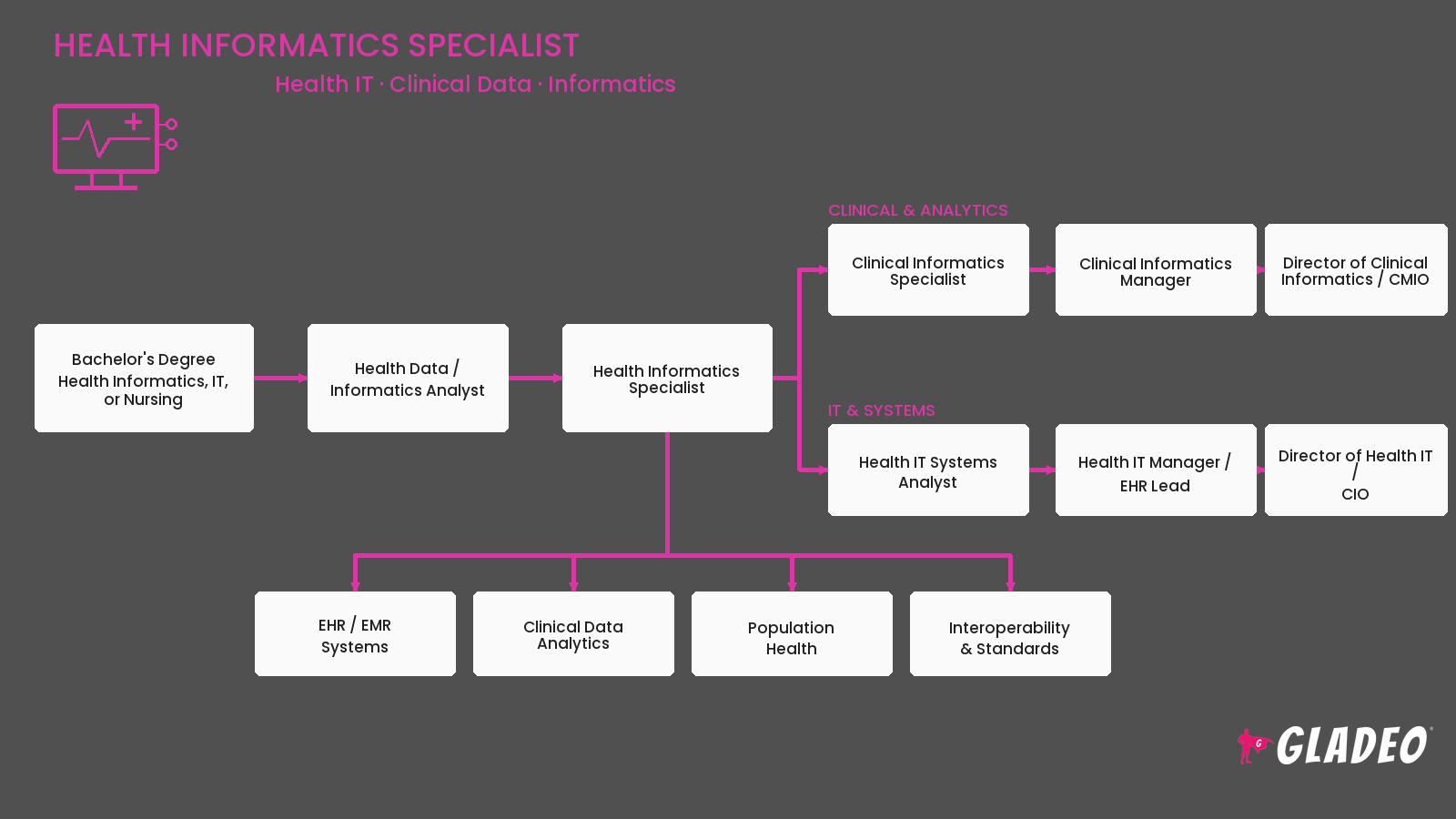
Becoming a Health Informatics Specialist typically involves a blend of healthcare knowledge and information technology skills. Many pursue degrees in health informatics, health information management, computer science, or related fields. Specialized certificate programs and training in electronic health records and data analytics are also common paths.
Students can take courses in relevant subjects such as:
- Biology or Anatomy
- Health Science
- Computer Science Fundamentals
- Information Technology
- Data Analysis and Statistics
- Healthcare Law and Ethics
- Medical Terminology
- Database Management
- Programming Basics (e.g., Python, SQL)
- Project Management
Hands-on experience is crucial, so internships or practicums in healthcare settings help build real-world skills. Developing a strong portfolio of projects and obtaining certifications in health IT systems can boost job prospects. On-the-job training continues to play a big role as technologies evolve rapidly.
- Take advanced math and science courses to build analytical skills.
- Join computer clubs or coding camps to develop technical abilities.
- Volunteer or intern in healthcare environments to gain exposure.
- Learn about healthcare careers through job shadowing.
- Practice using data analysis tools or software.
- Develop strong communication and teamwork skills through group projects.
- Explore certifications in Microsoft Office and basic programming.
- Attend health or tech-related workshops or seminars.
- Focus on writing and documentation skills.
- Research colleges offering health informatics or health IT programs.
- Look for programs accredited by health informatics or health information management bodies.
- Choose schools with strong connections to local healthcare providers for internships.
- Ensure curriculum covers healthcare regulations like HIPAA.
- Check if the program offers hands-on training with EHR software.
- Evaluate faculty expertise in both healthcare and IT.
- Consider online programs that provide flexibility.
- Look for opportunities to learn data analytics and programming.
- Seek programs with strong career support and job placement rates.
- Check for certification preparation included in coursework.
- Find programs that emphasize soft skills like communication and teamwork.
- Build a strong resume highlighting relevant coursework and any internships.
- Create a portfolio demonstrating data projects or software experience.
- Apply for entry-level roles like Health Information Technician or Data Analyst in healthcare.
- Network with professionals at healthcare conferences or local meetups.
- Seek internships or volunteer roles to gain healthcare experience.
- Prepare for interviews by practicing technical and behavioral questions.
- Get certified in popular EHR systems or health IT standards.
- Stay current with healthcare technology news and trends.
- Ask for informational interviews with Health Informatics Specialists.
- Demonstrate a willingness to learn and adapt during interviews.
- Follow up promptly after interviews to show enthusiasm.
- Use social media like LinkedIn to connect with industry insiders.
- Pursue advanced certifications in health informatics or project management.
- Gain experience managing larger projects or teams.
- Build relationships with clinical leaders and IT departments.
- Stay updated on emerging health IT technologies and regulations.
- Develop expertise in data analytics and reporting tools.
- Seek leadership roles in quality improvement or compliance.
- Consider graduate degrees in health informatics or healthcare administration.
- Mentor junior staff and contribute to professional organizations.
Websites:
- American Medical Informatics Association (AMIA) - amia.org
- Healthcare Information and Management Systems Society (HIMSS) - himss.org
- Health Level Seven International (HL7) - hl7.org
- Office of the National Coordinator for Health Information Technology (ONC) - healthit.gov
- National Institutes of Health (NIH) - nih.gov
- Medical Group Management Association (MGMA) - mgma.com
- Project Management Institute (PMI) - pmi.org
- HealthIT Certification - healthitcertification.com
- Health Informatics Forum - healthinformaticsforum.com
- Association for Health Informatics Professionals (AHIP) - ahip.org
- Data Science Central - datasciencecentral.com
- HealthIT.gov Blog - blog.healthit.gov
- Society for Imaging Informatics in Medicine (SIIM) - siim.org
- Healthcare IT News - healthcareitnews.com
Books:
- Health Informatics: An Interprofessional Approach by Ramona Nelson and Nancy Staggers
- Biomedical Informatics: Computer Applications in Health Care and Biomedicine by Edward H. Shortliffe and James J. Cimino
- Health Information Management Technology: An Applied Approach by Nanette B. Sayles
- Clinical Informatics Board Review: Pass the Exam the First Time by Rocky Reston
- Data Analytics in Healthcare Research: Tools and Strategies by Chandan K. Reddy and Charu C. Aggarwal
If Health Informatics isn't quite the right fit, many related careers still blend healthcare and technology or focus on data and management.
- Health Information Technician
- Clinical Data Analyst
- Medical Records Technician
- Healthcare IT Support Specialist
- Quality Improvement Coordinator
- Biomedical Engineer
- Public Health Analyst
- Project Manager in Healthcare
- Data Scientist
- Healthcare Compliance Officer
Newsfeed

Featured Jobs
Online Courses and Tools