






Spotlights
Ecological Restoration Scientist, Habitat Ecologist, Environmental Restoration Specialist, Conservation Scientist, Restoration Ecologist, Wetlands Scientist, Biodiversity Specialist, Environmental Planner, Natural Resource Manager, Conservation Biologist, Ecosystem Analyst, Environmental Consultant
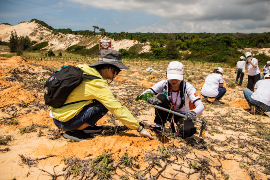
Imagine stepping into a once-thriving forest, wetland, or grassland that has been damaged by human activity or natural disasters, and playing a key role in bringing it back to life. Habitat Restoration Scientists make this vision a reality, transforming degraded ecosystems into vibrant, functioning habitats where wildlife can flourish and communities benefit from cleaner air, water, and natural beauty.
Habitat Restoration Scientists spend their days researching damaged environments, designing restoration plans, and working alongside ecologists, engineers, government agencies, and local communities to implement projects. Their work involves field surveys to assess soil, plants, and water quality, data analysis to understand ecosystem conditions, and on-site monitoring to ensure restoration efforts are successful. They coordinate with landowners, policymakers, and contractors to restore habitats that support endangered species, improve biodiversity, and mitigate environmental damage.
Using tools like GIS mapping software, environmental sensors, and data modeling techniques, Habitat Restoration Scientists apply scientific principles to develop effective restoration strategies. Their knowledge of plant biology, hydrology, and soil science enables them to select the right native species and restore natural processes. Their work not only heals ecosystems but also helps combat climate change and supports sustainable land use for future generations.
- Witnessing a damaged ecosystem transform into a thriving habitat filled with native plants and wildlife
- Knowing your work supports endangered species and promotes biodiversity
- Collaborating with communities to improve local environments and quality of life
- Contributing to solutions that address climate change and environmental challenges
Working Schedule
Habitat Restoration Scientists typically work a mix of office hours and fieldwork, often from Monday to Friday but sometimes on weekends during critical project phases or seasonal surveys. Their work environment varies from outdoor sites such as forests, wetlands, or rivers to indoor offices or labs where they analyze data and prepare reports. Many work for government agencies, nonprofits, or consulting firms, with some balancing multiple projects and tight deadlines that require flexibility and occasional overtime.
Typical Duties
- Conduct field assessments to evaluate habitat conditions and identify environmental damage
- Collect soil, water, and vegetation samples for laboratory analysis
- Develop restoration plans that outline goals, methods, timelines, and budgets
- Use GIS and mapping software to analyze land use and habitat features
- Coordinate with government agencies, community groups, and contractors to implement restoration projects
- Monitor restoration sites regularly to track progress and adapt plans as needed
- Prepare scientific reports, grant proposals, and presentations to communicate findings and secure funding
- Advise policymakers and land managers on best practices for habitat conservation and restoration
- Ensure compliance with environmental regulations and permits
- Study the impact of invasive species and develop control strategies
- Engage with local communities to educate and involve them in restoration efforts
- Analyze data to measure success and ecological improvements over time
Additional Responsibilities
- Stay updated on environmental laws, policies, and scientific research
- Participate in conferences, workshops, and professional development
- Train and supervise field technicians and volunteers
- Collaborate with multidisciplinary teams including engineers, hydrologists, and wildlife biologists
- Assist in grant writing and fundraising for restoration projects
- Manage budgets and schedules for multiple projects
- Promote public awareness through outreach and education programs
In the morning, a Habitat Restoration Scientist reviews recent data from field sensors and satellite imagery to assess the health of a restoration site. They plan the day’s fieldwork, preparing equipment and coordinating with team members or contractors for site visits.
Midday involves hands-on fieldwork: surveying plant growth, testing soil samples, and documenting changes in wildlife activity. They may adjust restoration techniques based on observations, ensuring the project stays on track toward ecological recovery.
Later in the afternoon, the scientist meets with local stakeholders, including community members and landowners, to discuss progress and address concerns. They compile data collected during the day, update project reports, and prepare materials for upcoming grant applications or regulatory reviews.
Soft Skills
- Strong communication skills to explain complex scientific concepts clearly
- Problem-solving to design effective restoration strategies
- Collaboration and teamwork across diverse disciplines and community groups
- Attention to detail for accurate data collection and analysis
- Adaptability to changing environmental conditions and project needs
- Patience and perseverance through long-term restoration processes
- Organizational skills to manage multiple projects and deadlines
- Critical thinking to evaluate restoration outcomes and improve methods
- Empathy for communities and wildlife affected by environmental degradation
- Public speaking to educate and engage stakeholders
- Leadership when guiding field teams and volunteers
- Curiosity and continuous learning mindset
Technical Skills
- GIS (Geographic Information Systems) mapping and spatial analysis
- Environmental data collection and sampling techniques
- Soil and water quality testing methods
- Ecological survey and monitoring protocols
- Statistical analysis and data interpretation software
- Remote sensing and aerial imagery analysis
- Restoration planning and project management tools
- Knowledge of native plant species and habitat requirements
- Environmental regulations and permitting processes
- Report writing and grant proposal development
- Wetlands Restoration Scientist: focuses on restoring marshes, swamps, and other wetland ecosystems
- Forest Restoration Scientist: specializes in reforestation and forest health improvement
- Riparian Restoration Scientist: works on restoring riverbanks and stream habitats
- Grassland Restoration Scientist: aims to revive native prairie and meadow ecosystems
- Urban Habitat Restoration Scientist: restores natural spaces within city environments
- Coastal Restoration Scientist: concentrates on beaches, dunes, and estuary recovery
- Invasive Species Specialist: targets removal and management of non-native plants and animals
- Wildlife Habitat Restoration Scientist: designs habitats specifically to support animal populations
- Environmental consulting firms
- Government environmental agencies
- Nonprofit conservation organizations
- Universities and research institutions
- Forestry companies
- Land trusts and preservation societies
- Wildlife refuges and national parks
- Water resource management agencies
- Agricultural extension services
- Renewable energy companies with environmental teams
- Community-based environmental groups
- Environmental advocacy organizations
Habitat Restoration Scientists often face pressure to meet project deadlines and budgets while ensuring ecological goals are met. This can mean balancing scientific rigor with practical constraints and regulatory requirements.
Work hours can be irregular, especially during field seasons when weather conditions or seasonal cycles dictate timing. Long days outdoors in sometimes challenging environments are common, requiring physical stamina and resilience.
The work also demands patience, as ecological restoration is a slow process and results may take years to fully manifest. Scientists must be prepared for setbacks, ongoing monitoring, and adapting plans as conditions change.
- Increased use of drone technology for aerial habitat assessment and monitoring
- Advances in GIS and remote sensing improving precision in mapping and analysis
- Growing emphasis on climate change resilience in restoration planning
- Integration of traditional ecological knowledge from Indigenous communities
- Development of native plant nurseries to supply restoration projects
- Use of bioengineering techniques to stabilize soils and waterways
- Expansion of urban habitat restoration to support biodiversity in cities
- Focus on ecosystem services such as carbon sequestration and water purification
- Collaboration across disciplines to address complex environmental challenges
- Greater public involvement through citizen science and community partnerships
Many Habitat Restoration Scientists were fascinated by nature from a young age, spending time outdoors exploring forests, streams, and wildlife. They often enjoyed activities like hiking, gardening, or volunteering for environmental causes.
Early interests in science, especially biology and earth sciences, combined with curiosity about how ecosystems work, often sparked their passion. They might have participated in school clubs focused on ecology or conservation, or engaged in citizen science projects.
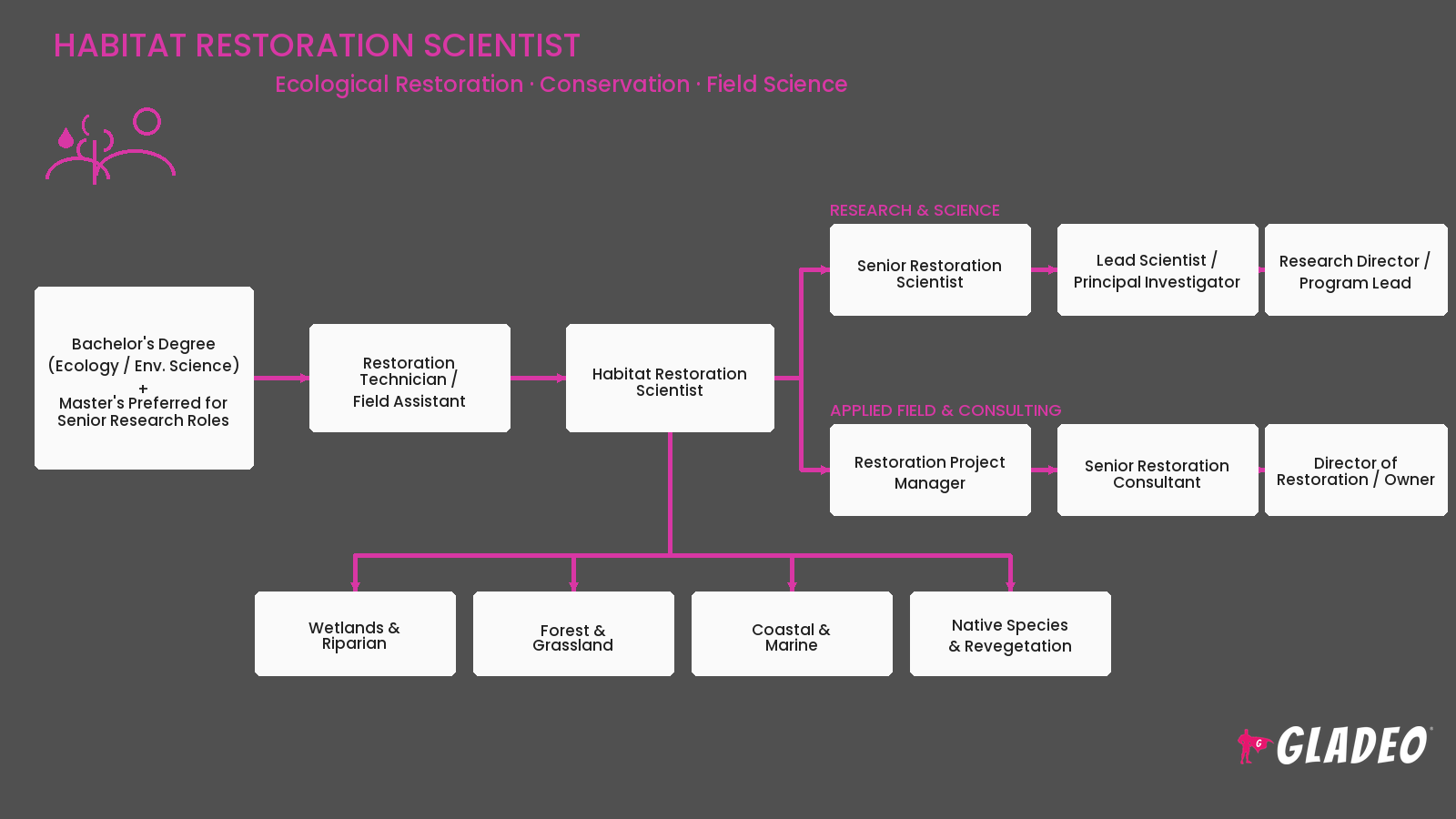
Most Habitat Restoration Scientists pursue a bachelor’s degree in environmental science, ecology, biology, natural resource management, or a related field. Advanced degrees can enhance opportunities for leadership roles and specialized research.
Students can take courses in relevant subjects such as:
- Ecology and Ecosystem Science
- Soil Science
- Hydrology and Water Resources
- Botany and Plant Identification
- Environmental Chemistry
- GIS and Spatial Analysis
- Environmental Policy and Law
- Wildlife Biology
- Statistics and Data Analysis
- Restoration Ecology
Hands-on experience through internships, fieldwork, and research projects is vital to build practical skills. Many scientists develop strong portfolios showcasing restoration work and data analysis. On-the-job training and continued education help keep up with evolving technologies and environmental challenges.
- Take advanced science courses such as biology, chemistry, and environmental science
- Join environmental or science clubs to gain practical experience
- Participate in community cleanups, tree planting, or local restoration projects
- Develop skills in computer applications, especially mapping software
- Volunteer for citizen science or habitat monitoring programs
- Attend science fairs and present ecological research
- Seek internships or summer programs with environmental organizations
- Build strong communication and writing skills through school projects
- Explore online courses in GIS and ecology
- Connect with mentors or professionals in environmental fields
- Develop teamwork and leadership skills through group activities
- Stay informed about current environmental issues and policies
- Choose programs with strong fieldwork components and lab facilities
- Look for faculty involved in restoration research or projects
- Ensure courses cover ecology, soil science, hydrology, and GIS
- Seek opportunities for internships with government or nonprofit groups
- Consider programs that integrate policy and science education
- Check if programs offer access to native plant nurseries or restoration sites
- Look for partnerships with local land trusts or conservation organizations
- Verify availability of research assistant positions
- Assess the program’s emphasis on sustainability and climate resilience
- Find programs encouraging community engagement and outreach
- Confirm access to modern data analysis and mapping software
- Explore certifications in environmental compliance or project management
- Apply for internships with environmental agencies or NGOs focused on restoration
- Build a portfolio of fieldwork reports, GIS maps, and data analyses
- Network with professors, professionals, and through environmental conferences
- Seek entry-level roles like field technician, environmental assistant, or research aid
- Volunteer for citizen science projects and habitat restoration events
- Develop proficiency with GIS and environmental monitoring equipment
- Prepare a resume highlighting scientific coursework and hands-on experience
- Practice interviewing with focus on problem-solving and teamwork examples
- Stay current on environmental regulations and restoration techniques
- Create an online presence showcasing your work and passion for habitat restoration
- Join professional organizations to access job listings and mentorship
- Consider temporary or seasonal work to gain diverse ecosystem experience
- Master advanced GIS and data modeling skills to lead complex projects
- Develop expertise in environmental policy and grant writing
- Build strong relationships with government agencies and community leaders
- Pursue graduate studies or certifications in restoration ecology or environmental management
- Take on project management responsibilities to oversee budgets and teams
- Publish research or case studies to establish professional credibility
- Lead outreach programs to expand community engagement
- Seek leadership roles in professional environmental organizations
Websites:
- Society for Ecological Restoration (ser.org)
- Ecological Society of America (esa.org)
- National Wildlife Federation (nwf.org)
- Environmental Protection Agency - Restoration Resources (epa.gov)
- US Fish and Wildlife Service (fws.gov)
- Conservation International (conservation.org)
- American Society of Landscape Architects - Ecological Planning (asla.org)
- Restoration Ecology Journal (restorationecologyjournal.org)
- The Nature Conservancy (nature.org)
- International Union for Conservation of Nature (iucn.org)
- Environmental Defense Fund (edf.org)
- National Oceanic and Atmospheric Administration - Habitat Restoration (noaa.gov)
- Society of Wetland Scientists (wetlands.org)
- Land Trust Alliance (landtrustalliance.org)
Books:
- Restoration Ecology: The New Frontier by Jelte van Andel and James Aronson
- Ecological Restoration by Susan M. Galatowitsch
- Foundations of Restoration Ecology by Donald A. Falk, Margaret A. Palmer, and Joy B. Zedler
- The Ecology and Management of Wetlands by William J. Mitsch and James G. Gosselink
- Bringing Nature Home by Douglas W. Tallamy
If habitat restoration isn’t the perfect fit, many related careers also make an impact on the environment and community health.
- Environmental Scientist
- Wildlife Biologist
- Forestry Technician
- Conservation Officer
- Environmental Educator
- Urban Planner with a focus on green spaces
- Agricultural Scientist
- Water Resource Specialist
- Climate Change Analyst
- Park Ranger
Newsfeed

Featured Jobs
Online Courses and Tools