





Spotlights
Landscape Technician, Grounds Maintenance Worker, Lawn Care Specialist, Turf Manager, Horticulture Technician, Landscape Laborer, Garden Caretaker, Park Maintenance Worker, Grounds Supervisor, Turfgrass Specialist, Grounds Maintenance Technician, Landscape Assistant
Imagine walking through a beautifully maintained park, a peaceful campus, or a vibrant sports field where every blade of grass and blooming flower has been carefully tended to create an inviting and safe environment. Groundskeepers make these spaces come alive, making outdoor areas welcoming and functional for everyone.
Groundskeepers work daily to maintain lawns, gardens, and outdoor landscapes. They mow grass, trim shrubs, plant flowers, and keep walkways clear, often collaborating with landscape designers, facility managers, and arborists. Their work ensures that public spaces, schools, corporate campuses, and sports complexes look their best and are safe for visitors.
Using tools like mowers, trimmers, irrigation systems, and fertilizers, groundskeepers apply their knowledge of plant care and soil health to keep landscapes thriving. Their role is crucial in preserving the natural beauty and usability of outdoor spaces, contributing to community well-being and environmental health.
- Creating beautiful, green spaces that people enjoy every day
- Working outdoors and connecting with nature
- Seeing immediate, visible results from your hard work
- Contributing to community spaces that promote relaxation and recreation
Working Schedule
Groundskeepers typically work full-time, often starting early in the morning to take advantage of daylight. The job is mostly outdoors, requiring physical activity in various weather conditions. Many groundskeepers work year-round, though hours can vary by season, and some positions may require weekend or holiday work, especially in parks or sports venues.
Typical Duties
- Mowing lawns and trimming hedges to maintain neat landscapes
- Planting and caring for flowers, shrubs, and trees
- Operating lawn care equipment such as mowers, trimmers, and leaf blowers
- Watering plants and managing irrigation systems
- Applying fertilizers, pesticides, and herbicides safely
- Removing trash, debris, and fallen leaves from grounds
- Maintaining pathways, fences, and outdoor furniture
- Monitoring plant health and reporting issues to supervisors
- Preparing soil by tilling and aerating for planting
- Assisting with snow removal and salting in winter months
Additional Responsibilities
- Monitoring and maintaining equipment for safety and efficiency
- Reporting pest infestations or plant diseases
- Assisting with landscape renovation or installation projects
- Following safety protocols and environmental regulations
- Coordinating with other maintenance or facilities staff
- Educating the public or team members about proper outdoor care
- Keeping accurate records of maintenance activities
- Responding to emergency repairs or weather-related damage
In the morning, groundskeepers begin by inspecting the assigned area, planning the day's tasks based on weather and priorities. They check equipment and prepare materials needed for mowing, trimming, or planting.
Midday involves hands-on work like cutting grass, pruning bushes, planting flowers, and watering. Groundskeepers often collaborate with supervisors or landscaping teams to address special projects or maintenance needs while ensuring safety on site.
Afternoons are for clean-up, equipment maintenance, and final inspections. Groundskeepers may also communicate with facility managers about upcoming work or problems detected during the day. Depending on the season, they might assist with winterizing plants or preparing for events.
Soft Skills
- Attention to detail
- Physical stamina and endurance
- Time management
- Teamwork and collaboration
- Communication skills
- Problem-solving
- Reliability and punctuality
- Adaptability to weather and conditions
- Patience and persistence
- Safety awareness
- Environmental responsibility
- Customer service orientation
Technical Skills
- Operation of lawn mowers and trimmers
- Knowledge of plant species and care
- Irrigation system management
- Use of fertilizers and pesticides safely
- Basic equipment maintenance
- Soil preparation and fertilization
- Landscape layout understanding
- Use of hand tools like pruners and shovels
- Snow and ice removal techniques
- Record-keeping and reporting
- Park Groundskeeper: Maintains public parks, focusing on safety and aesthetics for visitors.
- Golf Course Groundskeeper: Specializes in turf management and course preparation for playability.
- Sports Field Groundskeeper: Prepares and maintains fields for sports events, ensuring safe playing surfaces.
- Residential Groundskeeper: Works on private properties, managing lawns, gardens, and outdoor features.
- Municipal Groundskeeper: Employed by local government to care for public spaces and city properties.
- Botanical Garden Groundskeeper: Maintains specialized plant collections and visitor areas.
- Arboretum Groundskeeper: Focuses on tree care and preservation within curated collections.
- Cemetery Groundskeeper: Maintains burial grounds with respect and attention to detail.
- Municipal Parks and Recreation Departments
- Golf Courses and Country Clubs
- Private Landscaping Companies
- Educational Institutions (Schools and Universities)
- Sports Stadiums and Athletic Facilities
- Botanical Gardens and Arboretums
- Apartment Complexes and Residential Communities
- Cemeteries and Memorial Parks
- Corporate Campuses
- Resort and Hotel Grounds
- Government Facilities and Military Bases
- Hospitals and Healthcare Campuses
Groundskeeping can be physically demanding, requiring long hours of standing, bending, and lifting outdoors in all kinds of weather. The work often involves repetitive tasks that need focus and consistency to maintain high standards.
Many groundskeepers face pressure to complete tasks before public events or seasonal deadlines, requiring strong time management and the ability to work efficiently under timelines. Safety is always a top priority to prevent equipment accidents or exposure to chemicals.
The job may require sacrifices such as working early mornings, weekends, or holidays, especially in parks or sports venues. Additionally, groundskeepers must be prepared to handle unexpected challenges like storm damage or pest outbreaks, which can disrupt planned schedules.
- Increased use of eco-friendly and organic lawn care products
- Integration of smart irrigation and water-saving technologies
- Growing demand for sustainable and native plant landscaping
- More emphasis on safety gear and chemical handling training
- Use of battery-powered and electric lawn equipment to reduce emissions
- Rising popularity of xeriscaping to conserve water
- Advancements in turfgrass science for sports fields
- Increased focus on biodiversity and pollinator-friendly landscapes
- Growth in urban green spaces and community gardens
- Technology for drone monitoring and landscape mapping
Many future groundskeepers enjoy spending time outdoors as kids, often helping with gardening or lawn care at home. They may have a natural curiosity about plants, insects, and how nature works.
Hands-on activities like building forts, landscaping small garden patches, or volunteering in community clean-up projects also hint at an interest in groundskeeping, showing early signs of an appreciation for nature and physical work.
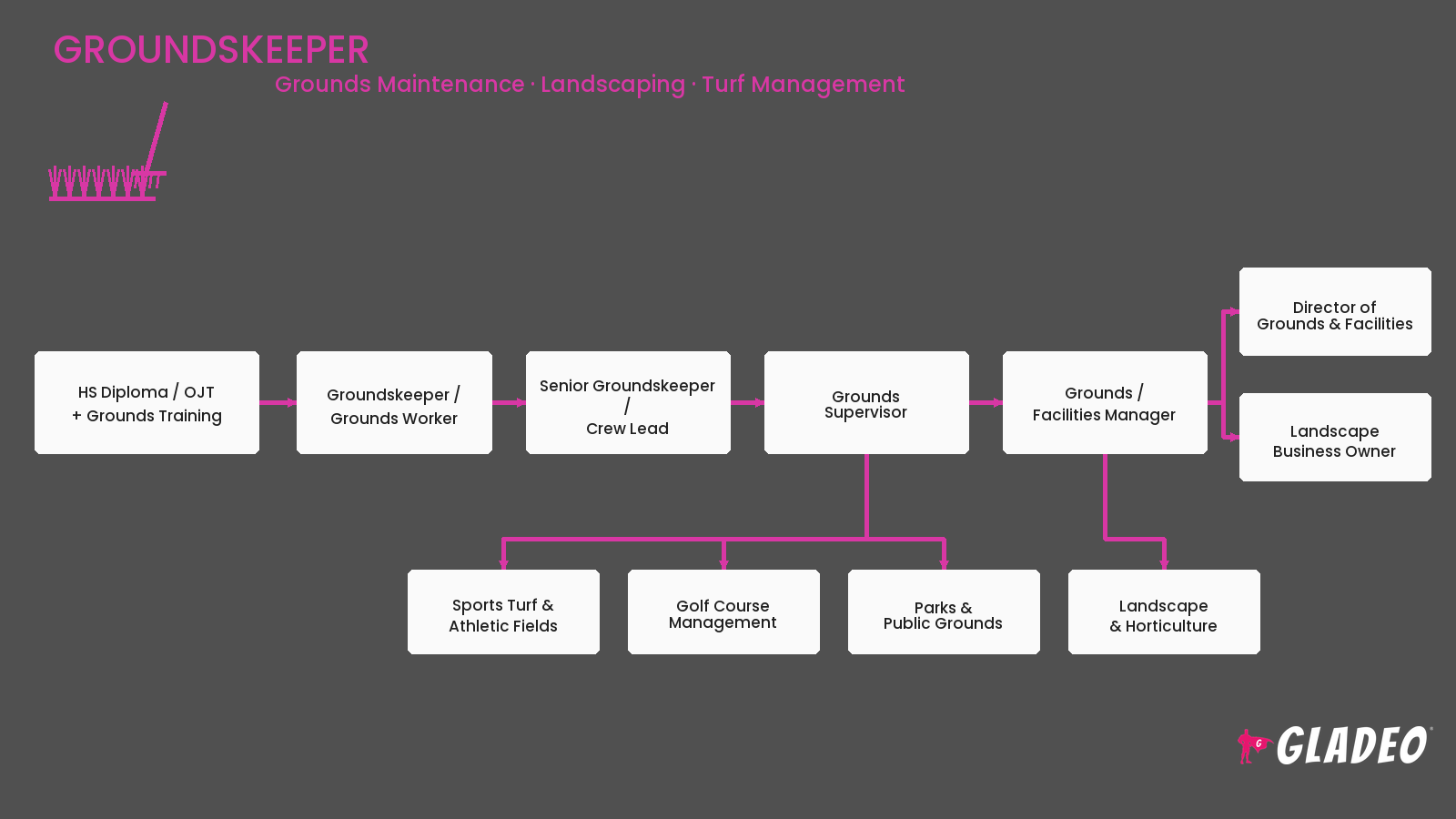
Most groundskeepers enter the field with a high school diploma or equivalent, though specialized training in horticulture, landscaping, or turf management can be very helpful. Many learn on the job, gaining skills through apprenticeships or vocational programs.
Students can take courses in relevant subjects such as:
- Horticulture
- Botany and Plant Science
- •Soil Science
- Landscape Design Basics
- Agricultural Science
- Environmental Science
- Pest Management
- Irrigation Technology
- Equipment Operation and Maintenance
- Safety and First Aid
Hands-on experience through internships, summer jobs, or volunteering is crucial in building practical skills and a professional network. Some groundskeepers pursue certifications in pesticide application or landscape management to advance their careers.
- Take biology and environmental science classes to understand plant health and ecosystems.
- Enroll in vocational or technical programs focused on landscaping or agriculture.
- Join school clubs related to gardening or environmental stewardship.
- Look for summer jobs or internships with landscaping companies or parks departments.
- Attend workshops or community college courses on equipment operation.
- Build a portfolio of projects like garden designs or landscaping before-and-afters.
- Develop physical fitness through sports or outdoor activities.
- Learn about safety and chemical handling through training programs.
- Explore local community garden volunteer opportunities.
- Consider dual-enrollment classes related to plant sciences or agriculture.
- Choose programs with strong hands-on training and equipment use.
- Look for courses covering plant identification and care.
- Seek programs that teach safe pesticide and fertilizer application.
- Find schools with partnerships to local landscaping businesses for internships.
- Ensure the curriculum includes irrigation and soil management.
- Pick programs that cover environmental sustainability practices.
- Check if there are opportunities for certification preparation.
- Look for instructors with real-world groundskeeping experience.
- Confirm access to modern landscaping tools and technology.
- Choose programs offering career placement or job support services.
- Apply for entry-level groundskeeping or landscaping assistant positions.
- Volunteer in community parks or botanical gardens to gain experience.
- Build a simple portfolio with photos of landscaping or gardening projects.
- Obtain any required pesticide or equipment operation certifications.
- Network with local landscaping businesses or park maintenance teams.
- Practice equipment maintenance and safety skills.
- Prepare for physical labor with fitness and stamina building.
- Learn to read and follow detailed instructions for plant care.
- Seek feedback from supervisors and coworkers to improve skills.
- Demonstrate reliability by showing up on time and completing assigned tasks.
- Use online job boards and local classifieds to find openings.
- Attend job fairs focused on agriculture or landscaping careers.
- Gain expertise with specialized equipment and plant species.
- Pursue certifications in pesticide application or turf management.
- Build relationships with supervisors and landscape designers.
- Take on leadership roles like crew leader or supervisor.
- Expand knowledge of sustainable and advanced landscaping techniques.
- Develop skills in landscape design and project management.
- Seek opportunities to work on larger or more complex properties.
- Consider continuing education in horticulture or environmental science.
Websites:
- National Association of Landscape Professionals (landscapeprofessionals.org)
- American Society of Landscape Architects (asla.org)
- Professional Grounds Management Society (pgms.org)
- Green Industry Pros (greenindustrypros.com)
- Landscape Management Magazine (landscapemanagement.net)
- The Grounds Guys (thegroundsguys.com)
- Pesticide Educational Resources Collaborative (pesticideresources.org)
- Turfgrass Producers International (turffiles.ncsu.edu)
- Landscape Ontario (landscapeontario.com)
- Urban Land Institute (uli.org)
- International Society of Arboriculture (isa-arbor.com)
- Garden Writers Association (gardenwriters.org)
- Landscaping Network (landscapingnetwork.com)
- Better Homes & Gardens Gardening (bhg.com/gardening)
Books:
- The Grounds Maintenance Supervisor's Handbook by John C. Pair
- Handbook of Turfgrass Management and Physiology by David V. Waddington
- The Landscape Professional's Guide to Plants by Robert N. Trigiano
- Pesticide Application Compendium by the Pennsylvania State University
- Soil Science Simplified by Donald P. Franzmeier
If groundskeeping isn't the perfect fit or you want to explore related fields, there are many other careers that also involve working outdoors, caring for plants, or managing landscapes.
- Landscape Designer
- Arborist
- Park Ranger
- Horticulturist
- Urban Farmer
- Environmental Technician
- Agricultural Equipment Operator
- Golf Course Superintendent
- Nursery Worker
- Land Surveyor
Newsfeed

Featured Jobs
Online Courses and Tools