







Spotlights
Aging Life Care Manager, Elder Care Manager, Care Coordinator, Geriatric Care Coordinator, Senior Care Consultant, Case Manager for Older Adults, Eldercare Advisor, Aging Life Care Professional, Geriatric Social Worker, Senior Care Navigator, Elder Care Consultant, Geriatric Case Manager
When an aging parent starts forgetting to take their medication, or a family suddenly has to figure out whether Grandpa can still live alone, most people have no idea where to even start. Geriatric Care Managers are the calm, knowledgeable guides who step into that overwhelming moment and turn confusion into a plan, giving families back their peace of mind during one of the hardest transitions in life.
Geriatric Care Managers assess an older adult's physical health, mental health, living situation, and support needs, then build a personalized plan that might include home care, medical appointments, legal and financial resources, or a move to assisted living. They work closely with doctors, nurses, social workers, elder law attorneys, family members, and the older adults themselves, coordinating every moving piece so nothing falls through the cracks. Much of the job is relationship-driven: earning trust, listening carefully, and helping families navigate difficult decisions with compassion instead of panic.
Using care planning software, community resource databases, and their own deep knowledge of local healthcare and social service systems, Geriatric Care Managers connect families to the right help at the right time. Their work matters because aging is complicated, and having one trusted professional who understands the whole picture can mean the difference between a crisis and a smooth, dignified transition.
- Giving overwhelmed families a clear plan and a sense of relief during a stressful time
- Helping older adults maintain independence, dignity, and quality of life
- Building meaningful, trusting relationships with clients and their families
- Making a tangible difference in someone's daily life through thoughtful problem solving
Working Schedule
Geriatric Care Managers typically work full-time, though the schedule often includes some flexibility to accommodate client emergencies, family meetings in the evenings, or urgent hospital visits. Much of the work happens in the community, including client homes, hospitals, assisted living facilities, and doctors' offices, alongside time in an office for paperwork, planning, and phone calls. Many Geriatric Care Managers work for private care management agencies or run their own independent practice, while others are employed by hospitals, healthcare systems, or nonprofit senior service organizations.
Typical Duties
- Conducting in-home or in-facility assessments of an older adult's needs
- Developing individualized care plans covering health, safety, and daily living
- Coordinating medical appointments and communicating with healthcare providers
- Researching and recommending home care agencies, assisted living, or nursing facilities
- Connecting families with legal, financial, and insurance resources
- Monitoring a client's ongoing health and adjusting care plans as needs change
- Mediating family discussions and decisions about a loved one's care
- Advocating for clients during hospital stays or medical appointments
- Managing crisis situations such as falls, hospitalizations, or sudden health changes
- Maintaining detailed case notes and care documentation
- Educating families about diseases like dementia and what to expect
- Screening and supervising in-home caregivers or care aides
Additional Responsibilities
- Building relationships with local hospitals, physicians, and elder law attorneys
- Staying current on community resources, benefits programs, and eldercare regulations
- Providing emotional support and counseling to stressed family caregivers
- Assisting with long-distance caregiving coordination for out-of-town family members
- Reviewing and helping manage a client's bills and insurance claims when appropriate
- Conducting periodic home safety evaluations
- Facilitating support groups or educational workshops for caregivers
- Participating in professional development and continuing education
A Geriatric Care Manager's morning might start with a home visit to assess a new client, walking through their living space, asking about their daily routine, and noting any safety concerns like loose rugs or missed medications. From there, they might call the client's physician to get updated on a recent diagnosis or hospital discharge plan.
Midday often involves coordinating logistics: scheduling a home health aide, researching assisted living options that fit a family's budget and preferences, or meeting with an elder law attorney to understand a client's power of attorney documents. A Geriatric Care Manager might also join a family meeting, helping siblings who disagree about their parent's care come to a shared decision.
Afternoons might bring a crisis call, like a client who fell and was taken to the emergency room, requiring the care manager to advocate for them at the hospital and update the family. The day often ends with documentation, updating care plans, and planning follow-up visits, all while staying reachable in case a client's situation changes unexpectedly.
Soft Skills
- Empathy and genuine compassion for older adults and families
- Strong communication and active listening
- Patience, especially during emotional or high-conflict family conversations
- Problem solving and critical thinking under pressure
- Organizational skills and attention to detail
- Cultural sensitivity and respect for diverse family dynamics
- Discretion and professionalism with sensitive information
- Emotional resilience
- Ability to build trust quickly with clients and families
- Flexibility when plans and health conditions change suddenly
- Conflict mediation and negotiation
- Strong sense of advocacy for vulnerable clients
Technical Skills
- Knowledge of aging-related health conditions, including dementia and chronic illness
- Familiarity with Medicare, Medicaid, and long-term care insurance systems
- Understanding of local healthcare, legal, and social service resources
- Care planning and case management software
- Basic knowledge of elder law concepts like guardianship and power of attorney
- Home safety assessment skills
- Crisis management and emergency response coordination
- Record keeping and documentation for care plans and billing
- Understanding of assisted living, memory care, and nursing home levels of care
- Basic budgeting knowledge to help families plan for care costs
- Independent Aging Life Care Professional: Runs a private practice serving families directly
- Hospital-Based Care Manager: Coordinates discharge planning and transitions from hospital to home
- Dementia Care Specialist: Focuses on clients with Alzheimer's or other cognitive conditions
- Long-Distance Care Coordinator: Manages care for clients whose family lives far away
- Nonprofit Senior Services Coordinator: Connects older adults to community and government resources
- Financial and Benefits Care Manager: Specializes in helping families navigate insurance and benefits programs
- Transition Specialist: Focuses specifically on moves to assisted living or memory care communities
- Family Mediator and Care Consultant: Focuses on resolving family conflict around aging parents' care
- Private aging life care management practices
- Hospitals and healthcare systems
- Assisted living and memory care communities
- Home care and home health agencies
- Nonprofit senior service organizations
- Area Agencies on Aging
- Elder law firms
- Insurance and long-term care companies
- Hospice and palliative care organizations
- Faith-based community service organizations
- Government social service agencies
- Retirement communities and continuing care facilities
Geriatric Care Managers work with families during some of the most emotionally charged moments of their lives, which means the job demands steady emotional resilience. Families may be scared, grieving, or in conflict with one another, and the care manager has to stay calm, clear-headed, and compassionate even when tensions run high.
The work can be unpredictable. A client's health can change overnight, requiring an urgent hospital visit or a fast pivot in the care plan, and evenings or weekends sometimes get interrupted by a crisis call. Balancing multiple clients with very different, ever-changing needs requires excellent organization and the ability to prioritize quickly.
The role also asks for constant learning. Healthcare systems, insurance rules, and available community resources shift often, and Geriatric Care Managers have to stay current to give families accurate guidance. Emotional burnout is a real risk in this field, so many professionals build strong support systems and boundaries to sustain a long career helping others.
- Growing demand for care management as the aging population expands rapidly
- Increased use of telehealth for remote monitoring and virtual family meetings
- Rising interest in aging-in-place technology like medical alert systems and home sensors
- Greater focus on dementia and memory care specialization
- Expansion of care coordination software and digital care plans
- Growing need for long-distance caregiving support as families live farther apart
- Increased attention to caregiver burnout and support for family caregivers
- Rising integration of geriatric care management with healthcare and hospital systems
- Growing awareness of elder financial abuse and the care manager's advocacy role
- More diverse and culturally specific care options for aging communities
Many Geriatric Care Managers grew up close to grandparents or older relatives, often helping care for them or simply enjoying spending time listening to their stories. They tended to be natural helpers and organizers, the ones friends and family turned to when something needed to be figured out calmly.
Others found their path through volunteering at nursing homes, hospitals, or community centers, or through an early interest in psychology, healthcare, or social work. A strong sense of empathy paired with a practical, problem-solving mindset was often present long before the career itself.
Most Geriatric Care Managers hold a bachelor's degree in social work, nursing, psychology, gerontology, or a related field, and many pursue a master's degree in social work or nursing for greater responsibility and higher earning potential. Licensure requirements vary by state and by whether the professional is a licensed social worker or nurse, and many care managers also earn a certification specific to aging life care management after gaining direct experience in the field.
Students can take courses in relevant subjects such as:
- Introduction to Gerontology
- Social Work Practice and Theory
- Human Development Across the Lifespan
- Psychology of Aging
- Healthcare Systems and Public Policy
- Family Systems and Communication
- Medical Terminology
- Case Management and Care Coordination
- Ethics in Healthcare and Social Services
- Introduction to Nursing or Public Health
Hands-on experience is essential to this career. Internships or fieldwork placements in hospitals, nursing homes, or social service agencies give students direct exposure to the realities of elder care coordination. Volunteering with older adults, whether through hospice programs, senior centers, or community organizations, also builds practical skills and confirms interest in the field before committing to a graduate program or certification.
- Take psychology, sociology, and health science courses when available
- Volunteer at a nursing home, senior center, or hospice program
- Spend time with grandparents or older relatives to understand their daily challenges
- Join clubs focused on healthcare, social work, or community service
- Practice active listening and communication skills through peer counseling or mentoring programs
- Research social work or gerontology programs and their requirements
- Shadow a social worker, case manager, or healthcare professional
- Explore internships with Area Agencies on Aging or elder service nonprofits
- Take a psychology or human development course to understand aging processes
- Build organizational skills through leadership roles in clubs or part-time jobs
- Learn basic healthcare and insurance terminology through independent reading
- Practice patience and empathy in any role involving caregiving or customer service
- Accredited social work or nursing programs recognized by state licensing boards
- Strong fieldwork or internship placements with healthcare or aging services organizations
- Coursework specifically covering gerontology and aging-related health conditions
- Faculty with direct experience in geriatric care or case management
- Programs offering electives in dementia care, family systems, or healthcare policy
- Opportunities to pursue aging life care certification after graduation
- Strong connections to local hospitals, agencies, and elder law firms
- Support for licensing exam preparation
- Small class sizes that allow for mentorship and hands-on learning
- Career services that track job placement in healthcare and social services
- Flexible scheduling for students balancing work or caregiving responsibilities
- Evaluation of tuition costs and financial aid or scholarship availability
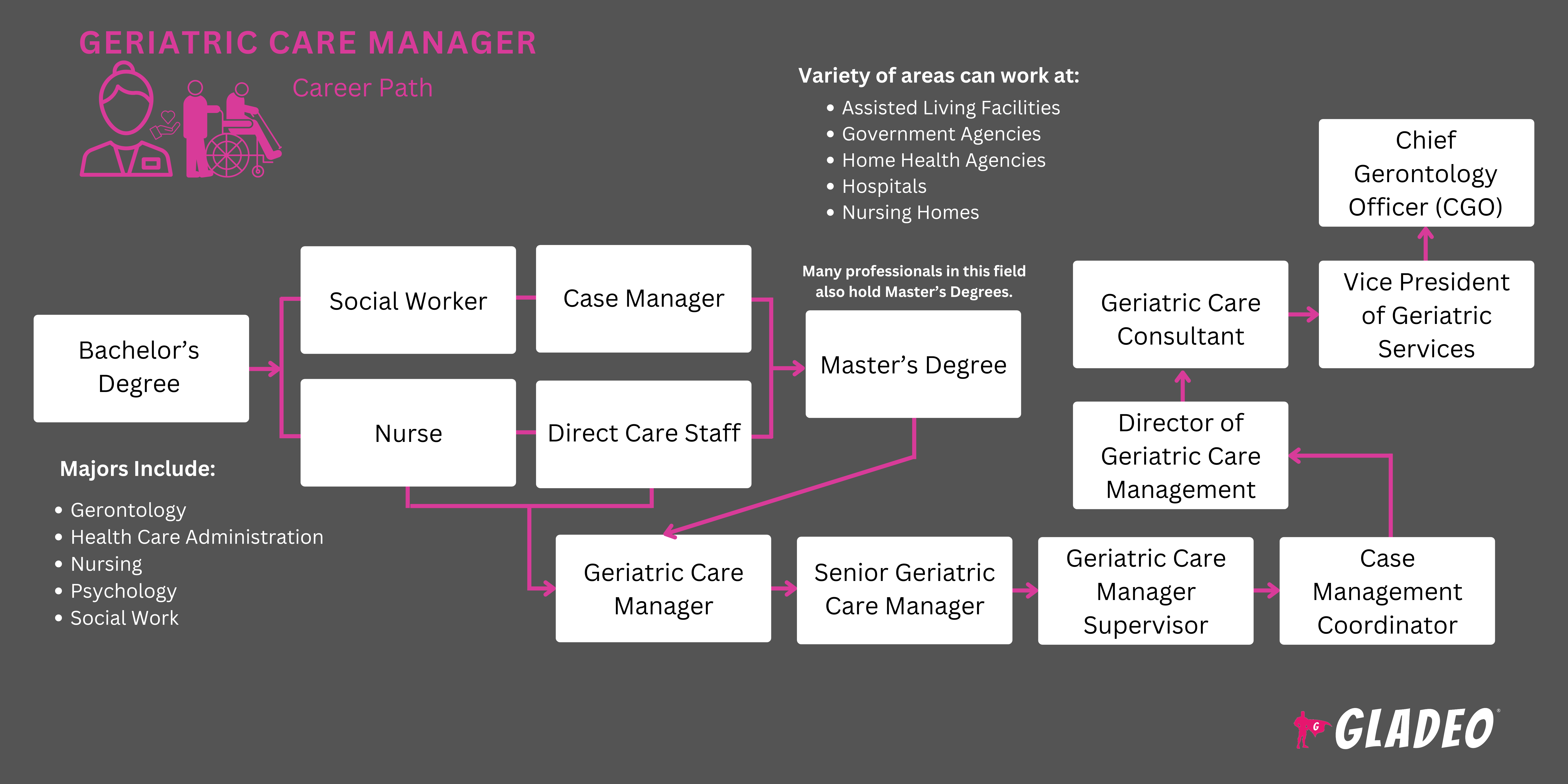
- Complete an internship or fieldwork placement in a hospital, nursing home, or social service agency
- Volunteer with older adults through hospice, senior centers, or community programs
- Apply for entry-level titles like Care Coordinator, Case Management Assistant, or Social Work Intern
- Earn your social work or nursing license as required by your state
- Pursue an aging life care management certification once eligible
- Search job boards through professional associations and healthcare employers
- Build a resume that highlights any direct experience working with older adults
- Network with social workers, nurses, and care managers through professional associations
- Practice discussing sensitive family situations calmly and professionally in interviews
- Seek mentorship from an experienced Geriatric Care Manager
- Be open to starting in a related role like hospital discharge planning to build experience
- Demonstrate strong organizational skills and compassion consistently
- Take on more complex cases involving dementia, family conflict, or crisis situations
- Pursue advanced certifications and continuing education in aging life care
- Build a strong referral network with physicians, attorneys, and healthcare facilities
- Develop a specialty area such as dementia care or long-distance caregiving
- Consider starting an independent practice after gaining substantial experience
- Build leadership skills to supervise other care managers or care coordinators
- Stay active in professional associations to learn about emerging best practices
- Mentor new care managers entering the field
Websites:
• Aging Life Care Association (ALCA) - aginglifecare.org
• National Association of Social Workers (NASW) - socialworkers.org
• Administration for Community Living - acl.gov
• National Institute on Aging - nia.nih.gov
• Family Caregiver Alliance - caregiver.org
• Alzheimer's Association - alz.org
• National Council on Aging - ncoa.org
• AARP - aarp.org
• American Society on Aging - asaging.org
• Eldercare Locator - eldercare.acl.gov
• National Academy of Elder Law Attorneys (NAELA) - naela.org
• Caregiver Action Network - caregiveraction.org
Books:
- Being Mortal by Atul Gawande
- The 36-Hour Day by Nancy L. Mace and Peter V. Rabins
- A Bittersweet Season by Jane Gross
- Handbook of Geriatric Care Management by Cathy Jo Cress
- Passages in Caregiving by Gail Sheehy
If you find that being a Geriatric Care Manager isn't the right fit, your skills in coordination, empathy, and healthcare knowledge transfer well to many related careers.
- Healthcare Social Worker
- Hospital Discharge Planner
- Hospice Care Coordinator
- Case Manager
- Community Health Worker
- Nurse Care Coordinator
- Senior Living Community Coordinator
- Patient Advocate
- Family Therapist
- Rehabilitation Counselor
Click here to download the infographic
Newsfeed

Featured Jobs
Online Courses and Tools