






Spotlights
Design Engineer, Designer, Industrial Designer, Mechanical Designer, Mold Designer, Product Design Engineer, Product Designer, Product Development Engineer, Sign Designer
Are you reading this while sitting on a chair or sofa? If so, take a second to think about where that piece of furniture came from!
At some point, someone designed that product you’re sitting on. In fact, somebody designed every piece of furniture you’ve ever seen or used. Most of us never think about Furniture Designers–but without them, we’d have no chairs, sofas, tables, cabinets, bookshelves, beds, outdoor furniture, office furnishings, or similar items.
Furniture Designers create and develop functional furniture pieces that are practical and visually appealing. They research trends, sketch designs, select materials, and oversee manufacturing to ensure final products meet intended designs. They might start with a conceptual sketch of a chair, create a digital 3D model, and then work with craftsmen to choose suitable materials and production techniques. During the design stage, they consider variables such as ergonomics, space efficiency, and style.
Though their efforts are rarely recognized by the public, Furniture Designers contribute significantly to our interior spaces and make our lives much easier!
- Expressing creativity through functional products
- Seeing product designs be used in everyday settings
- Opportunities to work with various materials and techniques
Working Schedule
Furniture Designers may work full-time or part-time in design studios, workshops, or manufacturing facilities. They must frequently collaborate with clients and other design professionals.
Typical Duties
- Research and analyze trends in furniture design, materials, and manufacturers
- Conduct market research to identify opportunities for new product lines and design improvements
- Create custom furniture designs tailored to specific spaces and unique client needs
- Create concept sketches for original designs
- Select appropriate materials, finishes, and colors
- Calculate material, labor, and production costs to develop pricing strategies
- Develop concepts further using furniture design software and CAD tools (such as AutoCAD, SketchUp, or SolidWorks) to produce 2D and 3D models featuring dimensions and other specifications
- Review designs with stakeholders
- Collaborate with sales and marketing teams to ensure design concepts align with market demands
- Work with craftsmen and manufacturers to develop prototypes.
Provide detailed assembly instructions and material lists - Ensure prototypes meet specifications, as well as safety, ergonomic, and quality standards
- Oversee the production process of approved designs. Perform quality control checks on finished products
- Present and market designs to potential clients and retailers
Additional Responsibilities
- Stay updated with industry trends and new materials
- Integrate sustainable practices and eco-friendly materials into design processes
- Engage in continuous learning to refine design and technical skills
- Negotiate with suppliers for high-quality materials and competitive pricing
- Provide after-sales support, including product care, maintenance, and repair guidance
- Attend trade shows and exhibitions
- Maintain a portfolio of work to attract new clients and opportunities
A chair needs to be more comfortable. A table needs to fit into a small apartment. A sofa needs to look stylish while remaining durable enough for everyday use. Furniture Designers solve these challenges by creating furniture that combines appearance, comfort, functionality, and practicality. They develop designs for homes, offices, hotels, restaurants, schools, and public spaces, using creativity, technical knowledge, and an understanding of materials and manufacturing processes to turn ideas into usable products.
A typical day might include:
- Researching furniture trends, interior design styles, consumer preferences, and emerging materials to develop new product ideas.
- Sketching concepts for chairs, tables, beds, sofas, cabinets, shelves, desks, and other furniture pieces.
- Creating detailed designs and 3D models using computer-aided design (CAD) and digital modeling software.
- Selecting materials such as wood, metal, glass, plastic, fabric, leather, and sustainable composites.
- Considering ergonomics, proportions, comfort, stability, durability, and safety when developing furniture designs.
- Building prototypes or scale models to test the appearance, structure, functionality, and comfort of new designs.
- Collaborating with engineers, interior designers, craftspeople, manufacturers, and suppliers to develop practical furniture products.
- Reviewing manufacturing techniques, production costs, material availability, and construction requirements.
- Presenting design concepts, renderings, material samples, and prototypes to clients, company executives, or production teams.
- Making adjustments to designs based on customer feedback, testing results, and manufacturing limitations.
- Visiting furniture factories, workshops, showrooms, and trade exhibitions to explore new products, materials, and production methods.
- Preparing technical drawings, measurements, specifications, and assembly instructions for manufacturing.
Soft Skills
- Artistic
- Attention to detail
- Client relations
- Communication skills
- Consumer-focus
- Creative
- Deductive reasoning
- Organizational skills
- Patience
- Problem-solving
- Resourcefulness
- Teamwork
- Time management
Technical Skills
- Ergonomics, functionality, and user experience in furniture design
- Knowledge of software related to:
- Analytics
- Computer-aided design
- Computer-aided manufacturing
- Development environment
- Financial analysis
- Graphics
- Materials, manufacturing processes, and construction techniques
- Problem-solving frameworks and lean product management
- Project management
- Technical drawing and modeling skills
- Residential Furniture Designer
- Commercial Furniture Designer
- Office Furniture Designer
- Outdoor Furniture Designer
- Luxury Furniture Designer
- Sustainable Furniture Designer
- Custom Furniture Designer
- Children's Furniture Designer
- Ergonomic Furniture Designer
- Upholstered Furniture Designer
- Cabinet and Storage Furniture Designer
- Industrial Furniture Designer
- Contemporary Furniture Designer
- Antique and Restoration Furniture Designer
- Modular Furniture Designer
- Architectural firms
- Custom furniture workshops
- Freelance or independent design studios
- Furniture manufacturing companies
- Interior design firms
- Retail stores
- Wholesale trade
Furniture must be visually pleasing, ergonomic, and durable because it gets used over and over, sometimes by multiple people. Thus, consumers expect companies to produce goods that will last.
Designers use a human-centered approach that puts consumer safety and needs first. In addition, they’re involved with quality assurance so products meet standards and are tested before hitting the market.
Meanwhile, furniture manufacturers are interested in keeping costs down, so designers must take this into account, too. The role requires balancing creativity with practicality, as well as managing time and budgets effectively.
Sustainability is a long-running trend in furniture design, with demand increasing for eco-friendly materials and production methods. Designers are also integrating smart features into many furniture products, blending functionality with technology to enhance user experience. Minimalism continues to be a popular aesthetic, so designers may frequently focus on clean lines, simplicity, and versatility.
Furniture Designers often have a passion for hands-on activities from a young age. They might have enjoyed drawing, building models, and woodworking.
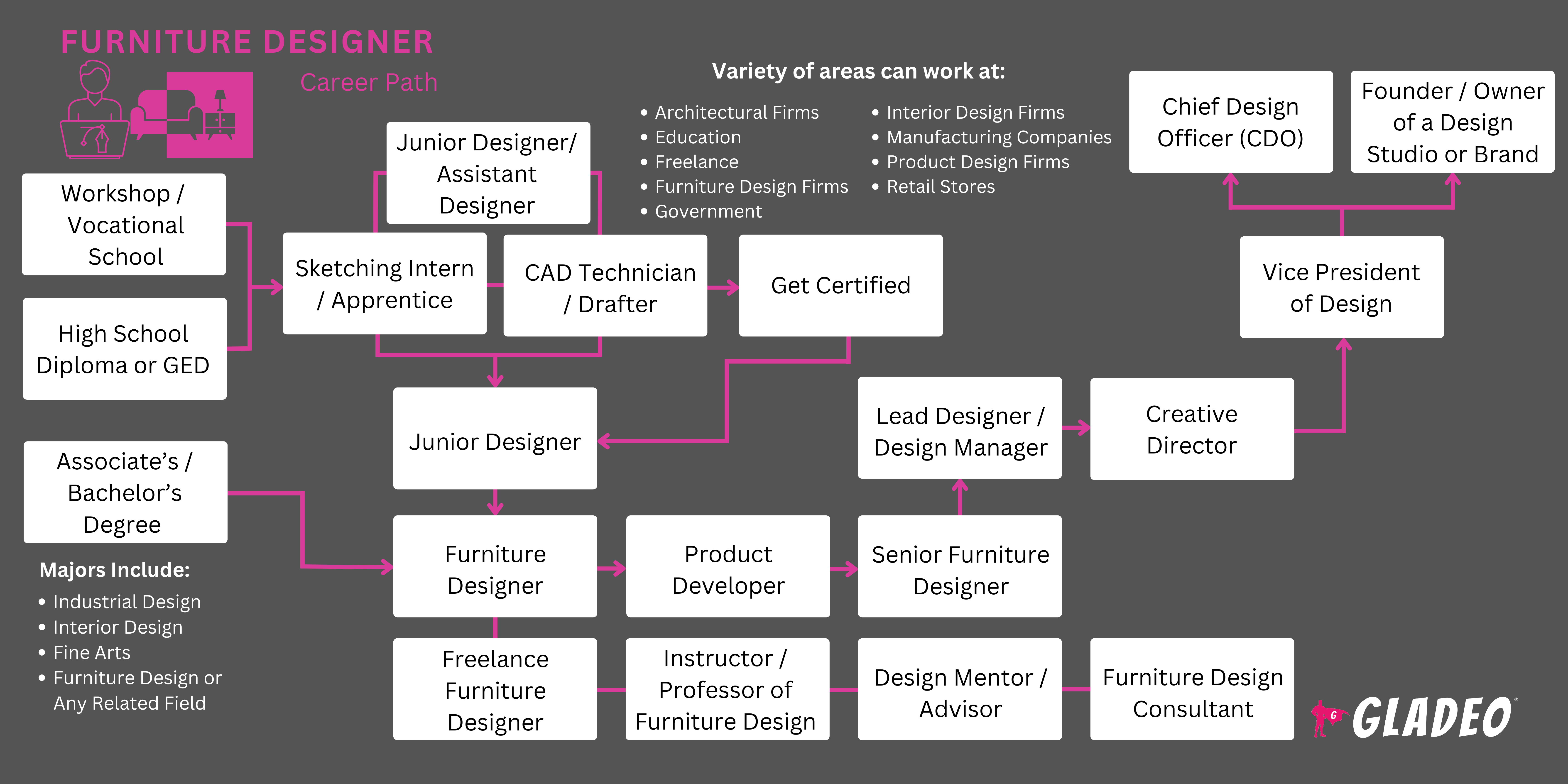
- There are no formal educational requirements to enter this career field, but Furniture Designers typically complete a relevant certificate program, vocational school training, an associate degree, or a bachelor’s degree in industrial design, furniture design, or a related field
- Common courses might include:
- Applied Techniques
- CAD and Digital Modeling
- Concept to Object
- Design History and Principles
- Drawing Furniture 2D and 3D
- Ergonomics
- Furniture Final Project
- Industrial Design
- Introduction to Furniture
- Manufacturing Processes
- Materials Science
- Metals for Furniture Design
- Professional Practice and Portfolio
- Textiles
- Students should try to get as much hands-on practice as possible, through internships, apprenticeships, part-time jobs, volunteer work, or at-home practice
- Furniture Designers should also participate in continual learning through extra classes, workshops, and other events.
Check out local trade school catalogs and organizations like The Furniture Society and Industrial Designers Society of America for opportunities - Certification in programs like Autodesk AutoCAD or Rhino 3D can be very helpful for standing out
- Other useful programs to learn may include:
- CAD Pro
- eCabinet Systems
- Foyr Neo
- Fusion 360
- PRO100
- Rockler SketchList 3D Furniture Design Software
- SketchUp
- SmartDraw
- SOLIDWORKS
- Sweet Home 3D
- Vectorworks
- Wood Designer
- Woodwork for Inventor
- Take classes in art, drawing, mathematics, geometry, physics, technology, and computer graphics.
- Practice sketching different types of furniture, including chairs, tables, sofas, beds, cabinets, and storage systems.
- Learn basic woodworking skills and experiment with materials such as wood, cardboard, metal, foam, fabric, and plastic.
- Study different furniture styles, construction methods, materials, and design movements.
- Visit furniture showrooms, manufacturing facilities, woodworking workshops, and interior design exhibitions.
- Experiment with CAD software, 3D modeling programs, and digital rendering tools.
- Participate in art clubs, woodworking clubs, robotics organizations, engineering activities, or design competitions.
- Create simple furniture projects, such as small shelves, stools, organizers, or miniature furniture models.
- Study ergonomics by observing how people sit, work, relax, and use furniture in different environments.
- Pursue college projects involving furniture concepts, product development, sustainable materials, or ergonomic design.
- Look for internships or part-time opportunities with furniture manufacturers, woodworking businesses, interior design firms, or product development studios.
- Learn about furniture assembly, joinery, upholstery, surface finishing, and manufacturing techniques.
- Build a professional portfolio showcasing original furniture concepts, sketches, technical drawings, 3D renderings, prototypes, and completed projects.
- Hands-on learning and internships with furniture manufacturers, woodworking workshops, product design studios, or interior design firms.
- Courses in industrial design, furniture design, product development, woodworking, materials science, ergonomics, and manufacturing processes.
- Opportunities to design chairs, tables, sofas, beds, cabinets, office furniture, and other functional furnishings.
- Access to design studios, woodworking shops, fabrication laboratories, 3D printers, CAD software, and furniture prototyping facilities.
- Strong connections to furniture manufacturers, interior design companies, product development firms, material suppliers, and professional design organizations.
- Opportunities to participate in furniture design competitions, product exhibitions, industry-sponsored projects, and real-world manufacturing assignments.
- Exposure to modern design technologies, including AutoCAD, SolidWorks, Rhino, SketchUp, 3D modeling, digital rendering, and computer-aided manufacturing.
- Training in woodworking, joinery, upholstery, furniture construction, material selection, structural stability, and product safety.
- Access to instructors with professional experience in furniture design, industrial design, woodworking, interior design, or product manufacturing.
- Opportunities to study sustainable furniture production, recycled materials, environmentally responsible manufacturing, and waste reduction.
- Opportunities to develop a professional portfolio showcasing furniture sketches, technical drawings, digital models, material experiments, physical prototypes, and completed designs.
- Search for job openings on employment portals like Indeed and ZipRecruiter
- Read posts carefully. Take note of any skills/experience gaps so you can work on those, if needed
- Write down keywords to add to your resume, such as:
- 3D Modeling
- CAD Software
- Creative Conceptualization
- Ergonomics
- Manufacturing Processes
- Market Trends Analysis
- Materials Knowledge
- Product Development
- Prototyping
- Sustainable Design
- Check out Furniture Designer resume templates for ideas
- Consult your school’s career center for help writing a resume, practicing interview techniques, and connecting with recruiters
- Reach out to former supervisors and professors to ask if they’ll serve as personal references
- Have your online portfolio polished and filled with high-quality photos and descriptive details that showcase your visual and interactive design skills and creativity
- Participate in design competitions and exhibitions to showcase your work
- Expect to start as an intern or assistant designer
- Turn in product designs that are feasible and profitable
- Stay within budgets and timeframes
- Stay open to constructive criticism
- Be a team player who collaborates well with others
- Demonstrate leadership skills and take on additional responsibilities
- Stay on top of furniture design trends (see our list of Recommended Resources)
- Knock out additional training and certifications to hone your skills or learn new ones
- Consider completing a master’s degree program. Like the Rhode Island School of Design’s Master of Fine Arts in Furniture Design
- Stay in touch with your network and keep an eye out for opportunities
- Participate in trade shows, design exhibitions, and professional organization events
- Continue to develop your online presence to show off your work
- Move to where the most jobs are. Per BLS, the states with the highest employment for commercial and industrial designers are California, New York, Michigan, Florida, and Ohio
Websites
- American Institute of Graphic Arts
- Architonic
- Autodesk AutoCAD
- Autodesk Fusion
- CAD Pro
- Core77
- Designboom
- Design Milk
- Dezeen
- Domus
- Dwell
- eCabinet Systems
- Foyr Neo
- Furniture Today
- Houzz
- Human Factors and Ergonomics Society
- Industrial Designers Society of America
- Inhabitat
- Interaction Design Association
- Interior Design Magazine
- InteriorZine
- Material ConneXion
- PRO100
- Product Development and Management Association
- Rhino 3D
- Rockler SketchList 3D
- SketchUp
- SmartDraw
- SOLIDWORKS
- Sweet Home 3D
- The Design Edit
- The Furniture Society
- Vectorworks
- Wood Designer
- Woodwork for Inventor
- World Design Organization
- Yanko Design
Books
- Atlas of Furniture Design, by Mateo Kries, et. al.
- Furniture Design, by Jim Postell
- Furniture Design: An Introduction to Development, Materials and Manufacturing, by Stuart Lawson
- The COMPLETE BOOK of Product Design, Development, Manufacturing, and Sales, by Steven Selikoff
- The Furniture Bible: Everything You Need to Know to Identify, Restore & Care for Furniture, by Christophe Pourny
- Woodworker’s Guide To Furniture Design, by Garth Graves
Furniture design can be a rewarding field, but workers don’t always get public recognition for their creative efforts. If you’re curious about related careers, check out our list below!
- Architect
- Art Director
- CAD Technician
- Design Consultant
- Drafter
- Fashion Designer
- Graphic Designer
- Industrial Designer
- Interior Designer
- Set Designer
- Software Developer
- Sports Product Designer
- Visual Effects (VFX) Artist
- Woodworker
Newsfeed

Featured Jobs
Online Courses and Tools