





Spotlights
Apparel Designer, Clothing Designer, Costume Designer, Textile Designer, Accessories Designer, Footwear Designer, Technical Designer, Fashion Stylist, Creative Director, Fashion Illustrator, Product Developer, Design Director
Every red carpet gown, every pair of jeans in your closet, every sneaker drop that sells out in minutes started the same way: as a sketch in someone's notebook. Fashion Designers turn imagination into clothing people actually wear, blending art and engineering to shape how the world dresses itself and expresses who it is.
Fashion Designers research trends, sketch original looks, choose fabrics and colors, and build garments from concept to finished sample. They work closely with pattern makers, seamstresses, textile mills, merchandisers, and marketing teams to make sure a design is not just beautiful but wearable, manufacturable, and on-brand. A single collection might move through dozens of fittings and revisions before it ever reaches a runway, a store rack, or an online cart.
Using tools like Adobe Illustrator, CLO 3D digital sampling software, mood boards, draping forms, and sewing machines, designers translate a vision into something tangible. Their work shapes entire industries, from luxury ateliers to mass-market retailers, and influences how millions of people feel when they get dressed every single day.
- Watching a sketch on paper become a real garment someone proudly wears
- Expressing creativity while solving practical puzzles of fit, fabric, and function
- Shaping culture and self-expression through color, silhouette, and style
- Seeing your designs walk a runway, fill a storefront window, or go viral online
Working Schedule
Most Fashion Designers work full-time, but the hours swing hard around the industry's calendar. Weeks leading up to Fashion Week, a seasonal collection launch, or a big retail delivery deadline often mean late nights in the studio and weekend fittings, while quieter stretches allow for research, sketching, and travel to fabric fairs. Designers split time between a design studio, a sample room full of fabric bolts and dress forms, and meetings with buyers or executives. Many work for an established brand, but a growing number freelance, consult for multiple labels, or run their own independent line.
Typical Duties
- Researching color, silhouette, and cultural trends for upcoming seasons
- Sketching original designs by hand or with digital illustration software
- Selecting fabrics, trims, prints, and embellishments for each piece
- Creating tech packs with measurements, construction notes, and materials
- Draping fabric on forms or building first patterns to test a design's shape
- Attending fittings to adjust fit, proportion, and comfort on a live model
- Collaborating with pattern makers and sewers to perfect a sample
- Presenting collections to merchandising, sales, and executive teams
- Sourcing fabric and trim suppliers, including negotiating costs and lead times
- Coordinating with production teams to move designs into manufacturing
- Attending trade shows and fabric fairs to scout new materials
- Managing a design calendar across multiple seasons at once
Additional Responsibilities
- Building mood boards and trend presentations for leadership
- Maintaining a technical design library of past patterns and specs
- Reviewing quality control samples before mass production begins
- Managing a small team of assistant designers or interns
- Coordinating with marketing on lookbooks, campaigns, and photoshoots
- Tracking budgets for fabric, trims, and sample production
- Staying current on sustainability certifications and sourcing standards
- Advising stylists or costume departments on custom pieces
A Fashion Designer's morning often starts with checking overnight emails from overseas fabric mills and reviewing yesterday's fitting notes over coffee. They might sketch a few new silhouette ideas before the studio fills up, then meet with the design team to review which looks from the current collection are moving forward and which need rework.
Midday is often spent in the sample room, pinning fabric on a dress form or watching a model try on a half-finished garment to check how it moves and fits. The designer calls out adjustments to the pattern maker on the spot, and might duck out to compare swatches against a mood board before a supplier deadline closes that afternoon.
Late afternoon shifts toward collaboration and business: a call with a textile mill about minimum order quantities, a meeting with merchandising about which styles buyers are excited about, or a working session with marketing on how a look will be styled for a campaign. Before heading out, the designer updates the tech pack for tomorrow's fitting and jots down inspiration from something they saw on the subway ride home.
Soft Skills
- Creativity and a strong personal point of view
- Visual and spatial awareness for fit and proportion
- Communication skills to direct pattern makers and sewers clearly
- Collaboration across design, merchandising, and production teams
- Time management across multiple seasons and deadlines at once
- Resilience and openness to critique during fittings and reviews
- Adaptability when trends, budgets, or timelines shift suddenly
- Attention to detail in construction, stitching, and finishing
- Cultural awareness and sensitivity when drawing on global influences
- Business sense around cost, pricing, and market positioning
- Negotiation skills when sourcing fabric and trim
- Leadership when managing assistants or freelance collaborators
Technical Skills
- Hand sketching and fashion illustration
- Adobe Illustrator and Photoshop for flats and presentations
- 3D digital sampling software such as CLO 3D or Browzwear
- Pattern making and draping techniques
- Sewing, garment construction, and finishing methods
- Textile knowledge, including fiber content, weight, and drape
- Color theory and print or textile design
- Tech pack creation and garment specification writing
- Product lifecycle management (PLM) software
- Basic knowledge of manufacturing and production timelines
- Ready-to-Wear Designer: Creates mass-produced seasonal collections sold in stores and online
- Haute Couture Designer: Builds custom, hand-finished garments for exclusive clients
- Bridal Designer: Specializes in wedding gowns and formalwear
- Activewear Designer: Focuses on performance fabrics and functional sportswear
- Menswear Designer: Designs tailored and casual clothing for men
- Childrenswear Designer: Creates durable, comfortable clothing sized for kids
- Costume Designer: Designs garments for film, television, theater, or dance
- Accessories Designer: Specializes in bags, shoes, jewelry, or other add-on pieces
- Luxury fashion houses
- Contemporary and ready-to-wear brands
- Fast fashion retailers
- Department store private-label design teams
- Athletic and outdoor apparel companies
- Bridal and formalwear studios
- Costume departments for film, television, and theater
- Textile and fabric mills
- E-commerce and direct-to-consumer startups
- Licensing and brand-extension companies
- Fashion schools and educational design programs
- Independent design studios and consultancies
Fashion is a deadline-driven business, and designers are expected to produce fresh, sellable ideas season after season without repeating themselves. The pressure to be original while staying commercially viable can be intense, especially at brands releasing new collections every few months.
The hours can be unpredictable and demanding, particularly around fittings, market weeks, and trade shows, when twelve-hour days are common. Many designers also travel frequently to visit fabric suppliers or factories, which can strain personal time and routines.
Financial instability is real, especially early in a career or when launching an independent label, since fashion businesses often run on thin margins and unpredictable sales cycles. Designers who thrive learn to pair their creative instincts with genuine business discipline and thick skin for criticism.
- Growth of 3D digital sampling to cut fabric waste and speed up design
- AI-assisted trend forecasting and demand prediction
- Rising demand for size-inclusive and adaptive clothing design
- Expansion of resale, rental, and circular fashion business models
- Direct-to-consumer brands selling and marketing through social platforms
- Increased use of regenerative and recycled textiles
- Smaller, on-demand production runs replacing mass overproduction
- Growth of digital fashion and virtual garments for gaming and avatars
- Nearshoring of manufacturing to shorten supply chains
- Rise of gender-fluid and size-neutral design approaches
Many Fashion Designers grew up sketching outfits in notebook margins, redesigning their own clothes, or sewing costumes for dolls and school plays. They often paid close attention to what people wore, noticing fabric, color, and silhouette before they had the vocabulary to describe it.
Others found their spark in thrifting and upcycling old clothes, watching runway shows online, or entering school fashion shows and art competitions. A love of color, textiles, and visual storytelling, paired with a hands-on drive to make rather than just admire, often pointed toward this path early on.
Most Fashion Designers earn a bachelor's degree in fashion design, apparel design, or a related field from an art or design school, typically a four-year program that combines studio coursework with technical training in patternmaking, draping, and construction. Some designers build careers through intensive certificate programs or apprenticeships instead, especially if they already have strong sewing and sketching skills, but a portfolio of original work matters more to employers than any single credential.
Students can take courses in relevant subjects such as:
- Fashion Illustration and Design Sketching
- Patternmaking and Draping
- Garment Construction and Sewing Techniques
- Textiles and Fabric Science
- Color Theory and Trend Forecasting
- Fashion History and Cultural Studies
- Computer-Aided Design (CAD) for Apparel
- Fashion Merchandising and Retail Math
- Sustainable and Ethical Fashion Practices
- Portfolio Development and Presentation
Internships at design houses, retailers, or textile companies give students real experience with fittings, sourcing, and production timelines that a classroom alone cannot teach. Building a strong portfolio of original sketches, finished garments, and process work is essential, since most employers and design schools evaluate candidates primarily on the strength of their creative body of work. Many designers continue learning on the job, picking up software, sourcing relationships, and production knowledge that varies from brand to brand.
- Take art, textiles, and sewing or fashion classes if your school offers them
- Learn to sew, alter, and construct garments on your own or through community classes
- Start a sketchbook and fill it with original designs, not just copies
- Enter school or community fashion shows and design competitions
- Teach yourself basic Adobe Illustrator or Procreate for digital sketching
- Thrift and upcycle clothing to practice construction and creative reuse
- Follow designers, brands, and fashion publications to build a trained eye
- Apply for summer pre-college programs at fashion or art schools
- Seek internships or shadowing opportunities at local boutiques or designers
- Document your process and finished pieces to start building a portfolio
- Study fabric types and how different materials drape and move
- Take business or marketing classes to understand the industry side of fashion
- Strong studio facilities with sewing machines, dress forms, and pattern tables
- Faculty with real industry experience and active professional networks
- Curriculum balancing creative design with technical construction skills
- Opportunities for a senior thesis collection or capstone runway show
- Required or strongly supported internship placements
- Access to guest critiques from working designers or brands
- Instruction in both hand sketching and digital design software
- Coursework in sustainable and ethical fashion production
- Career services with strong industry placement rates
- Located near a fashion hub with access to internships and events
- Portfolio review process that pushes you to refine your point of view
- Alumni network active in the industry you want to enter
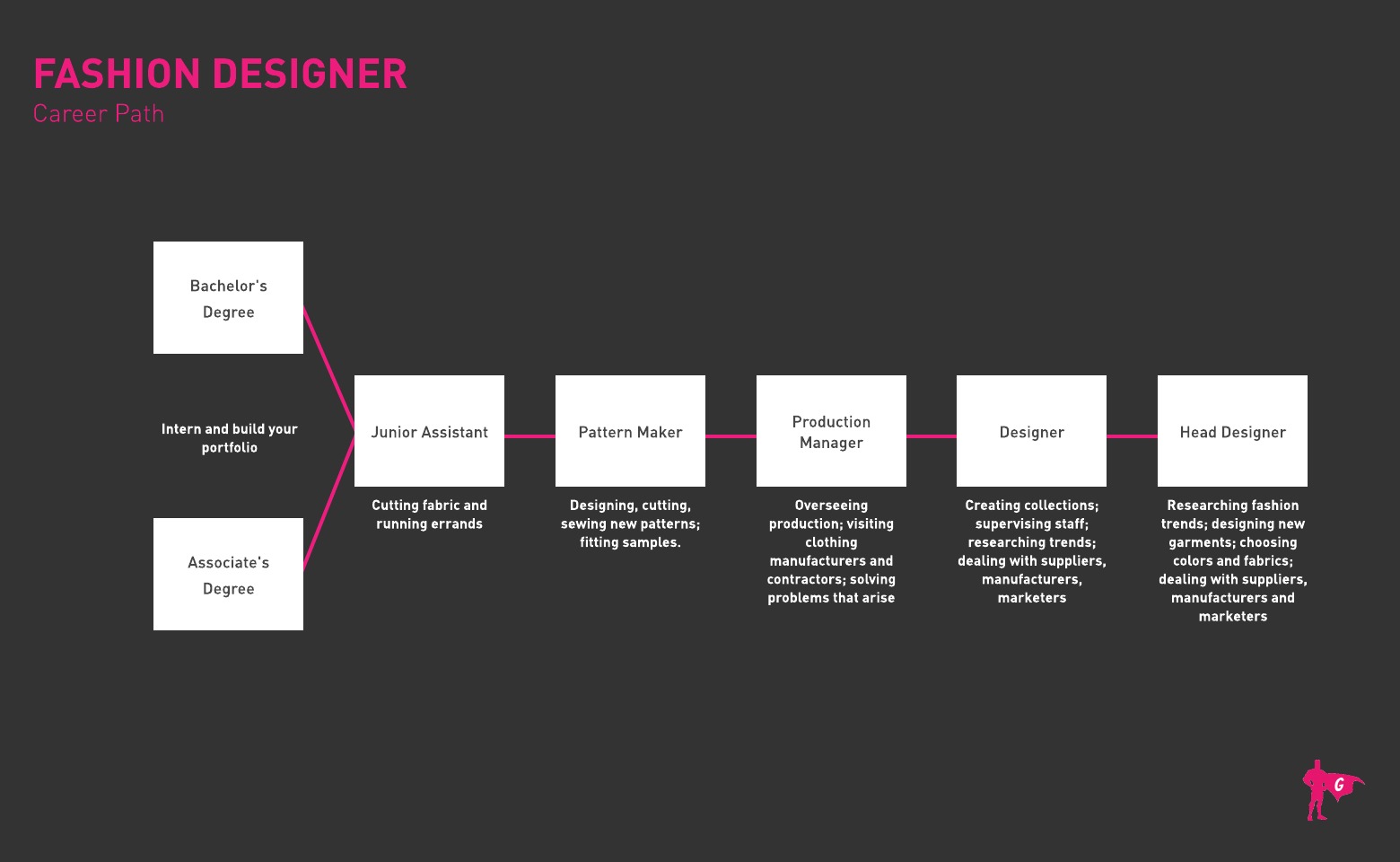
- Build a polished portfolio showcasing your strongest, most original designs
- Apply for entry-level titles like Design Assistant, Junior Designer, or Assistant Technical Designer
- Complete at least one fashion industry internship before graduating
- Attend your school's senior thesis show and invite industry contacts
- Search job boards like Fashionista, WWD Careers, and LinkedIn
- Network at trade shows, fabric fairs, and alumni events
- Tailor your portfolio and resume to each brand's specific aesthetic
- Practice discussing your design process and inspiration clearly in interviews
- Consider starting in patternmaking, sample making, or merchandising to break in
- Reach out directly to independent designers who may need freelance help
- Follow and engage with brands you admire on professional platforms
- Be open to relocating to a fashion hub like New York, Los Angeles, or abroad
- Take ownership of a full category or collection as your skills grow
- Build strong relationships with pattern makers, sample rooms, and vendors
- Develop a recognizable point of view that sets your work apart
- Learn the business side: costing, margins, and production timelines
- Seek mentorship from senior designers and creative directors
- Pursue advanced titles like Senior Designer, Design Director, or Creative Director
- Build a following or reputation that could support launching your own label
- Stay current with sustainability practices and new design technologies
Websites:
- Council of Fashion Designers of America (CFDA) - cfda.com
- Fashion Group International (FGI) - fgi.org
- Business of Fashion - businessoffashion.com
- Women's Wear Daily (WWD) - wwd.com
- Vogue Business - voguebusiness.com
- WGSN - wgsn.com
- Fashionista - fashionista.com
- American Apparel & Footwear Association (AAFA) - aafaglobal.org
- Fashion Institute of Technology (FIT) - fitnyc.edu
- Parsons School of Design - newschool.edu/parsons
- Sustainable Apparel Coalition - apparelcoalition.org
- Ecotextile News - ecotextile.com
- CLO Virtual Fashion - clo3d.com
- Pantone Fashion Color - pantone.com
Books:
- The Fashion Designer Survival Guide by Mary Gehlhar
- Fashion Design Course: Principles, Practice, and Techniques by Steven Faerm
- Gods and Kings: The Rise and Fall of Alexander McQueen and John Galliano by Dana Thomas
- Grace: A Memoir by Grace Coddington
- Isaac Mizrahi: How to Have Style by Isaac Mizrahi
If you find that being a Fashion Designer isn't the right fit, your skills in sketching, textiles, and trend awareness transfer well to many related careers.
- Fashion Illustrator
- Textile Designer
- Fashion Stylist
- Costume Designer
- Technical Designer
- Fashion Merchandiser
- Product Developer
- Visual Merchandiser
- Trend Forecaster
- Costume or Wardrobe Assistant
Newsfeed

Featured Jobs
Online Courses and Tools