


Spotlights
Fashion Intern, Fashion Coordinator, Stylist Assistant, Merchandising Assistant, Production Assistant, Visual Merchandising Assistant, Fashion Buyer Assistant, Wardrobe Assistant, Retail Sales Associate, Brand Ambassador, Showroom Assistant, Fashion Public Relations Assistant
A Fashion Assistant works behind the scenes to keep the fashion world organized, creative, and running smoothly. They support designers, stylists, and fashion teams with daily tasks that help bring collections, photoshoots, runway shows, and product launches to life.
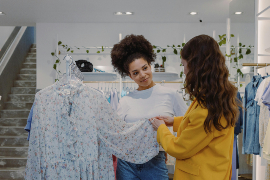
Fashion Assistants may help prepare outfits for fashion shoots, organize clothing samples, track inventory, assist with fittings, or coordinate schedules for design teams. They are often the “right hand” of fashion professionals, making sure everything is ready, in place, and on time.
This role is fast-paced and highly detail-oriented. One day you might be steaming clothes for a photoshoot, and the next you could be helping style models or organizing a new clothing collection. Fashion Assistants are essential in turning creative ideas into polished, real-world fashion outcomes.
- Helping fashion designers and stylists bring creative ideas to life
- Supporting fashion shows, photoshoots, and product launches
- Keeping up with current fashion trends and new styles
- Working in a fast-paced and creative environment
- Building connections with designers, models, buyers, and fashion industry professionals
- Helping customers or clients feel confident and stylish through fashion choices
- Learning different parts of the fashion business such as merchandising, styling, and production
- Having opportunities to work with clothing, accessories, fabrics, and fashion collections
Working Schedule
Fashion Assistants usually work full-time in fashion studios, retail brands, media companies, or event production teams. Schedules can be unpredictable, especially during fashion week, photoshoots, or product launches. Early mornings, late nights, and weekend work are common in fast-moving fashion environments. Some Fashion Assistants also work freelance, especially in styling, editorial shoots, or event-based fashion work.
Typical Duties
- Assist stylists and designers in preparing outfits and collections
- Organize clothing racks, samples, and accessories
- Help dress models during fittings and photoshoots
- Steam, press, and prepare garments for presentation
- Track clothing inventory and sample movement
- Support fashion shoots, runway shows, and brand events
- Coordinate with photographers, stylists, and production teams
Pack and unpack garments for fashion events, client meetings, or photoshoots - Arrange accessories, shoes, and props to complete the outfit looks
- Help maintain the cleanliness and organization of fashion studios or showrooms
- Take notes during fittings and assist with clothing adjustments or alterations
- Deliver samples or pick up garments from designers, stores, or production facilities
- Assist with scheduling appointments, fittings, and production timelines
- Research current fashion trends, fabrics, and competitor brands
- Help prepare mood boards, lookbooks, or presentation materials
- Communicate with vendors, suppliers, and fashion clients when needed
- Ensure garments are properly labeled, stored, and returned after use
- Assist backstage during runway shows by organizing outfit changes and dressing schedules
- Support social media or marketing teams by helping prepare fashion content and product display
Additional Responsibilities
- Updating fashion sample libraries and wardrobe systems
- Assisting in sourcing clothing and accessories for styling projects
- Preparing mood boards or fashion presentation materials
- Helping manage fashion show logistics and backstage coordination
- Communicating with suppliers, designers, and vendors
- Maintaining cleanliness and organization in fashion studios or wardrobes
The day often begins in a fashion studio, showroom, or backstage area preparing clothing, accessories, and materials for the day’s projects. A Fashion Assistant might spend the morning organizing garment racks, steaming clothes, and helping stylists or designers prepare looks for fittings, photoshoots, or client presentations. Throughout the day, they may assist with dressing models, tracking samples, and making sure outfits are ready and properly arranged.
Some days are spent supporting fashion shoots, runway shows, or marketing events where quick thinking and strong organization skills are important. Fashion Assistants may also help research trends, coordinate with photographers and production teams, update inventory records, and run errands related to fashion production. A typical week can include long hours during busy fashion events, but also exciting opportunities to work closely with creative professionals and see new collections come to life.
Soft Skills
- Organization
- Communication
- Teamwork
- Time management
- Adaptability
- Attention to detail
- Creativity
- Problem-solving
- Multitasking
- Professionalism
Technical Skills
- Basic knowledge of fashion and styling
- Garment care (steaming, pressing, handling fabrics)
- Wardrobe and inventory management
- Photoshoot and runway coordination basics
- Familiarity with fashion terminology
- Basic sewing or garment repair skills (helpful)
- Knowledge of styling tools and accessories organization
- Digital tools for scheduling or inventory tracking
- Editorial Fashion Assistants – Support magazine shoots and fashion editorials
- Styling Assistants – Work directly with stylists for outfits and looks
- Production Assistants – Help organize fashion shoots, campaigns, and events
- Showroom Assistants – Manage clothing samples and buyer presentations
- Retail Fashion Assistants – Support fashion merchandising and store styling
- Fashion magazines and media companies
- Clothing brands and design houses
- E-commerce fashion companies
- Retail stores and luxury boutiques
- Fashion show production companies
- Celebrity styling agencies
- Advertising and creative studios
- Event production companies
This field demands creativity, flexibility, and strong attention to detail. Fashion Assistants often work behind the scenes handling fast-paced tasks, tight deadlines, and last-minute changes during photoshoots, fittings, or fashion events. Long hours are common during busy seasons, and the work can be physically demanding with constant organizing, lifting garment racks, and being on your feet for extended periods.
However, the experience can be exciting and rewarding—helping bring fashion concepts to life and working closely with designers, stylists, photographers, and models. Although the role may start with entry-level responsibilities, it provides valuable industry exposure and opportunities to build connections, develop creative skills, and grow within the fashion world.
- Fashion assistants now work closely with digital tools for inventory, styling planning, and virtual fashion previews
- Sustainability is influencing wardrobe sourcing and styling decisions
- Social media and influencer styling have increased demand for fast-paced assistant roles
- Virtual fashion shows and digital campaigns are becoming more common
- Brands are focusing more on organized sample management and digital wardrobe systems
- AI-powered fashion forecasting tools are helping teams predict trends and consumer preferences
- More fashion brands are using e-commerce styling and live online shopping events
- Digital clothing and virtual fashion for gaming and social media avatars are growing industries
- Fashion assistants are increasingly helping create content for TikTok, Instagram, and other social platforms
- Remote collaboration tools are allowing fashion teams to coordinate across different locations
- Inclusive fashion and body diversity are becoming major priorities in styling and marketing campaigns
- Many companies now use cloud-based systems to track samples, clothing loans, and returns
- Behind-the-scenes fashion content has become valuable for brand marketing and audience engagement
- Faster production cycles in “see now, buy now” fashion have increased the need for organized support staff
- Eco-friendly fabrics and ethical fashion sourcing are becoming more important across the industry
- Fashion assistants are gaining more opportunities in celebrity styling, influencer management, and personal branding
- Online fashion marketplaces and resale platforms are influencing wardrobe selection and styling trends
Many were interested in fashion, clothing, or expressing themselves through personal style. Some enjoyed organizing outfits, watching fashion shows, following trends on social media, or helping friends choose what to wear. Others were drawn to photography, design, celebrity styling, or creative projects that involved colors, fabrics, and visual presentation. They often had creative minds, strong attention to detail, and enjoyed working in fast-paced environments where teamwork and style come together.
- Fashion Assistants usually need a high school diploma or equivalent, though many employers prefer candidates with some training in fashion, styling, merchandising, or visual arts.
- A certificate or associate degree in Fashion Merchandising, Fashion Styling, Fashion Design, or Retail Management can improve job opportunities.
- Courses often include styling fundamentals, fashion history, textiles, visual merchandising, and wardrobe coordination.
- Experience with photoshoots, fashion events, or retail environments is highly valued.
- Internships with fashion brands, magazines, styling agencies, or retail companies can provide strong hands-on experience.
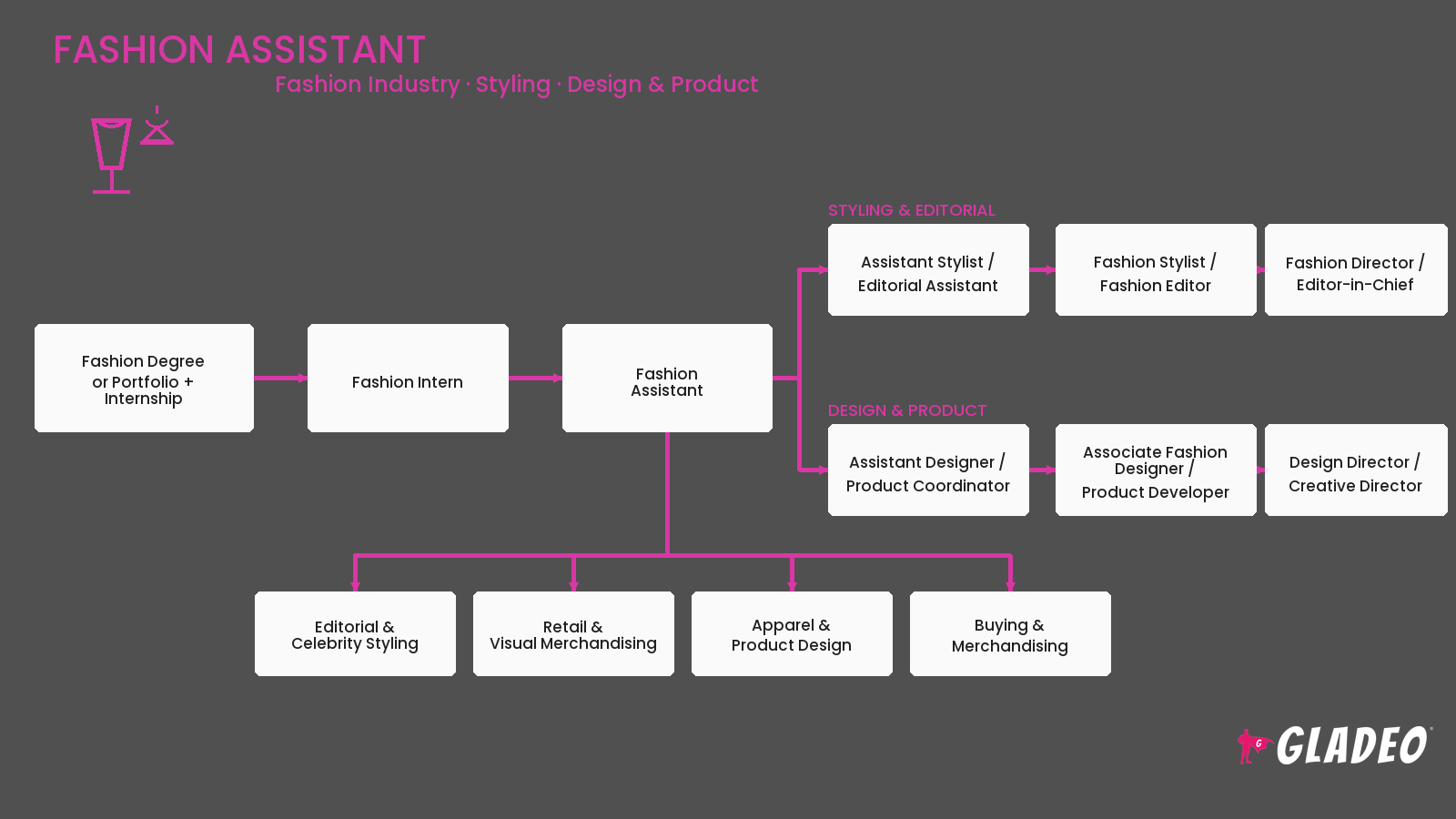
- Many Fashion Assistants begin in retail or entry-level studio roles before moving into styling or creative positions.
- Basic knowledge of garment care, organization, and fashion tools is important for success.
- Strong communication and teamwork skills are essential since the role involves constant collaboration.
- Join fashion clubs or styling organizations
- Practice creating outfits and mood boards
- Work in retail or customer service for fashion experience
- Volunteer for school plays or costume departments
- Take photography, art, or design classes
- Build a small styling or fashion portfolio
- Follow fashion magazines and industry trends
- Assist in local fashion shows or events
- Courses in fashion styling, fashion merchandising, textiles, garment construction, or fashion business
- Opportunities to learn about fashion marketing, visual merchandising, and trend forecasting
- Hands-on experience through styling projects, fashion shows, photoshoots, or student productions
- Internship opportunities with fashion brands, magazines, designers, retail companies, or styling agencies
- Training in digital fashion tools, inventory systems, mood board creation, and fashion presentation software
- Access to sewing labs, fashion studios, photography spaces, or design workshops
- Programs that teach organization, communication, teamwork, and event coordination skills
- Opportunities to build a professional portfolio with styling work, fashion content, or creative projects
- Connections with industry professionals through guest speakers, networking events, or mentorship programs
- Experience working with social media content creation, influencer styling, or fashion campaign production
- Programs that expose students to sustainable fashion practices and ethical sourcing
- Flexible pathways that can lead to careers in styling, fashion production, merchandising, public relations, or fashion marketing
- Search job boards like LinkedIn, Indeed, FashionJobs, and fashion brand career pages
- Apply for entry-level roles such as Styling Assistant, Fashion Studio Assistant, Retail Assistant, or Production Assistant
- Build a simple portfolio showing outfits, styling work, or fashion inspiration boards
- Gain experience through retail work, internships, or fashion events
- Network at fashion shows, school events, and styling workshops
- Ask mentors or supervisors for references and recommendations
- Highlight organization, teamwork, and fashion knowledge in your résumé
- Practice working under pressure and managing fast-paced tasks
- Be open to starting in retail or studio support roles
- Show enthusiasm, reliability, and willingness to learn
- Develop expertise in areas such as styling, fashion merchandising, visual presentation, or fashion production
- Learn digital tools used in the fashion industry, including inventory software, content creation apps, and fashion planning platforms
- Build strong communication, organization, and teamwork skills—higher-level roles often coordinate events, productions, or creative teams
- Volunteer to assist with fashion shows, photoshoots, influencer campaigns, or brand events to gain hands-on experience
- Create a strong portfolio showcasing styling work, fashion content, mood boards, or creative projects to attract future opportunities
- Network with designers, stylists, photographers, makeup artists, and fashion professionals through internships and industry events
- Stay updated on fashion trends, social media marketing, and emerging technologies in the fashion industry
- Take on leadership responsibilities such as supervising interns, coordinating wardrobe teams, or managing backstage operations
- Gain experience working with luxury brands, magazines, e-commerce companies, or celebrity stylists to expand your career options
- Develop personal branding skills through social media platforms, fashion blogs, or online creative portfolios
Websites:
- Fashion Institute of Technology (FIT)
- The Business of Fashion
- FashionUnited
- Vogue Runway
- FashionJobs
- Council of Fashion Designers of America (CFDA)
- Who What Wear
- BoF Careers
- Retail Design Blog
Books:
- The Fashion Book by Phaidon
- The End of Fashion by Teri Agins
- Fashion Stylist’s Handbook by Lucy Gillbanks
- The Little Dictionary of Fashion by Christian Dior
If a career as a Fashion Assistant isn’t the right fit for you—or you want to explore other creative opportunities—consider these related paths, which all involve fashion, styling, design, branding, or visual presentation:
- Fashion Stylist
- Visual Merchandiser
- Retail Buyer
- Fashion Designer
- Costume Stylist
- Fashion Photographer Assistant
- Fashion Marketing Coordinator
- Wardrobe Supervisor
- Event Production Assistant
- Brand Coordinator
Newsfeed

Featured Jobs
Online Courses and Tools