







Spotlights
Music Estate Manager, Artist Estate Administrator, Catalog Manager, Legacy Manager, Estate Business Manager, Music Rights Administrator, Posthumous Career Manager, Estate Director, Trust and Estate Administrator, Music Catalog Administrator, Artist Legacy Director, Estate Operations Manager
When a legendary musician passes away, their voice does not have to fall silent. New albums still get released, classic songs still land in blockbuster films, hologram tours still sell out arenas, and entire generations continue to fall in love with music from artists they never got to see perform live. Making all of that possible, honoring an artist's legacy while keeping their music alive and thriving for new audiences, is the work of Estate Management professionals.
Estate Managers in the music industry oversee the business affairs, catalog, and legacy of a deceased or retired artist's estate. They manage licensing requests for film, television, and commercials, oversee royalty collection and distribution to heirs, approve or reject new releases and remixes, protect the artist's name and image from misuse, and make strategic decisions about how the artist's music and brand should evolve over time. They work closely with estate trustees, heirs, entertainment attorneys, record labels, and licensing agencies, balancing the wishes of the artist's family with what will keep the music relevant to new listeners decades into the future.
Using royalty tracking systems, licensing databases, and archival management tools, Estate Managers turn a body of work into a living, breathing legacy business. Their work matters because a poorly managed estate can see an artist's music mishandled, misused, or forgotten, while a well-managed one, think of the estates behind icons whose music still tops charts and soundtracks films years after their passing, can introduce that artist's genius to millions of new fans while honoring exactly what that artist would have wanted.
- Preserving and honoring the legacy of artists whose music shaped generations
- Introducing legendary music to entirely new audiences through smart licensing and releases
- Protecting an artist's creative vision and reputation even after they are gone
- Blending deep respect for the past with strategic thinking about the future
Working Schedule
Estate Managers typically work full-time in an office setting, though the pace can shift dramatically depending on what is happening with the estate, quiet stretches of routine royalty administration can suddenly turn into intense sprints around an anniversary release, a biopic premiere, or a major licensing deal. Because estates often involve family members, trustees, and business partners in different time zones or with unpredictable schedules, evening and weekend availability is sometimes needed. Most Estate Managers work for specialized estate management firms, entertainment law firms, or are employed directly by the estate or trust itself.
Typical Duties
- Overseeing licensing requests for film, television, advertising, and video games
- Managing royalty collection and accurate distribution to heirs and beneficiaries
- Reviewing and approving new releases, reissues, remixes, and compilations
- Protecting the artist's name, image, likeness, and trademarks from unauthorized use
- Coordinating with record labels and publishers on catalog strategy
- Working with attorneys to enforce copyright and pursue infringement cases
- Managing relationships with heirs, trustees, and family representatives
- Approving merchandise, branded products, and commercial partnerships
- Overseeing archival preservation of masters, photos, and memorabilia
- Planning commemorative releases around anniversaries and milestones
- Reviewing biographical projects like documentaries, books, and films for accuracy and approval
- Preparing financial reports and projections for the estate and its beneficiaries
Additional Responsibilities
- Coordinating museum exhibits, tribute concerts, or hologram tour projects
- Managing social media and digital presence maintained on the artist's behalf
- Negotiating new deals for previously unreleased or vault material
- Staying current on copyright law, including duration and termination rights
- Overseeing insurance for physical archives and valuable memorabilia
- Managing disputes between heirs or business partners when they arise
- Building long-term strategic plans for how the catalog should grow
An Estate Manager's morning often starts by reviewing incoming licensing requests, a film studio wanting to use a song in a pivotal scene, a brand hoping to feature the artist's image in a campaign, and deciding which fit the artist's legacy and which do not. There may be a call with the estate's attorney to discuss a trademark dispute or a royalty audit that uncovered an underpayment.
Midday often involves meetings with record label partners about an upcoming reissue or a newly discovered unreleased recording, weighing how to present it in a way that honors the artist's original intent. Estate Managers frequently coordinate with heirs or trustees, presenting options and financial reports, and helping the family make informed decisions about the direction of the estate.
Afternoons and evenings can involve reviewing a documentary script for accuracy, approving artwork for an anniversary vinyl reissue, or fielding a call about a potential hologram tour or biopic deal. Estate Managers close the day by updating catalog and royalty records, ensuring every licensing agreement and payment is tracked accurately for the future.
Soft Skills
- Deep respect for artistic legacy and integrity
- Strong communication and diplomacy, especially with grieving families
- Sound judgment and decision-making
- Negotiation skills
- Discretion and confidentiality
- Patience when navigating family dynamics or disputes
- Strategic, long-term thinking
- Attention to detail
- Cultural awareness and historical sensitivity
- Organizational skills for managing complex catalogs
- Integrity and trustworthiness
- Adaptability to unexpected opportunities or challenges
Technical Skills
- Copyright and intellectual property law
- Royalty tracking and catalog administration systems
- Licensing negotiation and contract review
- Trust and estate administration basics
- Archival and digital asset management
- Financial reporting and budgeting
- Knowledge of music publishing and master recording ownership
- Brand and trademark protection strategies
- Familiarity with entertainment industry deal structures
- Data analysis for tracking catalog performance and streaming trends
- Catalog Manager: Focuses on organizing, licensing, and growing the recorded music catalog
- Licensing Specialist: Manages requests for film, TV, advertising, and brand partnerships
- Trust and Estate Administrator: Handles the legal and financial administration of the estate itself
- Brand and Legacy Director: Oversees the artist's name, image, and overall public legacy
- Archival Manager: Preserves and organizes physical and digital assets like masters and memorabilia
- Royalty and Rights Manager: Focuses specifically on royalty accuracy and rights enforcement
- Specialized music estate management firms
- Entertainment law firms with estate practices
- Record labels with catalog and legacy divisions
- Music publishing companies
- Family offices representing artist estates
- Trust companies and estate administration firms
- Licensing and brand management agencies
- Museums and cultural institutions with music archives
- Talent agencies with legacy client divisions
- Independent trusts established directly by the artist
- Merchandising and licensing companies
- Film and television production companies negotiating biographical projects
Estate Managers carry the weight of protecting something irreplaceable, an artist's legacy, and every decision has to be weighed against how it will be remembered years or decades later. That responsibility can create real pressure, especially when family members disagree about the right path forward or when a business opportunity looks lucrative but does not feel true to the artist.
Navigating grief and family dynamics is a constant part of the job. Estate Managers often work closely with people who are still mourning a loved one while also needing to make hard-nosed business decisions, and finding the right balance between compassion and clear-eyed strategy takes real emotional intelligence and patience.
The work can also be legally complex and slow-moving. Copyright disputes, trademark enforcement, and multi-party negotiations can drag on for months or years, requiring persistence and a willingness to play a long game rather than seek quick wins. Estate Managers have to be comfortable with ambiguity and prepared for surprises, from newly discovered recordings to unexpected legal challenges.
- Growth of AI-generated music and deepfake vocals raising new legal and ethical questions for estates
- Rise of hologram concerts and virtual performances extending an artist's live presence
- Increased streaming activity driving renewed interest in legacy catalogs
- Growing use of biopics and documentaries to introduce classic artists to younger audiences
- Expansion of catalog sales, where estates sell rights to investment funds or major labels
- More sophisticated royalty auditing technology to catch underpayments across platforms
- Rising importance of social media strategy for keeping legacy artists culturally relevant
- Increased scrutiny and legal action around unauthorized AI use of an artist's voice or likeness
- Growth of themed exhibits, museum partnerships, and immersive fan experiences
- More estates establishing clear posthumous release and licensing guidelines while the artist is still living
Many Estate Managers grew up as passionate music fans and collectors, the kid who knew every album, every liner note, and every bit of history behind their favorite artists. They often loved research, reading biographies, and digging into the stories behind the music they loved.
Others were drawn to organizing and preserving things, whether that meant curating a collection, archiving family photos, or managing a school project with careful attention to detail. A combination of deep music appreciation, respect for history, and a knack for business and organization often points toward this unique career path.
Most Estate Managers hold a bachelor's degree in business, arts administration, entertainment law, or a related field, and many pursue a law degree or paralegal training given how much of the work involves copyright, trademark, and trust law. Entry into this specialized field usually comes through experience in entertainment business management, music publishing, or entertainment law before moving into estate-specific work, since there are relatively few dedicated estate management training programs.
Students can take courses in relevant subjects such as:
- Entertainment Law and Copyright
- Business Administration
- Arts and Music Management
- Trust and Estate Law
- Music History
- Contract Negotiation
- Intellectual Property Law
- Nonprofit and Archive Management
- Communications and Public Relations
- Music Publishing and Licensing
Because this is such a specialized field, hands-on experience matters enormously. Internships at music publishing companies, entertainment law firms, or record labels with catalog divisions provide crucial exposure to royalty systems and licensing processes. Many professionals also build expertise in copyright law and trust administration, either through formal legal education or years of on-the-job experience handling complex rights issues.
- Study music history and develop deep knowledge of iconic artists and their catalogs
- Take business, law, and economics courses whenever available
- Read about copyright and intellectual property law basics
- Volunteer or intern with a local museum, archive, or historical society
- Seek internships at music publishing companies, labels, or entertainment law firms
- Join a music business or entertainment law student club if your school has one
- Practice organizing and cataloging collections, whether music, media, or memorabilia
- Follow news about major artist estates and how they manage licensing and legacy
- Build research and writing skills through history or journalism coursework
- Attend industry panels or webinars on music publishing and copyright
- Consider a double major or minor combining business with music or history
- Network with professionals in music publishing, entertainment law, or archival work
- Strong entertainment or intellectual property law coursework
- Programs with connections to music publishing companies or entertainment law firms
- Faculty with real experience in copyright, trusts, or the music industry
- Opportunities for internships at labels, publishers, or estate management firms
- Coursework covering trust and estate administration
- Access to archival or museum studies courses if available
- Strong alumni network in entertainment business or law
- Career services connected to entertainment industry employers
- Programs located near major music industry hubs like Los Angeles, Nashville, or New York
- Courses in music history that go beyond surface-level survey classes
- Opportunities to study contract negotiation and licensing
- Flexible options for combining business, law, and arts coursework
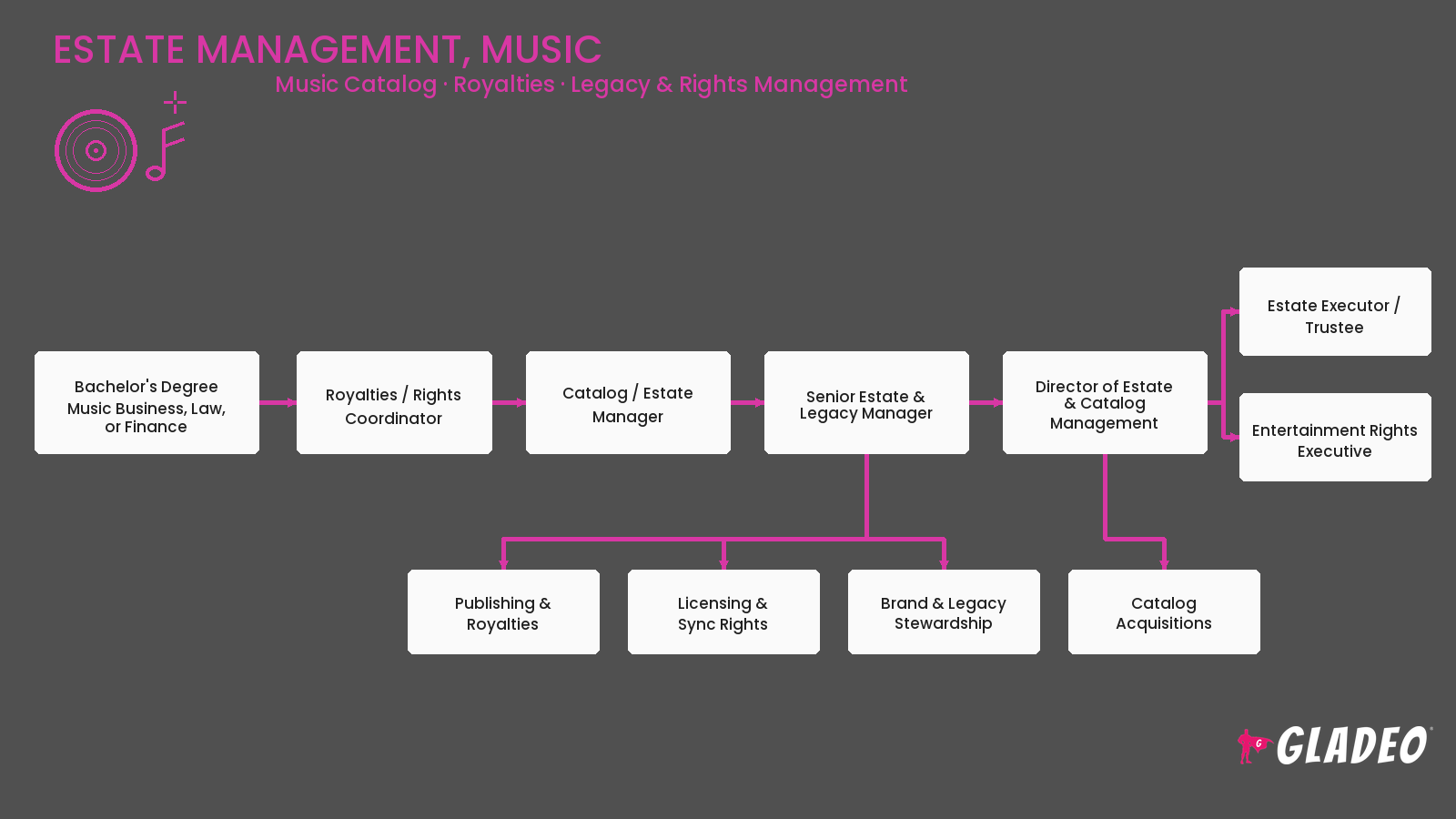
- Apply for entry-level roles like Catalog Coordinator, Licensing Assistant, or Estate Administration Assistant
- Pursue internships at music publishers, record labels, or entertainment law firms
- Build a foundation in general entertainment business management before specializing in estates
- Learn royalty tracking and licensing software used across the industry
- Network at music publishing conferences and entertainment law events
- Study copyright and trust law basics, even informally, to speak the language of the field
- Highlight any deep knowledge of specific artists, genres, or eras in interviews
- Demonstrate discretion and professionalism, estate work requires enormous trust
- Be open to starting in a broader royalty, licensing, or business affairs role first
- Connect with entertainment attorneys and publishing professionals who can offer referrals
- Follow major estate management firms and learn how they operate
- Show genuine passion for music history and preservation
- Build deep expertise in copyright law, licensing, and royalty administration
- Take on responsibility for larger, more complex catalogs and licensing deals
- Develop strong relationships with heirs, trustees, and industry partners
- Pursue additional legal or business credentials to strengthen your expertise
- Build a reputation for protecting an artist's legacy with judgment and care
- Move from coordinator or assistant roles into full estate manager or director positions
- Mentor newer team members and take on leadership within your firm
- Consider specializing in a niche like AI and digital rights, archival preservation, or catalog sales
Websites:
- National Music Publishers' Association - nmpa.org
- Recording Academy (GRAMMYs) - grammy.com
- Music Business Worldwide - musicbusinessworldwide.com
- Billboard - billboard.com
- Recording Industry Association of America - riaa.com
- Copyright Alliance - copyrightalliance.org
- U.S. Copyright Office - copyright.gov
- Association of Independent Music Publishers - aimp.org
- Variety - variety.com
- The Hollywood Reporter - hollywoodreporter.com
- Music Ally - musically.com
- Rock and Roll Hall of Fame - rockhall.com
- GRAMMY Museum - grammymuseum.org
- Trust & Estate Practitioners Association - step.org
Books:
- All You Need to Know About the Music Business by Donald S. Passman
- This Business of Music by M. William Krasilovsky and Sidney Shemel
- Ripped: How the Wired Generation Revolutionized Music by Greg Kot
- The Death and Life of American Copyright by Bill Rosenblatt
- Estate Planning for the Muddled Mind by Twila Slesnick and Katie Curatolo
If you find that Estate Management in music isn't the right fit, your knowledge of copyright, licensing, and artist legacy translates well into many related careers.
- Entertainment Attorney
- Music Publishing Administrator
- Business Manager, Music
- Talent Agent
- Museum or Archive Curator
- Trust and Estate Administrator
- Royalty Auditor
- Licensing Manager
- Record Label Catalog Manager
- Brand Manager
Newsfeed

Featured Jobs
Online Courses and Tools