





Spotlights
Environmental Scientist, Wildlife Ecologist, Conservation Scientist, Restoration Ecologist, Marine Ecologist, Urban Ecologist, Forest Ecologist, Aquatic Ecologist, Ecosystem Analyst, Biodiversity Specialist, Habitat Scientist, Ecological Researcher
Imagine walking through a dense forest, a wetland, or a coral reef and understanding exactly how every plant, animal, and microbe depends on one another to keep that ecosystem healthy. Ecologists make this possible by studying these connections and helping protect the balance of nature that supports all life on Earth.
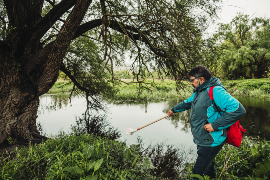
Ecologists investigate how living things interact with each other and their environments. They spend their days collecting data in the field, analyzing samples in the lab, and working with teams of scientists, government officials, and conservation groups to solve environmental challenges. Their work might involve tracking endangered species, studying the effects of pollution, or restoring damaged habitats.
Using tools like geographic information systems (GIS), statistical software, and field instruments, ecologists uncover patterns in nature that guide conservation and land management decisions. Their insights help communities manage natural resources sustainably, protect biodiversity, and respond to climate change, making their role crucial in preserving the planet's health for future generations.
- Contributing directly to the protection and restoration of ecosystems and wildlife habitats.
- Discovering new insights about nature that can influence environmental policies and practices.
- Working outdoors in diverse natural settings, combining science with adventure.
- Collaborating with passionate teams dedicated to sustainability and conservation.
Working Schedule
Ecologists often balance time between outdoor fieldwork, which can require early mornings and sometimes weekend efforts, and indoor lab or office work analyzing data and writing reports. Their schedules can be seasonal depending on the ecosystem studied and may involve travel to remote locations. Many ecologists work for government agencies, universities, nonprofits, or environmental consulting firms, with some pursuing freelance research projects or contract work. Deadlines can be driven by grant funding or environmental regulations, creating periods of intense focus.
Typical Duties
- Design and conduct field studies to observe ecosystems and collect samples.
- Use equipment like GPS units, water quality sensors, and soil samplers to gather environmental data.
- Analyze data using statistical and mapping software to interpret ecological patterns.
- Monitor populations of plants, animals, and microorganisms to assess ecosystem health.
- Prepare scientific reports and publications to share findings with stakeholders.
- Advise landowners, policymakers, or conservation groups on sustainable practices.
- Develop restoration plans to rehabilitate damaged ecosystems.
- Conduct environmental impact assessments for proposed construction or development projects.
- Collaborate with other scientists, government agencies, and community members.
- Educate the public and students about ecological issues and conservation.
- Apply for research grants and manage project budgets.
- Stay current with scientific literature and ecological research methods.
Additional Responsibilities
- Present findings at conferences and workshops to influence environmental management.
- Train and supervise field technicians or interns.
- Participate in community outreach and environmental education programs.
- Advocate for environmental policies based on scientific evidence.
- Manage databases of ecological data for long-term monitoring.
- Coordinate with legal teams on environmental regulations and compliance.
- Develop new methodologies or technologies for ecological research.
- Engage in interdisciplinary projects combining ecology with economics, urban planning, or social sciences.
In the morning, an ecologist might prepare field equipment, review study protocols, and travel to a study site such as a forest preserve or wetland. They assess weather and environmental conditions to ensure data quality and safety during fieldwork.
By midday, the ecologist collects samples of soil, water, or wildlife, records observations about species behavior or habitat conditions, and uses GPS or drones to map the area. They might collaborate with technicians or local experts during this hands-on investigation phase.
Later in the day, the ecologist returns to the lab or office to enter and analyze data, write progress reports, and communicate with colleagues or funding agencies. They may also attend meetings to discuss conservation strategies or prepare materials for upcoming presentations.
Soft Skills
- Curiosity and a strong desire to explore natural environments.
- Critical thinking to analyze complex ecological data.
- Attention to detail when conducting fieldwork and recording observations.
- Communication skills to explain scientific concepts clearly.
- Teamwork and collaboration with diverse professionals.
- Problem-solving to address environmental challenges creatively.
- Patience and persistence during long-term research projects.
- Adaptability to changing weather and field conditions.
- Ethical awareness regarding wildlife and habitat protection.
- Organization and time management for balancing field and office work.
- Public speaking and educational outreach abilities.
- Open-mindedness to integrate new scientific ideas.
Technical Skills
- Proficiency with GIS mapping software.
- Knowledge of statistical analysis tools like R or SPSS.
- Experience using field instruments (e.g., water quality meters, soil probes).
- Ability to identify plant and animal species accurately.
- Data collection and sampling techniques.
- Laboratory analysis of biological samples.
- Report writing and scientific publication standards.
- Remote sensing and drone operation basics.
- Environmental impact assessment procedures.
- Use of database management systems for ecological data.
- Industrial Ecologist: Focuses on minimizing environmental impacts of industrial processes and promoting sustainable production.
- Wildlife Ecologist: Studies animal species, their behaviors, and habitats to aid conservation.
- Restoration Ecologist: Works to repair ecosystems damaged by human activity or natural disasters.
- Aquatic Ecologist: Specializes in freshwater or marine ecosystems, studying water quality and aquatic life.
- Urban Ecologist: Examines ecological dynamics within cities and develops green infrastructure solutions.
- Forest Ecologist: Studies forest ecosystems, including tree species, soil, and wildlife interactions.
- Conservation Scientist: Develops strategies to protect natural resources and biodiversity.
- Ecosystem Analyst: Uses data modeling to predict ecological changes and guide management decisions.
- Environmental protection agencies
- Wildlife conservation organizations
- Forestry services and park management
- Research universities and academic institutions
- Environmental consulting firms
- Nonprofit environmental advocacy groups
- Government natural resource departments
- Agricultural sustainability programs
- Marine and freshwater research institutes
- Urban planning and development agencies
- Climate change research centers
- International environmental organizations
Ecologists often work under pressure to meet deadlines for research grants, environmental assessments, or conservation projects, which can require juggling multiple tasks and adapting to unexpected challenges like weather changes or limited access to sites.
Their work hours may extend beyond the typical 9-to-5 schedule, especially during field seasons or when urgent environmental issues arise. Traveling to remote or rugged locations is common, demanding physical stamina and flexibility.
The job requires dealing with complex ecological systems where results may take years to fully understand, meaning ecologists must be patient and resilient. They may face emotional challenges when confronting habitat destruction or endangered species decline, fueling their commitment to making a positive impact.
- Growing use of drones and remote sensing technology for ecosystem monitoring.
- Increasing integration of big data and machine learning in ecological research.
- Expansion of citizen science programs involving the public in data collection.
- Greater emphasis on climate change impact studies and adaptation strategies.
- Development of green infrastructure and urban ecology to support sustainable cities.
- Cross-disciplinary collaboration with social sciences and economics for holistic environmental solutions.
- Advances in DNA analysis for tracking biodiversity and species populations.
- Stricter environmental regulations driving demand for ecological assessments.
- Rising global awareness and funding for conservation biology.
- Use of virtual reality and 3D modeling to visualize ecological changes.
Many ecologists were fascinated by nature as kids, spending time exploring forests, collecting insects, or observing birds. They often enjoyed science classes, especially biology and environmental studies, and loved outdoor activities like hiking and camping.
They tended to be curious about how ecosystems work and cared deeply about protecting animals and plants. Early experiences volunteering at nature centers or participating in environmental clubs often sparked their passion for understanding and preserving the natural world.
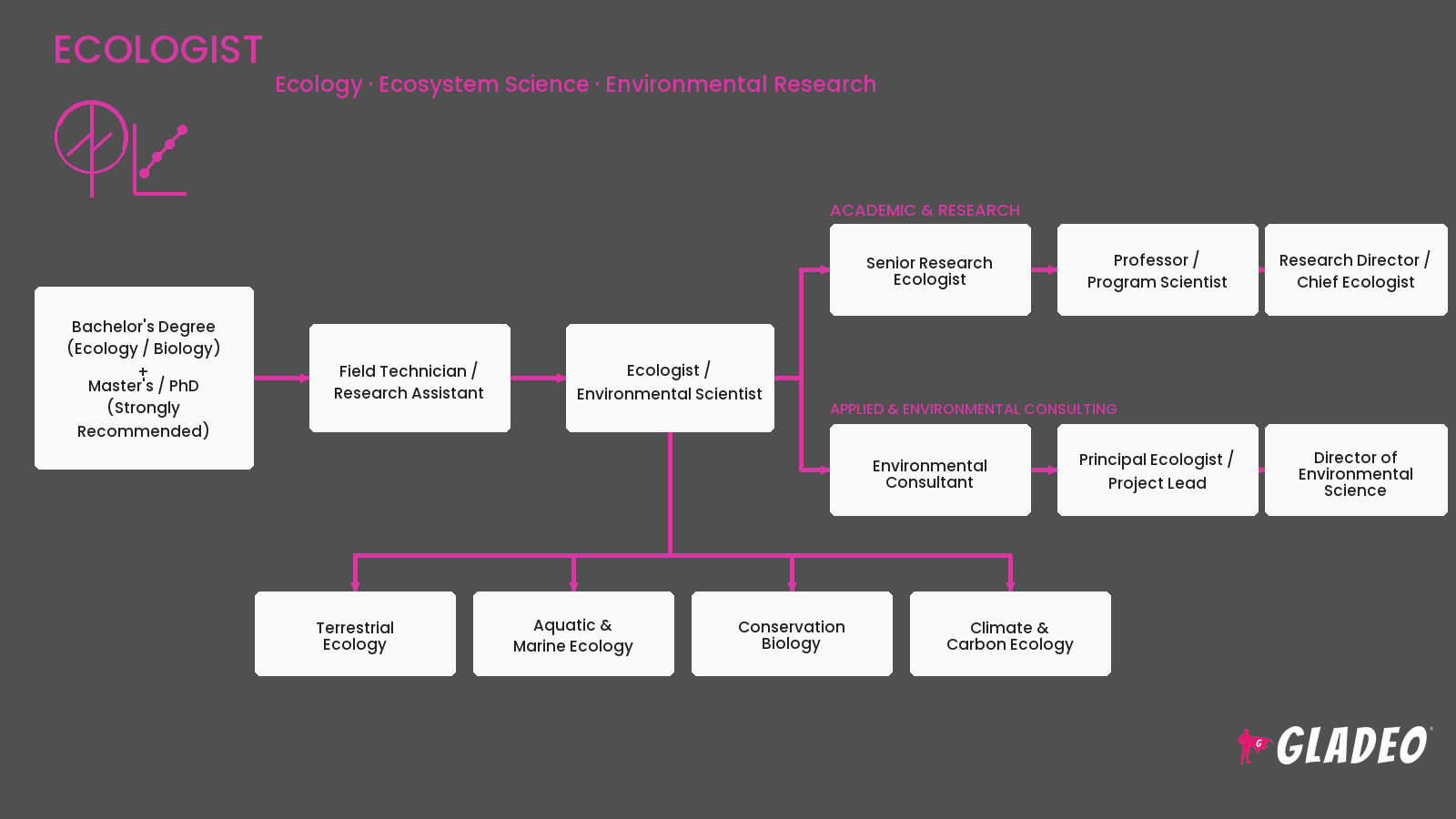
Becoming an ecologist typically involves earning a bachelor's degree in ecology, environmental science, biology, or a related field. Advanced research positions often require a master's or doctoral degree, especially for specialized roles or academic careers.
Students can take courses in relevant subjects such as:
- Biology and Ecology
- Environmental Science
- Chemistry
- Statistics and Data Analysis
- Geographic Information Systems (GIS)
- Soil Science
- Wildlife Biology
- Conservation Biology
- Research Methods
- Environmental Policy
Hands-on experience through internships, fieldwork, and research projects is crucial for aspiring ecologists. Building a strong portfolio of field studies and scientific writing helps demonstrate skills to employers. Many ecologists continue learning on the job to keep up with evolving technologies and environmental challenges.
- Take science courses like biology, chemistry, and environmental science.
- Join environmental or science clubs and participate in related projects.
- Volunteer for local conservation or wildlife organizations.
- Attend nature camps or outdoor education programs.
- Develop computer skills, especially in data analysis and mapping.
- Pursue summer internships or research assistant roles.
- Explore college programs with strong ecology or environmental science departments.
- Participate in science fairs or environmental competitions.
- Connect with professionals in the field for mentorship.
- Consider dual majors or minors in related areas like geography or statistics.
- Engage in community service focused on sustainability.
- Stay informed about current environmental issues through reading and media.
- Choose programs accredited in environmental or biological sciences.
- Look for schools offering extensive fieldwork opportunities.
- Check faculty expertise and research focus areas.
- Evaluate access to labs and ecological research equipment.
- Consider programs with internship or cooperative education
partnerships. - Review alumni career outcomes and networking support.
- Find programs that teach GIS and data analysis skills.
- Seek interdisciplinary programs combining ecology with policy or economics.
- Ensure availability of scholarships or financial aid for research.
- Investigate study-abroad options for global ecological experience.
- Look for student organizations focused on ecology or conservation.
- Prioritize hands-on learning and project-based courses.
- Apply for internships or assistant roles with environmental agencies or NGOs.
- Build a strong resume highlighting fieldwork and research experience.
- Develop a portfolio of ecological studies or reports.
- Network with professors, professionals, and at environmental events.
- Gain experience with GIS and statistical software.
- Volunteer for local conservation projects or citizen science programs.
- Prepare for interviews by practicing explanations of your research and passion for ecology.
- Consider entry-level titles like Field Technician, Research Assistant, or Environmental Analyst.
- Attend job fairs focused on environmental careers.
- Stay open to relocating for positions that offer growth.
- Seek temporary or seasonal positions to gain diverse experience.
- Keep learning and obtaining certifications related to ecology.
- Pursue advanced degrees to specialize and qualify for senior research or management roles.
- Publish scientific papers and present at conferences to build credibility.
- Develop leadership skills by managing projects and teams.
- Expand professional network through memberships in ecological societies.
- Seek certifications in environmental impact assessment or GIS.
- Transition into policy advising or environmental consulting roles.
- Gain experience across different ecosystems or industries.
- Stay current with emerging technologies and research trends.
Websites:
- Ecological Society of America (esa.org)
- Society for Conservation Biology (conbio.org)
- National Wildlife Federation (nwf.org)
- Environmental Protection Agency (epa.gov)
- United States Geological Survey (usgs.gov)
- International Union for Conservation of Nature (iucn.org)
- Conservation International (conservation.org)
- American Fisheries Society (fisheries.org)
- Society for Freshwater Science (freshwater-science.org)
- Wildlife Society (wildlife.org)
- Greenpeace (greenpeace.org)
- World Wildlife Fund (worldwildlife.org)
- Nature Conservancy (nature.org)
- Environmental Careers Organization (eco.org)
Books:
- A Sand County Almanac by Aldo Leopold
- Silent Spring by Rachel Carson
- The Ecology of Commerce by Paul Hawken
- Braiding Sweetgrass by Robin Wall Kimmerer
- Principles of Terrestrial Ecosystem Ecology by F. Stuart Chapin III
If a career as an ecologist doesn’t fit your interests or circumstances, there are many related paths that also focus on the environment, science, and sustainability.
- Environmental Engineer
- Wildlife Biologist
- Forestry Technician
- Marine Biologist
- Conservation Officer
- Environmental Educator
- Park Ranger
- Sustainability Specialist
- Agricultural Scientist
- Natural Resource Manager
Newsfeed

Featured Jobs
Online Courses and Tools