





Spotlights
Geoscientist, Geologist, Soil Scientist, Hydrologist, Paleontologist, Environmental Scientist, Seismologist, Volcanologist, Oceanographer, Atmospheric Scientist, Geophysicist, Mineralogist
Imagine standing on the edge of a cliff, gazing at layers of rock that tell stories millions of years old, or predicting how a natural disaster might impact a community to help save lives. Earth Scientists make these moments possible by unlocking the secrets of our planet’s past, present, and future.
Earth Scientists study the physical elements of the Earth—from rocks and soil to water and atmosphere—to understand processes like earthquakes, climate change, and resource distribution. Their day-to-day work involves collecting samples in the field, analyzing data in labs, collaborating with engineers, policymakers, and environmentalists, and creating models that forecast geological and environmental events. Their insights help industries, governments, and communities make informed decisions about land use, conservation, and disaster readiness.
Using high-tech tools like GIS (Geographic Information Systems), remote sensing satellites, seismic instruments, and computer modeling software, Earth Scientists translate complex data into actionable knowledge. Their work is crucial for safeguarding natural resources, planning sustainable development, and advancing our understanding of Earth's dynamic systems.
- Helping communities prepare for natural disasters and reduce risks.
- Discovering new insights about Earth’s history and environmental changes.
- Contributing to the responsible management of natural resources.
- Collaborating with diverse teams on impactful projects that protect the environment.
Working Schedule
Earth Scientists often balance time between outdoor fieldwork and indoor research or data analysis. Fieldwork can involve travel to remote or rugged locations, sometimes in challenging weather, while lab and office work require focused data interpretation and report writing. Many work full-time, with occasional extended hours during critical project phases or when monitoring urgent environmental events. Employment can be with government agencies, private companies, or research institutions, with some roles offering flexibility and others requiring strict adherence to project timelines.
Typical Duties
- Collecting soil, rock, water, and air samples during field studies.
- Analyzing samples using laboratory instruments and software.
- Mapping geological features using GIS and remote sensing technology.
- Conducting surveys to assess mineral deposits or groundwater resources.
- Monitoring seismic activity and interpreting data to forecast earthquakes or volcanic eruptions.
- Studying climate patterns and their impact on ecosystems.
- Preparing detailed reports and scientific papers for stakeholders and the public.
- Collaborating with environmental engineers to design sustainable solutions.
- Advising policymakers on land use, conservation, and hazard mitigation.
- Using computer models to simulate geological and environmental processes.
- Presenting findings at conferences and community meetings.
- Ensuring compliance with environmental regulations and standards.
Additional Responsibilities
- Maintaining and calibrating scientific instruments.
- Training junior scientists and interns in field and lab methods.
- Securing funding through grant writing and proposals.
- Participating in environmental impact assessments.
- Engaging with local communities to educate about environmental risks and protection.
- Staying updated on new scientific research and technologies.
- Contributing to multidisciplinary teams for large-scale projects.
- Adhering to safety protocols during fieldwork.
Mornings often start by reviewing data collected from previous field trips or recent sensor readings, planning the day’s field activities or lab experiments accordingly.
Midday is focused on hands-on work: collecting samples in varied outdoor environments, conducting lab analyses, or running computer simulations to predict geological events.
Afternoons and evenings might include writing reports, meeting with project collaborators, or preparing presentations to share insights with stakeholders or the community, ensuring the science is accessible and actionable.
Soft Skills
- Curiosity and a passion for discovery
- Attention to detail
- Strong problem-solving abilities
- Effective communication skills
- Collaboration and teamwork
- Adaptability to changing environments
- Critical thinking and analysis
- Patience and perseverance
- Time management
- Safety awareness
- Public speaking and presentation skills
- Cultural sensitivity and community engagement
Technical Skills
- Proficiency with GIS software
- Remote sensing and satellite data analysis
- Laboratory techniques for sample testing
- Seismic data interpretation
- Computer modeling and simulation
- Data visualization tools
- Field survey and sampling methods
- Statistical analysis software
- Report writing and scientific documentation
- Use of environmental monitoring equipment
- Geologist: Studies the Earth’s physical structure, rock formations, and processes like erosion and plate tectonics.
- Hydrologist: Focuses on water in the environment, including groundwater flow, water quality, and distribution.
- Soil Scientist: Analyzes soil properties, formation, and its impact on agriculture and ecosystems.
- Paleontologist: Investigates fossils and ancient life forms to understand Earth’s biological history.
- Volcanologist: Studies volcanoes, lava flows, and related hazards to predict eruptions.
- Seismologist: Examines earthquakes and seismic waves to assess risks and inform safety measures.
- Environmental Scientist: Explores interactions between humans and the environment to develop solutions to pollution and conservation.
- Geophysicist: Uses physical principles to study Earth’s interior, gravity, and magnetic fields.
- Environmental consulting firms
- Government agencies (e.g., US Geological Survey)
- Universities and research institutes
- Energy companies (oil, gas, renewable)
- Mining and mineral exploration companies
- Non-profit environmental organizations
- Federal and state environmental protection agencies
- Engineering and construction firms
- Water resource management agencies
- Disaster preparedness organizations
- National parks and conservation services
- International environmental organizations
Earth Scientists face the challenge of balancing rigorous scientific research with practical applications that affect public safety and environmental health. The pressure can be high, especially when working on disaster prediction or resource management projects where accuracy and timing are critical.
Work hours are generally full-time but can extend to evenings or weekends during field seasons or urgent environmental events. Fieldwork may require travel to remote or hazardous locations, demanding physical stamina and adaptability.
This career requires patience through long research phases and repeated data analysis, along with a commitment to lifelong learning as technology and environmental challenges evolve. Sacrifices may include time away from home and coping with unpredictable weather or field conditions.
- Increasing use of drone technology for aerial surveys.
- Advances in remote sensing with higher-resolution satellite data.
- Growing focus on climate change impact studies and adaptation strategies.
- Integration of big data analytics and AI in geological modeling.
- Use of virtual reality for geological visualization and education.
- Emphasis on interdisciplinary collaboration with ecologists, engineers, and urban planners.
- Expansion of renewable energy resource exploration (wind, geothermal).
- Development of more precise seismic monitoring networks.
- Enhancement of public engagement through open-access data platforms.
- Stronger regulations driving environmental impact assessments and sustainable practices.
Many Earth Scientists were fascinated by nature and enjoyed exploring outdoors as children—collecting rocks, observing weather patterns, or studying animals and plants. They often showed curiosity about how the Earth works and a desire to understand natural phenomena.
Hands-on activities like building models of volcanoes, visiting museums, or engaging in science fairs helped spark an early interest. Reading about dinosaurs, earthquakes, or space also contributed to their passion for Earth sciences and exploration.
Becoming an Earth Scientist typically involves earning a bachelor’s degree in geology, environmental science, earth science, or a related field. Many roles, especially in research or specialized areas, require a master’s or doctoral degree. Hands-on experience through internships, fieldwork, and lab research is essential to develop practical skills.
Students can take courses in relevant subjects such as:
- Geology and Mineralogy
- Soil Science
- Hydrology and Water Resources
- Environmental Chemistry
- Geophysics
- Remote Sensing and GIS
- Climatology and Meteorology
- Paleontology
- Field Methods in Earth Science
- Data Analysis and Statistics
Building a strong portfolio of fieldwork, research projects, and technical skills will set you apart. Participating in summer research programs or internships with environmental agencies can provide valuable experience. Continuous learning through workshops and certifications keeps your knowledge current in this evolving field.
- Take advanced science courses like biology, chemistry, physics, and earth science.
- Participate in science clubs, fairs, and environmental projects.
- Develop strong math skills, especially in statistics and data analysis.
- Explore computer science and learn about GIS software basics.
- Volunteer for local environmental cleanups or conservation efforts.
- Attend lectures or seminars about geology and environmental issues.
- Seek summer internships or fieldwork opportunities with local agencies.
- Build a portfolio of science experiments and research projects.
- Engage with online courses or tutorials related to earth sciences.
- Connect with mentors working in environmental or geological fields.
- Choose programs with strong fieldwork components and lab facilities.
- Look for schools offering internships or partnerships with environmental organizations.
- Ensure access to GIS and remote sensing technology training.
- Consider programs with interdisciplinary coursework (biology, chemistry, physics).
- Check for faculty expertise aligning with your interests.
- Seek programs that support research projects and presentations.
- Look for guidance on professional certifications and licensing.
- Evaluate the availability of career services and networking opportunities.
- Confirm the program’s reputation in earth and environmental sciences.
- Explore study abroad or field study options for diverse experience.
- Prioritize programs that teach data analysis and modeling skills.
- Check for funding opportunities like scholarships or research grants.
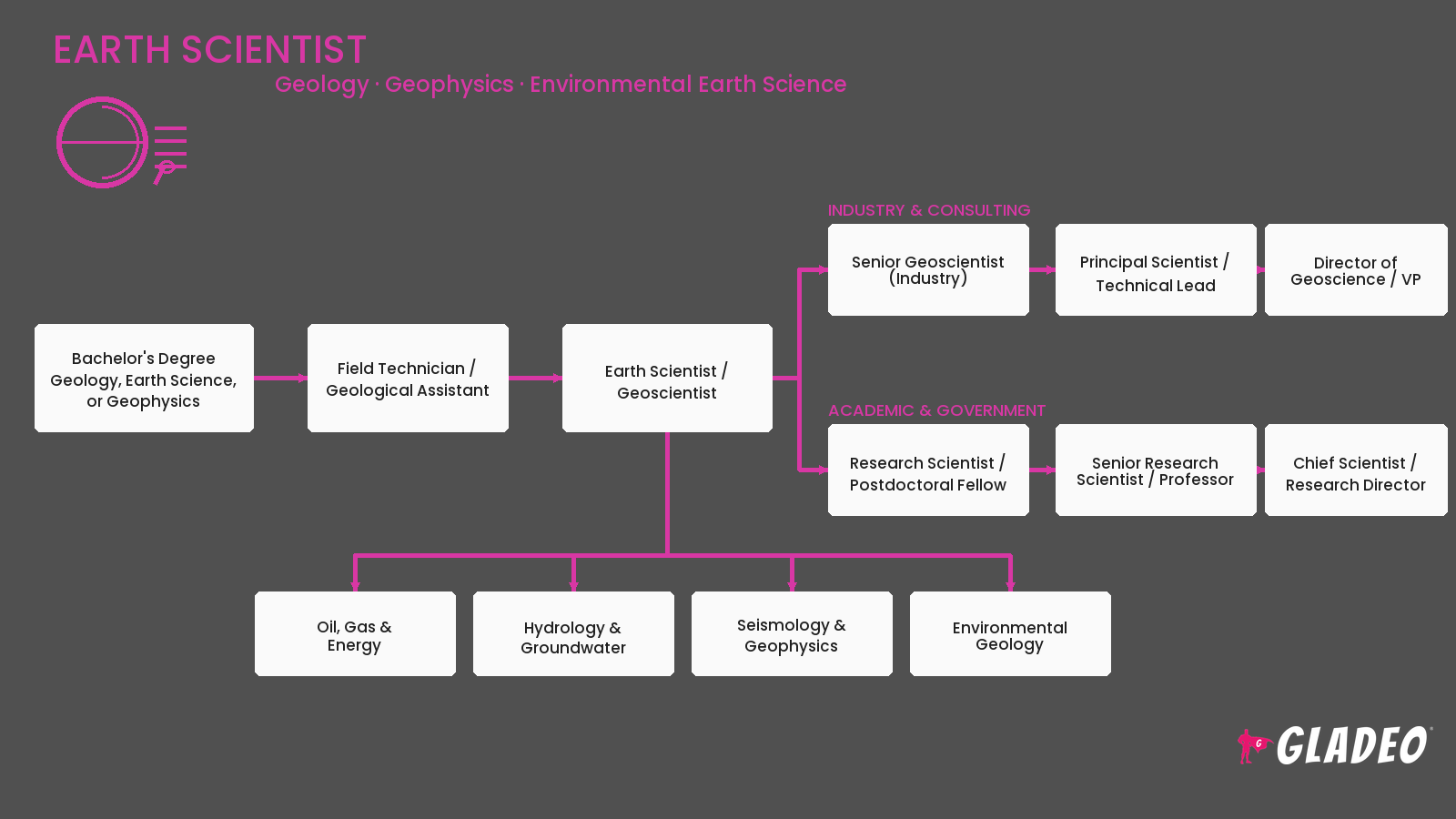
- Apply for internships or assistant roles with environmental agencies or research labs.
- Build a professional portfolio showcasing fieldwork, lab results, and reports.
- Attend career fairs focused on environmental and earth sciences.
- Network with professors, mentors, and industry professionals.
- Prepare for interviews by reviewing key scientific concepts and current environmental issues.
- Consider entry-level titles like Geological Technician or Environmental Science Assistant.
- Volunteer for community science projects or conservation groups.
- Develop proficiency with industry-standard software like GIS and data analysis tools.
- Seek opportunities to assist with field data collection and sample analysis.
- Join professional organizations to access job boards and resources.
- Create a LinkedIn profile highlighting your skills and interests.
- Stay flexible and open to relocation for the right opportunity.
- Gain advanced degrees (master’s or PhD) to specialize and increase job prospects.
- Develop expertise in cutting-edge technologies like remote sensing or AI modeling.
- Publish research findings in scientific journals to build credibility.
- Build strong professional relationships with colleagues and mentors.
- Attend industry conferences to stay updated and network.
- Pursue certifications related to environmental management or GIS.
- Take on leadership roles in projects or teams.
- Explore opportunities in consulting, government, or academia for growth.
Websites:
- American Geosciences Institute (americangeosciences.org)
- Geological Society of America (geosociety.org)
- National Association of Environmental Professionals (naep.org)
- U.S. Geological Survey (usgs.gov)
- Society of Exploration Geophysicists (seg.org)
- Environmental Protection Agency (epa.gov)
- International Union of Geological Sciences (iugs.org)
- Association of Environmental & Engineering Geologists (aegweb.org)
- Earth Science Women’s Network (eswnonline.org)
- Geological Society of London (geolsoc.org.uk)
- International Association of Hydrogeologists (iah.org)
- American Institute of Professional Geologists (aipg.org)
- National Oceanic and Atmospheric Administration (noaa.gov)
- Society for Mining, Metallurgy & Exploration (smenet.org)
Books:
- Earth Science by Edward J. Tarbuck and Frederick K. Lutgens
- Principles of Geology by Charles Lyell
- Introduction to Environmental Geology by Edward A. Keller
- Geology: A Complete Introduction by David Rothery
- The Story of Earth by Robert M. Hazen
If becoming an Earth Scientist doesn’t feel like the perfect fit, there are plenty of other exciting careers where your passion for science and the environment can shine.
- Environmental Consultant
- Hydrologist
- Geospatial Analyst
- Environmental Engineer
- Meteorologist
- Wildlife Biologist
- Natural Resource Manager
- Climate Scientist
- Science Educator
- Park Ranger
Newsfeed

Featured Jobs
Online Courses and Tools