







Spotlights
Investigator, Detective, Criminal Investigator, Special Agent, Private Investigator, Fraud Investigator, Homicide Detective, Cybercrime Investigator, Undercover Agent, Law Enforcement Detective, Case Investigator, Crime Scene Investigator
When a crime disrupts a community or a mystery threatens justice, Detectives and Criminal Investigators step in to uncover the truth. Their work shapes the stories that victims tell, the safety communities feel, and the verdicts that courts deliver.
Day to day, these professionals gather facts by interviewing witnesses and suspects, analyzing evidence, and following leads. They collaborate closely with patrol officers, forensic experts, prosecutors, and sometimes victims’ families to build a clear picture of what happened. Their investigations can involve anything from tracking down stolen property to solving complex crimes like homicide or cyber fraud.
Using tools like forensic databases, surveillance technology, and digital forensics software, Detectives piece together clues that are often hidden or obscured. Their role is crucial because the evidence and testimonies they collect directly influence whether justice is served and public trust is maintained.
- Helping bring closure and justice to victims and their families
- Solving challenging puzzles that require critical thinking and creativity
- Working closely with a team dedicated to public safety and truth
- Making a tangible difference in community safety and law enforcement effectiveness
Working Schedule
Detectives and Criminal Investigators typically work full-time, often beyond the standard 40-hour week. Their hours can be unpredictable, with shifts during nights, weekends, and holidays depending on case demands. Many work in environments ranging from police stations to crime scenes, sometimes under high stress and time pressure. Some are employed by law enforcement agencies, while others work privately or for government investigative units, with freelance assignments common in private investigations.
Typical Duties
- Interview witnesses, victims, and suspects to gather information
- Collect, preserve, and analyze physical and digital evidence
- Conduct surveillance to monitor suspects or locations
- Prepare detailed reports and case files for use in court
- Collaborate with forensic experts to interpret lab results
- Follow up on leads by canvassing neighborhoods or checking records
- Testify in court as expert witnesses when necessary
- Use databases to check criminal histories and track stolen property
- Coordinate with prosecutors and other legal personnel
- Develop profiles or motives based on gathered evidence
- Execute search warrants and subpoenas legally
- Maintain confidentiality and handle sensitive information with care
Additional Responsibilities
- Maintain physical fitness and readiness for fieldwork
- Stay updated on new investigative techniques and legal regulations
- Participate in community outreach or crime prevention programs
- Mentor junior detectives or interns
- Manage case logistics and prioritize tasks under deadlines
- Handle administrative duties, including paperwork and evidence logs
- Attend training sessions and professional development workshops
- Ensure compliance with ethical and procedural standards
Mornings often begin with reviewing overnight reports and checking in with patrol officers or forensic teams to get updates on ongoing cases. Detectives prioritize their day's tasks, plan interviews, and organize evidence gathered so far.
Midday is usually spent conducting interviews, surveillance, or visiting crime scenes. Detectives analyze new information, consult with colleagues, and sometimes attend meetings with prosecutors to discuss case progress and legal strategies.
Afternoon and evening hours might involve following up on leads, preparing reports, or attending court proceedings. Investigators often work late into the night to meet deadlines or respond to urgent developments, balancing fieldwork with paperwork and collaboration.
Soft Skills
- Critical thinking and problem solving
- Strong communication and interviewing abilities
- Attention to detail
- Emotional intelligence and empathy
- Patience and persistence
- Teamwork and collaboration
- Ethical judgment and integrity
- Stress management
- Adaptability and flexibility
- Discretion and confidentiality
- Time management
- Observation skills
Technical Skills
- Knowledge of criminal law and investigative procedures
- Proficiency with forensic technology and databases
- Report writing and documentation
- Use of surveillance and tracking equipment
- Digital forensics and cyber investigation tools
- Interview and interrogation techniques
- Evidence collection and preservation
- Legal compliance and chain of custody protocols
- Familiarity with court procedures and testimony
- Data analysis and case management software
- Homicide Detective: Focuses on investigating deaths and murders to determine causes and perpetrators
- Cybercrime Investigator: Specializes in crimes involving computers, networks, and digital data
- Fraud Investigator: Examines financial crimes such as embezzlement, scams, and insurance fraud
- Private Investigator: Works independently or for private clients to gather information for legal, personal, or business matters
- Undercover Agent: Assumes covert identities to infiltrate criminal organizations or gather intelligence
- Narcotics Detective: Targets illegal drug operations and related crimes
- Cold Case Investigator: Revisits unsolved cases using new technology and fresh perspectives
- Insurance Investigator: Investigates suspicious claims to detect fraud or verify details
- Local police departments
- State law enforcement agencies
- Federal investigative agencies (e.g., FBI, DEA)
- Private investigation firms
- Insurance companies
- Corporate security departments
- Legal firms and public defender offices
- Nonprofit organizations focused on crime prevention
- Cybersecurity firms
- Corrections departments
- Government regulatory agencies
- Forensic laboratories
Detectives face intense pressure as the stakes of their work can mean freedom or imprisonment for suspects. They often deal with traumatic situations and must maintain professionalism and emotional control.
Their work hours are irregular, including nights, weekends, and extended shifts to follow leads or respond to emergencies. This unpredictability demands flexibility and strong personal time management.
Sacrifices include exposure to danger, emotionally difficult cases, and the challenge of balancing high workloads with personal life. The role requires resilience, ethical commitment, and sometimes managing public scrutiny or media attention.
- Increasing use of digital forensics and cyber investigation tools
- Growth in data analytics to identify crime patterns
- Integration of body-worn cameras and surveillance tech
- Emphasis on community policing and transparency
- More cross-agency collaboration and information sharing
- Rise in specialized units for cybercrime and human trafficking
- Advancements in DNA analysis and forensic science
- Use of artificial intelligence for evidence analysis
- Remote and virtual interviewing techniques
- Focus on mental health resources for investigators
Many future detectives showed a strong curiosity about mysteries, puzzles, or law enforcement from a young age. They often enjoyed reading detective stories, playing investigative games, or engaging in activities that required observation and problem solving.
They might have been drawn to roles like neighborhood watch, junior law enforcement programs, or participated in debate and public speaking to build communication skills early on.
Becoming a Detective or Criminal Investigator usually starts with obtaining a degree in criminal justice, criminology, forensic science, or a related field. Many begin their careers as police officers to gain practical experience before specializing in investigations.
Students can take courses in relevant subjects such as:
- Criminal Justice
- Criminology
- Forensic Science
- Psychology
- Sociology
- Law Enforcement Procedures
- Ethics in Criminal Justice
- Cybersecurity Basics
- Report Writing
- Interview and Interrogation Techniques
Hands-on experience through internships, ride-along, or police academy training is essential. Building a strong portfolio of investigative skills and maintaining physical fitness will prepare students for the demands of the job. Ongoing training is common throughout a detective’s career to stay current with laws and technology.
- Join law enforcement or criminal justice clubs in high school
- Take courses in psychology, sociology, and government
- Volunteer or intern with local police departments or community safety programs
- Develop strong writing and communication skills
- Build physical fitness through sports or training
- Participate in debate or drama to hone interviewing and presentation skills
- Take computer science or IT classes to understand cybercrime basics
- Seek mentorships with law enforcement professionals
- Attend career days focused on public safety
- Research colleges with strong criminal justice programs
- Prepare for police academy entrance exams
- Engage in leadership roles and teamwork activities
- Look for programs with hands-on internships or ride-along
- Choose schools with connections to local law enforcement agencies
- Ensure courses cover both legal and forensic science aspects
- Verify accreditation and reputation of the program
- Seek opportunities for cross-disciplinary learning (e.g., psychology, IT)
- Find programs offering training in digital forensics
- Consider programs with strong ethics and communication training
- Look for mentorship or advisor support
- Check for access to modern investigative technology
- Prioritize programs with strong job placement records
- Attend workshops or seminars on emerging crime trends
- Choose schools offering physical fitness and self-defense training
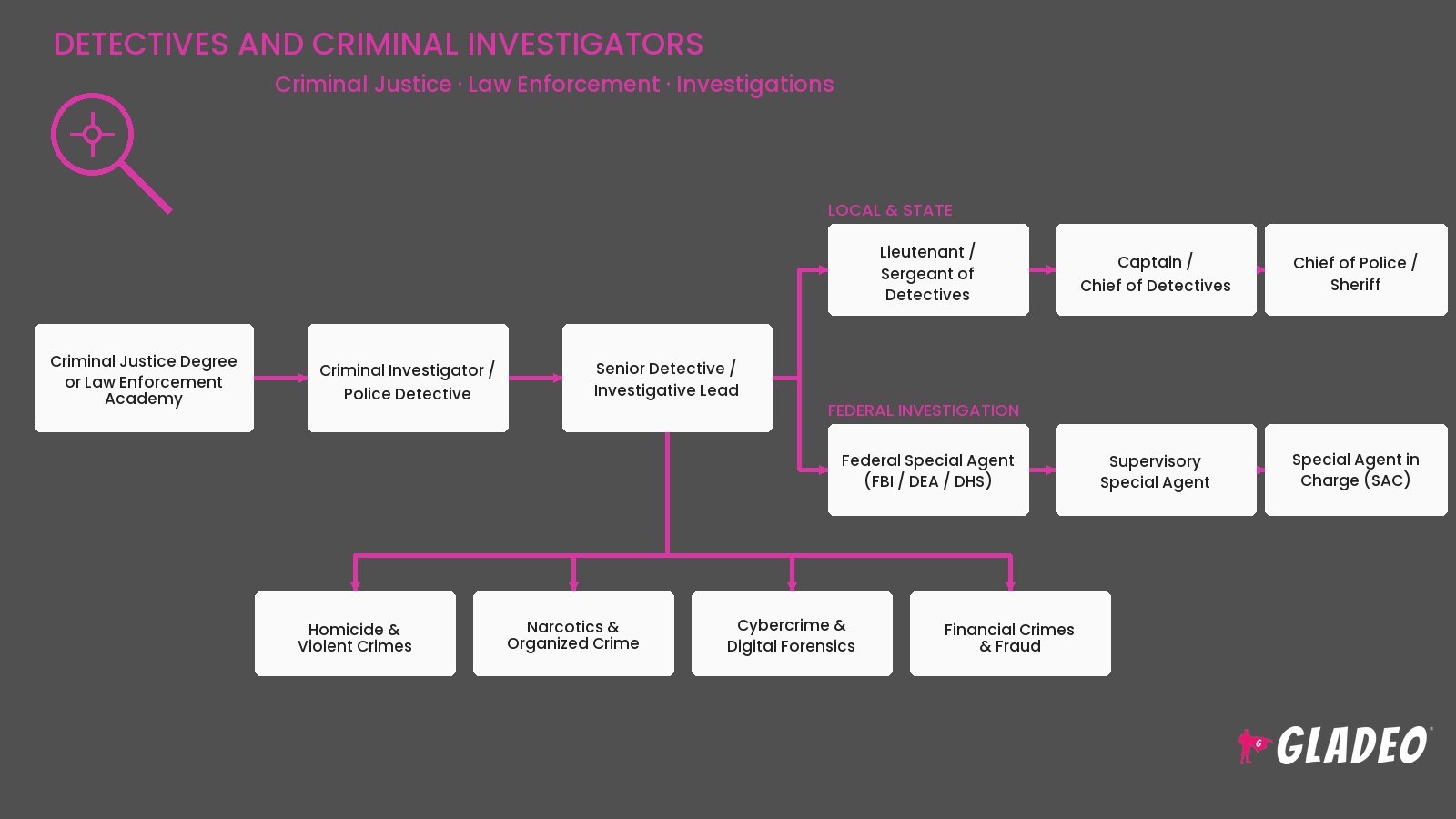
- Apply for entry-level police officer or patrol positions to gain field experience
- Seek internships with detective bureaus or investigative agencies
- Volunteer in community watch programs or victim support organizations
- Develop a strong, clear resume highlighting relevant coursework and skills
- Prepare a portfolio with examples of investigative work or reports
- Network with law enforcement professionals through events and social media
- Attend local law enforcement job fairs and career expos
- Practice interview skills focusing on scenario-based questions
- Obtain necessary certifications such as firearms or defensive tactics
- Stay physically fit and maintain a clean background record
- Shadow detectives or investigators to learn on the job
- Participate in ride-along to understand field realities
- Gain experience in patrol or special units to build investigative skills
- Pursue specialized training in cybercrime, forensics, or homicide
- Develop strong relationships with prosecutors and forensic teams
- Take on leadership roles within investigative teams
- Stay updated on new technology and legal changes
- Earn certifications in advanced investigative techniques
- Seek mentorship from senior detectives
- Build a reputation for reliability and thoroughness
Websites:
- International Association of Chiefs of Police (theiacp.org)
- National Association of Legal Investigators (nali.org)
- International Association of Crime Analysts (crimeanalysts.org)
- Society of Professional Investigators (spiweb.org.uk)
- National White Collar Crime Center (nw3c.org)
- FBI Careers (fbijobs.gov)
- National Criminal Justice Reference Service (ncjrs.gov)
- Cybercrime Support Network (cybercrimesupport.org)
- Police Executive Research Forum (policeforum.org)
- National Forensic Science Technology Center (forensiccoe.org)
- Private Investigator Licensing Boards (varies by state)
- The American Society of Criminology (asc41.com)
- International Association of Special Investigation Units (iasiu.org)
- Law Enforcement Today (lawenforcementtoday.com)
Books:
- Practical Homicide Investigation by Vernon J. Geberth
- Criminal Investigation by Charles Lushbaugh and Brian Klinoff
- Forensic Science: Fundamentals & Investigations by Anthony J. Bertino and Patricia Nolan Bertino
- The Art of Investigative Interviewing by Inge Sebyan Black
- Investigative Interviewing: Psychology, Method and Practice by Eric Shepherd and Andy Griffiths
If a career as a Detective or Criminal Investigator doesn’t work out or you want to explore related fields, consider these options that also focus on justice, safety, or investigative skills.
- Police Officer
- Crime Scene Investigator (CSI)
- Forensic Scientist
- Parole or Probation Officer
- Security Consultant
- Cybersecurity Analyst
- Legal Assistant or Paralegal
- Private Investigator
- Loss Prevention Specialist
- Intelligence Analyst
Newsfeed

Featured Jobs
Online Courses and Tools