





Spotlights
Edible Landscape Designer, Culinary Plant Specialist, Food Crop Consultant, Agricultural Horticulturist, Specialty Crop Technician, Sustainable Food Grower, Culinary Botanist, Urban Farm Manager, Food Production Technician, Garden-to-Table Specialist, Horticultural Food Scientist, Crop Nutritionist
Imagine biting into a perfectly ripe tomato or savoring fresh herbs grown just steps away from your kitchen—culinary horticulturists make these delicious farm-to-table experiences possible by blending gardening science with food production.
Culinary horticulturists work daily in gardens, greenhouses, farms, and research labs, cultivating edible plants that chefs and consumers rely on. They collaborate with farmers, chefs, agricultural scientists, and sustainability experts to develop and maintain plants that have the best flavor, nutrition, and growth efficiency. Their work includes selecting plant varieties, improving soil health, managing pests naturally, and experimenting with growing methods to increase yields and quality.
Using tools like soil testing kits, irrigation systems, plant breeding software, and greenhouse technology, culinary horticulturists ensure that edible plants thrive in various environments. Their expertise supports sustainable food systems, connecting agriculture with the culinary world to bring fresh, healthy ingredients from seed to plate.
- Helping communities access fresh, nutritious food through sustainable growing methods.
- Collaborating with chefs and food artisans to create unique flavors and dining experiences.
- Contributing to environmental health by promoting organic and eco-friendly cultivation practices.
- Watching plants grow from seedlings to harvest and knowing your work nourishes people and the planet.
Working Schedule
Culinary horticulturists often work full-time hours that blend outdoor and indoor environments, including gardens, farms, and labs. Their schedule can vary seasonally, with longer days during planting and harvest times. Many balance hands-on plant care with meetings and planning sessions. Some work for farms or research organizations, while others might freelance or consult, which can involve irregular hours and travel to different sites.
Typical Duties
- Selecting and propagating edible plant species suited for specific climates and soils.
- Testing and improving soil quality to enhance plant growth and flavor.
- Monitoring plant health and managing pests using integrated pest management techniques.
- Collaborating with chefs to understand culinary needs and tailor crop selections accordingly.
- Documenting plant growth data and conducting research on new cultivation methods.
- Designing and maintaining edible landscapes that combine aesthetics with food production.
- Educating farmers, gardeners, and the public about growing and harvesting edible plants.
- Managing greenhouse environments to optimize conditions for plant growth.
- Evaluating the nutritional content and flavor profiles of different plant varieties.
- Implementing sustainable and organic farming practices to preserve ecosystem health.
- Advising on post-harvest handling to maintain freshness and quality.
- Staying current with agricultural technology and culinary trends to innovate crop production.
Additional Responsibilities
- Maintaining detailed records of plant varieties, growth conditions, and harvest outcomes.
- Training farmworkers or garden staff on best practices for edible plant care.
- Participating in community outreach or workshops to promote urban gardening and food literacy.
- Assisting in grant writing or funding proposals for agricultural research projects.
- Coordinating with suppliers for seeds, fertilizers, and other growing materials.
- Analyzing market trends to recommend crops with high culinary demand.
- Supporting food safety compliance related to edible plant production.
- Advising restaurants or food businesses on sourcing locally grown produce.
Morning often begins early with a walk through the garden or farm to assess plant health, irrigation needs, and pests. Planning daily tasks involves reviewing weather forecasts and adjusting schedules accordingly.
Midday might include soil testing, applying organic amendments, or working alongside farm crews to propagate or harvest crops. Meetings with chefs or agricultural scientists provide insight into culinary trends and research developments.
Afternoons are typically spent analyzing data gathered from plant growth experiments or updating cultivation plans. Outreach activities or training sessions for staff and community members may round out the day, followed by equipment maintenance and preparing for the next day’s work.
Soft Skills
- Curiosity about plant biology and food science
- Patience and attention to detail in plant care
- Strong communication for collaborating with chefs and farmers
- Problem-solving to address pest or growth challenges
- Creativity in developing edible landscapes and crop varieties
- Adaptability to changing weather and growing conditions
- Teamwork for working alongside diverse professionals
- Organization for managing multiple projects and data
- Passion for sustainability and environmental stewardship
- Teaching and public speaking skills for outreach
- Critical thinking to analyze research findings
- Time management to balance hands-on work and planning
Technical Skills
- Soil testing and analysis
- Plant propagation techniques
- Integrated pest management
- Greenhouse and irrigation system operation
- Data collection and agricultural software use
- Knowledge of plant nutrition and fertilization
- Seed selection and breeding basics
- Harvesting and post-harvest handling
- Organic growing certification standards
- Basic laboratory skills for plant research
- Urban Culinary Horticulturist: Focuses on growing edible plants in city environments, such as rooftop gardens and community plots.
- Sustainable Crop Specialist: Develops eco-friendly cultivation methods to reduce environmental impact.
- Research Horticulturist: Conducts scientific studies on edible plant varieties and growth techniques.
- Edible Landscape Designer: Combines aesthetics with food production in residential or public spaces.
- Greenhouse Crop Manager: Oversees controlled environment agriculture for year-round production.
- Farm-to-Table Consultant: Advises restaurants and farms on sourcing and growing specialty ingredients.
- Herbal Plant Specialist: Focuses on growing culinary and medicinal herbs with specific flavor profiles.
- Food Security Horticulturist: Works on projects to increase local food availability in underserved areas.
- Botanical gardens with edible plant programs
- Sustainable farms and organic agriculture operation
- Agricultural research institutions and universities
- Urban agriculture nonprofits and community gardens
- Hospitality groups focused on farm-to-table dining
- Government agencies managing food and agriculture
- Greenhouse and nursery businesses
- Seed companies and plant breeding firms
- Food cooperatives and farmers markets
- Environmental conservation organizations
- Culinary schools with garden programs
- Agricultural extension services
Culinary horticulturists often face physical demands such as bending, lifting, and working outdoors in all weather conditions. They must handle seasonal cycles that can include early mornings and intensive periods during planting or harvest.
The role requires balancing scientific research with practical farming and collaboration with chefs and other food professionals. Deadlines can be tight, especially when coordinating harvests with restaurant needs or research projects.
Sacrifices may include irregular hours during peak seasons and the need to stay current with evolving agricultural technologies and culinary trends. The work can be mentally challenging, requiring problem-solving for pests, weather setbacks, or crop failures.
- Increasing demand for local, organic, and sustainably grown food.
- Advancements in controlled environment agriculture like vertical farming.
- Use of data analytics and sensors for precision growing.
- Integration of culinary preferences into crop development.
- Growing interest in edible landscaping for home and public spaces.
- Focus on biodiversity and heirloom plant varieties.
- Collaboration between chefs and growers to create unique flavors.
- Expansion of urban agriculture and community gardening programs.
- Emphasis on reducing food waste through efficient harvest and storage.
- Use of hydroponics and aquaponics for soil-free cultivation.
Many culinary horticulturists loved spending time outdoors as kids, often helping with gardening or growing their own fruits and vegetables. They were curious about how plants grow and enjoyed experimenting with different seeds and soils.
They often showed an early interest in cooking and food, combining their love of plants with a passion for flavors and nutrition. Activities like visiting farms, farmers markets, or cooking with fresh produce sparked their desire to connect food production with culinary arts.
Becoming a culinary horticulturist typically involves education in plant science, agriculture, or horticulture, often at the associate or bachelor's degree level. Hands-on experience through internships, farm work, or research projects is vital to mastering both growing techniques and culinary applications.
Students can take courses in relevant subjects such as:
- Plant Biology and Physiology
- Soil Science and Fertility
- Sustainable Agriculture Practices
- Pest and Disease Management
- Horticultural Crop Production
- Food Science and Nutrition
- Greenhouse Management
- Plant Propagation Techniques
- Agricultural Technology and Data Analysis
- Culinary Arts or Food Systems
Practical experience is key, so students should seek internships at farms, botanical gardens, or agricultural research centers. Building a portfolio of successful crop projects and understanding culinary needs through collaboration enhances job readiness. On-the-job training and continuing education keep skills sharp as the field evolves.
- Take biology, chemistry, and environmental science courses to build a science foundation.
- Enroll in agricultural or horticulture classes if available.
- Join gardening clubs or volunteer at community gardens.
- Participate in cooking classes or food science clubs.
- Seek summer internships or part-time jobs at farms or nurseries.
- Attend workshops on sustainable farming and plant care.
- Develop skills in data collection and use of technology.
- Explore online courses related to agriculture and culinary arts.
- Connect with local chefs or farmers for mentorship opportunities.
- Start a small edible garden at home to gain hands-on experience.
- Research colleges with strong horticulture or agriculture programs.
- Prepare a portfolio highlighting plant projects and culinary collaborations.
- Look for programs offering both horticulture and food science courses.
- Choose schools with hands-on farm or greenhouse facilities.
- Ensure the program includes internship or cooperative education opportunities.
- Check if faculty have experience in culinary horticulture or sustainable agriculture.
- Look for programs that teach integrated pest management and organic growing.
- Consider schools with connections to local farms, chefs, or food businesses.
- Verify availability of courses in plant breeding and propagation.
- Seek programs with strong research opportunities in specialty crops.
- Look for training in agricultural technology and data analysis tools.
- Ensure curriculum covers both plant science and culinary applications.
- Find programs emphasizing sustainability and environmental stewardship.
- Check for career services and alumni networks in agriculture and food industries.
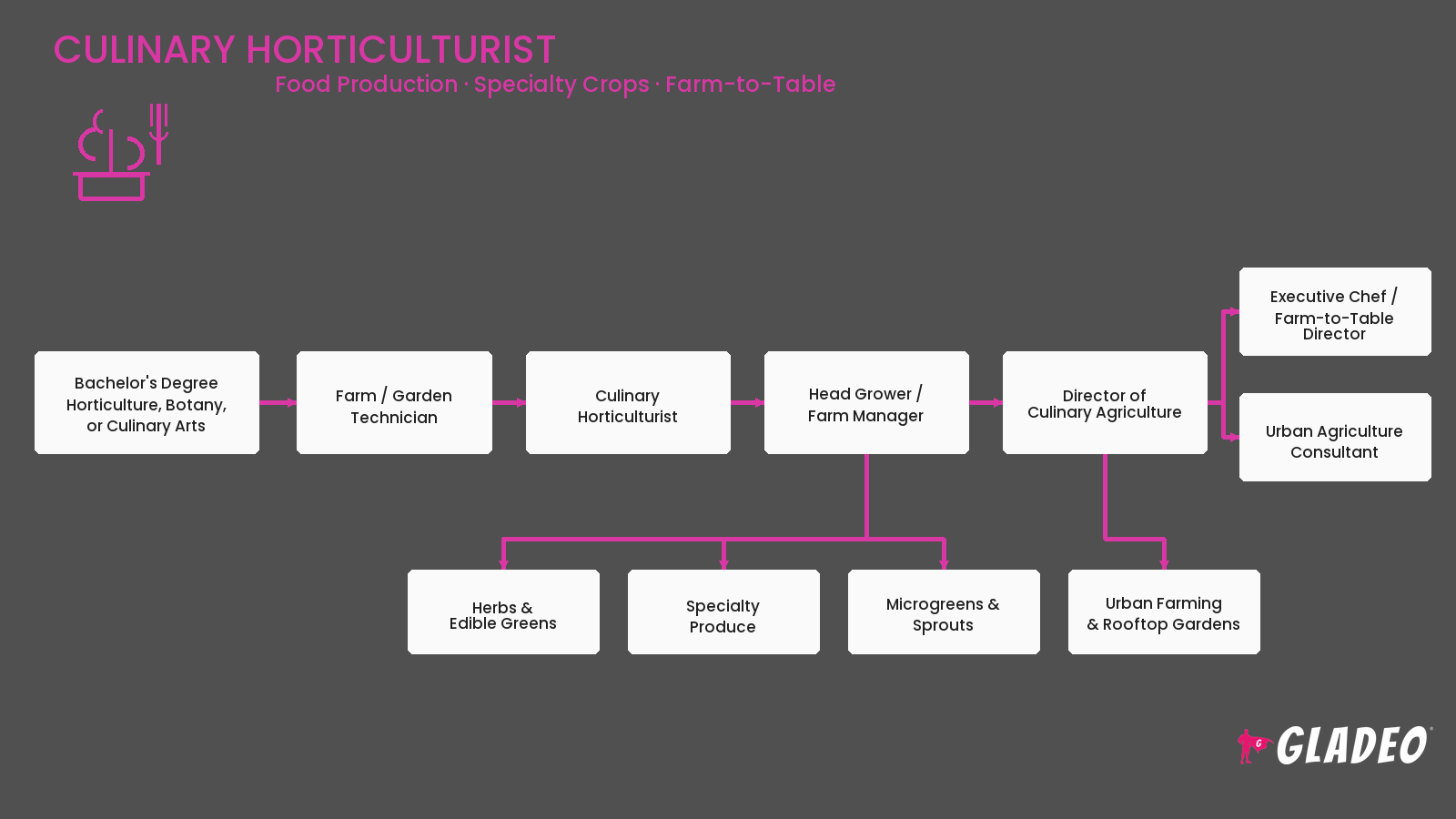
- Apply for internships or assistant roles at farms specializing in specialty crops or edible plants.
- Volunteer at botanical gardens with edible plant collections.
- Work as a greenhouse technician or nursery assistant.
- Assist in community garden projects focusing on food production.
- Take entry-level positions in agricultural research labs.
- Shadow culinary horticulturists or sustainable farmers.
- Build a portfolio documenting plant growing projects and experiments.
- Network with local chefs and farmers to learn about industry needs.
- Attend agricultural workshops and farming conferences.
- Develop skills in soil testing, plant care, and pest management.
- Create a small edible garden to demonstrate your expertise.
- Seek mentorship from experienced horticulturists or agricultural scientists.
- Gain advanced knowledge through certifications or graduate studies in horticulture or plant science.
- Specialize in a niche like urban agriculture or sustainable cropping systems.
- Develop strong relationships with chefs, farmers, and researchers to expand your impact.
- Publish research or case studies on innovative cultivation techniques.
- Take leadership roles managing farms, greenhouses, or research projects.
- Stay current with emerging technologies like precision agriculture tools.
- Expand your skills into related areas like food safety or crop marketing.
- Teach or consult to share your expertise and grow your professional network.
Websites:
- American Society for Horticultural Science - https://www.ashs.org
- Association for Specialty Cut Flowers and Edible Plants - https://ascfep.org
- Urban Agriculture Network - https://urbanagriculture.network
- Sustainable Agriculture Research & Education (SARE) - https://www.sare.org
- National Gardening Association - https://garden.org
- Growing for Market - https://www.growingformarket.com
- The Culinary Herb Growers Association - https://culinaryherbgrowers.org
- Greenhouse Grower - https://www.greenhousegrower.com
- Edible Schoolyard Project - https://edibleschoolyard.org
- Rodale Institute - https://rodaleinstitute.org
- The Herb Society of America - https://herbsociety.org
- Organic Farming Research Foundation - https://ofrf.org
- AgriBusiness Global - https://www.agribusinessglobal.com
- Local Harvest - https://www.localharvest.org
Books:
- The Cook’s Herb Garden by Jeff Cox and Marie-Pierre Moine
- Edible Landscaping by Rosalind Creasy
- The Organic Gardener’s Handbook of Natural Pest and Disease Control by Fern Marshall Bradley and Barbara W. Ellis
- Planting the Future: Saving Our Medicinal Herbs by Mark Blumenthal
- The Market Gardener by Jean-Martin Fortier
If culinary horticulture doesn’t end up being your perfect fit, there are many related careers that use your love of plants, food, and sustainability in different ways.
- Agricultural Scientist
- Food Scientist
- Landscape Designer
- Urban Farmer
- Chef specializing in farm-to-table cuisine
- Environmental Consultant
- Botanist
- Sustainable Agriculture Educator
- Nursery Manager
- Soil and Plant Scientist
Newsfeed

Featured Jobs
Online Courses and Tools