




Spotlights
Visual Development Artist, Character Designer, Environment Artist, Matte Painter, Storyboard Artist, Concept Designer, Illustration Artist, 2D Artist, Game Artist, Digital Painter, Animation Concept Artist, Pre-Production Artist
Every epic video game, blockbuster movie, or immersive animated series begins with a spark of imagination brought to life by Concept Artists. These creative visionaries craft the first visual ideas that shape entire worlds and characters, influencing how audiences experience stories and adventures.
Concept Artists develop detailed sketches and digital paintings that define the look, feel, and mood of characters, environments, props, and scenes. They collaborate closely with directors, game designers, animators, and writers to translate scripts and ideas into compelling visual concepts that guide the entire production team.
Using sophisticated digital painting software and traditional sketching tools, Concept Artists visualize ideas that serve as blueprints for 3D modelers, animators, and set designers. Their work is essential for aligning creative vision, saving time and resources by providing clear, inspiring references that steer projects toward success.
- Seeing your original sketches evolve into fully realized characters and worlds on screen or in games.
- Collaborating with diverse creative teams to bring stories and ideas to life visually.
- The thrill of constant creativity, inventing new designs and pushing artistic boundaries.
- Knowing your art sets the tone and inspires the entire production process, impacting millions of viewers or players.
Working Schedule
Concept Artists often work full-time in studios or remotely, with schedules that can intensify near project deadlines. Their work demands focus and creativity during regular business hours but may require extra hours to meet tight milestones. Freelance Concept Artists enjoy more flexible hours but must manage client expectations and deadlines independently.
Typical Duties
- Sketching initial design ideas for characters, environments, props, and costumes.
- Creating detailed digital paintings and illustrations to communicate visual concepts.
- Collaborating with art directors, designers, and writers to refine ideas and ensure consistency.
- Researching references and gathering inspiration to inform realistic or fantastical designs.
- Presenting concept art to stakeholders and incorporating feedback quickly.
- Maintaining organized asset libraries and version control of artwork.
- Adapting designs based on technical requirements for animation or game engines.
- Exploring color palettes, lighting, and mood to enhance storytelling through visuals.
- Using 3D modeling software to create basic models or paint over 3D scans for more accurate concepts.
- Staying updated on industry trends and new digital tools to improve workflow.
Additional Responsibilities
- Mentoring junior artists and providing constructive critiques.
- Participating in brainstorming sessions to generate fresh ideas.
- Assisting with marketing materials through concept visuals for trailers or promotional art.
- Helping create style guides that standardize visual elements across projects.
- Collaborating with texture artists and animators to ensure designs translate well into 3D.
- Contributing to pitch decks and proposals with compelling concept imagery.
- Managing multiple projects simultaneously and meeting overlapping deadlines.
- Continuously experimenting with new art techniques and software features.
Mornings often start by reviewing feedback from the art director or project leads on previous sketches and planning new assignments. This time is used to gather references, brainstorm ideas, and outline rough thumbnails that capture the essence of the design goals.
Midday is dedicated to deep creative work—developing polished digital paintings or refining character poses and environmental layouts. Concept Artists frequently communicate with team members to align concepts with narrative and technical parameters.
Afternoons or evenings usually involve presentations and critiques where artists share their work, receive input, and make revisions. They may also engage in learning sessions to improve skills or explore new software updates to enhance future projects.
Soft Skills
- Strong creativity and imagination
- Excellent visual communication
- Collaboration and teamwork
- Adaptability to feedback
- Time management
- Attention to detail
- Problem-solving mindset
- Openness to experimentation
- Patience and perseverance
- Curiosity and continuous learning
- Self-motivation
- Effective presentation skills
Technical Skills
- Digital painting software (Photoshop, Procreate)
- 3D modeling basics (Maya, Blender)
- Graphic tablets and styluses
- Understanding of anatomy and perspective
- Color theory and lighting techniques
- Storyboarding and thumbnail sketching
- Version control software (Perforce, Git)
- Texture painting tools
- Concept art pipelines and workflows
- File management and organization
- Character Concept Artist: Focuses on designing characters, costumes, and creatures with personality and style.
- Environment Concept Artist: Creates landscapes, cityscapes, and interiors to establish setting and atmosphere.
- Prop Concept Artist: Designs weapons, vehicles, gadgets, and other objects essential to storytelling.
- Creature Designer: Specializes in imaginative animal or monster concepts with unique traits.
- Storyboard Artist: Develops sequential art to visualize scenes and camera angles early in production.
- Visual Development Artist: Works broadly on mood, lighting, and overall aesthetic to guide art direction.
- Matte Painter: Creates detailed background paintings that blend with live action or 3D environments.
- Pre-Production Artist: Supports early-stage design work across multiple concept art areas to prepare for production.
- Video game studios
- Film and animation production companies
- Advertising agencies
- Publishing houses
- VR/AR development firms
- Toy and merchandise companies
- Freelance art studios
- Educational institutions
- Theme park design companies
- Comic book publishers
- Mobile app developers
- Visual effects companies
Concept Artists work under tight deadlines that can require intense focus and extended hours, especially when projects approach key milestones. They must balance creativity with efficiency, delivering high-quality visuals quickly.
The role demands mental endurance to revise and iterate artwork after feedback, sometimes repeatedly, without losing enthusiasm or vision. Collaboration means artists often juggle multiple opinions and project needs.
Physical demands include long hours at a computer or drawing tablet, requiring good ergonomics and regular breaks to avoid strain. The pressure to innovate and stay current with tools and trends can also be challenging but rewarding.
- Increasing use of AI-assisted tools to speed up concept generation.
- Growing demand for immersive VR and AR experiences shaping concept art needs.
- Remote and hybrid work models expanding opportunities for freelance artists.
- Integration of 3D modeling early in the concept phase for more accurate designs.
- Cross-disciplinary skills becoming more valuable, blending traditional and digital art.
- Focus on diverse and inclusive character and environment designs.
- Real-time rendering engines influencing faster visualization of concepts.
- Collaborative cloud platforms improving team workflows and asset sharing.
- Rising popularity of indie games creating more freelance and small studio roles.
- Sustainability themes inspiring new creative directions in design.
Many Concept Artists loved drawing, painting, and storytelling from a young age, often creating their own characters and worlds in notebooks or digital apps. They enjoyed video games, cartoons, and comic books that sparked their imagination.
They usually showed strong visual creativity and attention to detail early on, experimenting with different art styles and tools. Problem-solving through art projects and working on group creative activities hinted at their future career path.
Becoming a Concept Artist typically involves earning a degree or certificate in fine arts, graphic design, illustration, or animation. Hands-on training in digital art tools and building a strong portfolio are essential for entering this competitive field.
Students can take courses in relevant subjects such as:
- Drawing and sketching fundamentals
- Digital painting and illustration
- Anatomy for artists
- Color theory and composition
- 3D modeling basics
- Character design
- Environmental design
- Storyboarding and visual storytelling
- Graphic design principles
- Art history and visual culture
Students should seek internships or personal projects to build a diverse portfolio showcasing creativity and technical skill. Continuous learning and adapting to new software or art styles help Concept Artists stay effective and relevant in their careers.
- Take advanced art classes focusing on drawing and digital media.
- Join art clubs or teams to collaborate on projects and gain feedback.
- Practice regularly with sketchbooks and digital tablets.
- Learn to use software like Photoshop and Blender through online tutorials or classes.
- Participate in art competitions and exhibitions to build confidence.
- Study anatomy and perspective to improve realistic drawing skills.
- Explore storytelling through comics or short animations.
- Develop a personal website or social media presence to showcase artwork.
- Attend workshops or summer programs focused on concept art or game design.
- Connect with professionals through internships or mentorship programs.
- Look for programs with strong digital art and illustration courses.
- Choose schools that offer access to industry-standard software and hardware.
- Seek programs with experienced faculty who have professional backgrounds.
- Ensure the curriculum includes portfolio development and critique sessions.
- Check for opportunities to collaborate on projects simulating real production environments.
- Consider programs offering internship placements or industry connections.
- Evaluate class sizes to ensure personalized instruction.
- Look for schools supporting emerging technologies like VR and 3D art.
- Find programs offering workshops or guest lectures from industry artists.
- Prioritize schools with active student art communities and exhibitions.
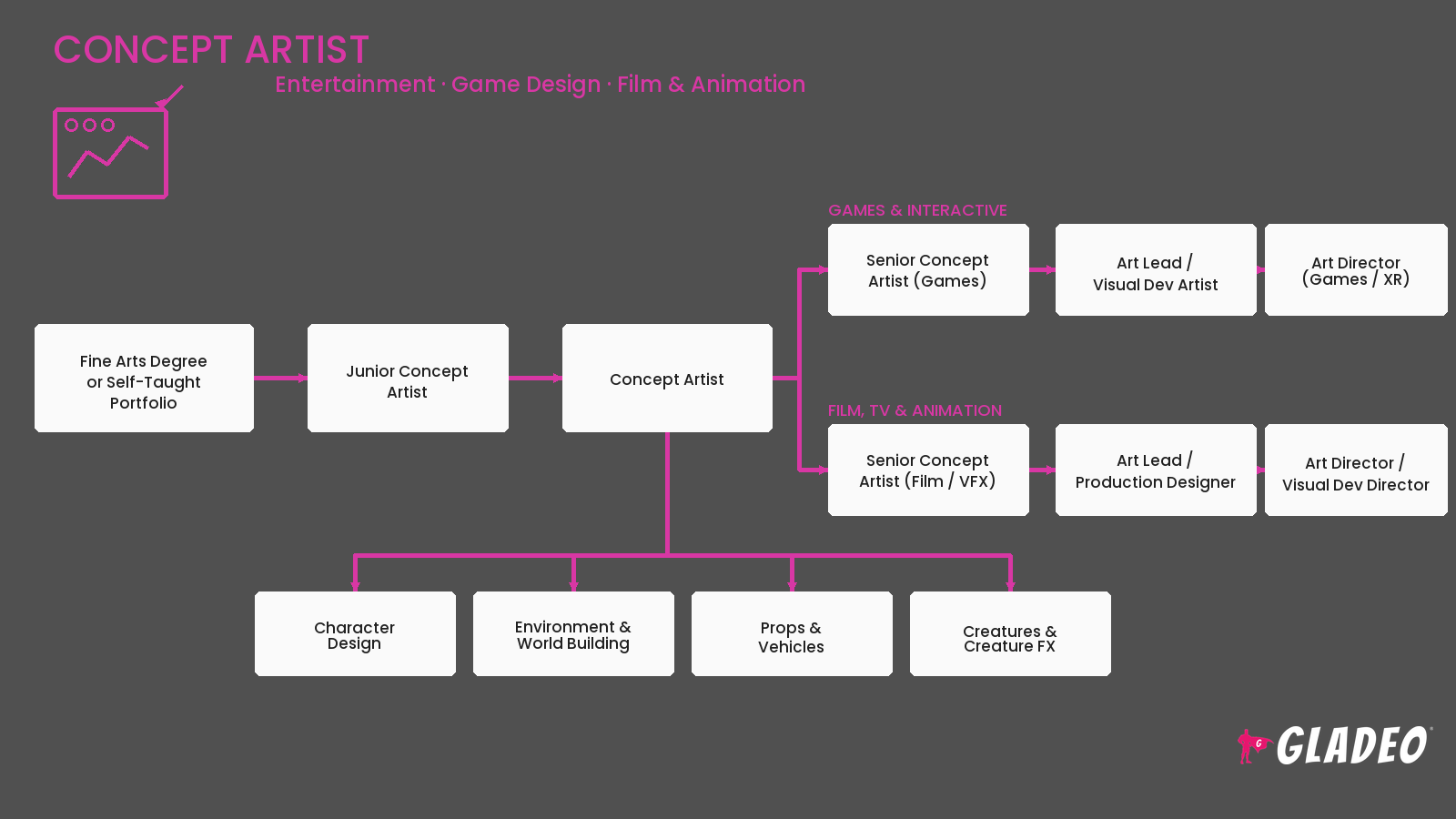
- Build a strong, diverse portfolio focused on concept sketches and finished digital paintings.
- Create a demo reel or online gallery showcasing your best work and artistic range.
- Apply for internships or junior concept artist roles at game studios, animation houses, or agencies.
- Network with industry professionals through conventions, online forums, and social media.
- Improve your skills constantly by taking online courses and practicing new techniques.
- Prepare for interviews by understanding studio workflows and project pipelines.
- Be open to freelance or contract work to gain experience and build client relationships.
- Seek feedback from mentors and peers to refine your portfolio and approach.
- Stay updated on software updates and emerging tools relevant to concept art.
- Volunteer for student films or indie games to gain practical collaboration experience.
- Learn to manage deadlines and communicate professionally with teams.
- Develop a personal brand around your unique art style and strengths.
- Master advanced digital painting and 3D skills to take on complex projects.
- Build strong relationships with art directors and creative leads.
- Expand your expertise into related roles like art directing or visual development.
- Contribute to high-profile projects to enhance your reputation.
- Lead or mentor junior artists to gain leadership experience.
- Stay adaptable to new technologies and project types.
- Attend industry conferences and workshops to grow your network.
- Develop a specialty, such as character or environment design, to become a sought-after expert.
Websites:
- ArtStation (www.artstation.com)
- ConceptArtWorld (www.conceptartworld.com)
- CGSociety (www.cgsociety.org)
- DeviantArt (www.deviantart.com)
- The Rookies (www.therookies.co)
- Society of Illustrators (www.societyillustrators.org)
- Behance (www.behance.net)
- ImagineFX (www.imaginefx.com)
- Animation Mentor (www.animationmentor.com)
- ZBrushCentral (www.zbrushcentral.com)
- Polygon Academy (www.polygon-academy.com)
- Schoolism (www.schoolism.com)
- Digital Arts Online (www.digitalartsonline.co.uk)
- LinkedIn Learning (www.linkedin.com/learning)
Books:
- Color and Light: A Guide for the Realist Painter by James Gurney
- Framed Ink: Drawing and Composition for Visual Storytellers by Marcos Mateu-Mestre
- Figure Drawing for All It's Worth by Andrew Loomis
- The Skillful Huntsman: Visual Development of a Grimm Tale at Art Center College of Design by Khang Le, Mike Yamada, Felix Yoon
- Digital Painting Techniques: Practical Techniques of Digital Art Masters by 3dtotal Publishing
If the fast-paced world of concept art doesn't fit your path or you want to explore other creative careers, related fields offer chances to use your artistic skills in different ways.
- Illustrator
- Graphic Designer
- Storyboard Artist
- 3D Modeler
- Animator
- Visual Effects Artist
- Game Designer
- Art Director
- Character Designer
- Environmental Artist
Newsfeed

Featured Jobs
Online Courses and Tools