





Spotlights
Analytical Chemist, Research Chemist, Chemical Scientist, Laboratory Chemist, Organic Chemist, Inorganic Chemist, Pharmaceutical Chemist, Quality Control Chemist, Environmental Chemist, Process Chemist, Materials Chemist, Forensic Chemist
Every medicine you take, every cleaner you use, and many of the materials that build your world have been carefully tested and improved by chemists. These scientists unlock the secrets of substances to make products safer, stronger, and more effective, impacting lives in ways you might not even notice.
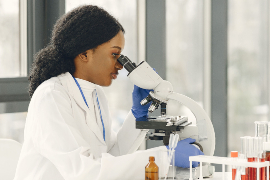
Chemists spend their days experimenting with chemicals and materials to understand their properties and reactions. They work closely with engineers, biologists, product developers, and quality control teams to design experiments, analyze results, and develop new or improved products. Their work often involves testing samples, running complex instruments, and documenting findings that help companies produce better medicines, cleaner fuels, or safer food.
Using advanced lab equipment like spectrometers, chromatographs, and microscopes, chemists apply scientific methods to solve problems ranging from pollution control to drug discovery. Their detailed analyses and innovations are essential for ensuring that products meet safety standards and perform as promised, making their role vital in industries from healthcare to manufacturing.
- Contributing to new medicines that save lives and improve health.
- Discovering solutions to environmental challenges and pollution.
- Creating innovative materials that improve everyday products.
- Using scientific knowledge to make the world safer and cleaner.
Working Schedule
Chemists typically work in laboratory settings during regular business hours, but deadlines or experiments may require evening or weekend work. Many chemists are employed full-time in industries like pharmaceuticals, manufacturing, or research institutions. Some work as consultants or freelancers, adapting their schedules to client needs. Work environments are usually indoors, with strict safety protocols.
Typical Duties
- Design and conduct experiments to test chemical properties.
- Analyze substances using instruments like gas chromatographs and spectrometers.
- Develop new chemical compounds or improve existing products.
- Document experimental procedures and results accurately.
- Collaborate with engineers, biologists, and quality assurance teams.
- Ensure compliance with safety and environmental regulations.
- Prepare reports and presentations for management or regulatory agencies.
- Troubleshoot issues in manufacturing processes related to chemicals.
- Maintain and calibrate laboratory equipment.
- Stay updated on scientific literature and industry trends.
- Train junior staff or interns in laboratory techniques.
- Participate in patent application processes for new discoveries.
Additional Responsibilities
- Monitor chemical processes in manufacturing to improve efficiency.
- Assist in scaling up laboratory discoveries to production levels.
- Support regulatory submissions by providing scientific data.
- Maintain safety standards and proper handling of hazardous materials.
- Participate in interdisciplinary research projects.
- Manage chemical inventories and order supplies.
- Contribute to grant writing or funding proposals.
- Engage in public outreach or education about chemistry and safety.
In the morning, chemists review the goals for their experiments and prepare samples or reagents needed for testing. They check equipment calibration and safety protocols before starting work to ensure accuracy and safety.
Midday involves performing experiments, carefully observing chemical reactions, and recording data in lab notebooks or software. Chemists may analyze data using computers and discuss progress with team members to adjust procedures if needed.
Afternoon often focuses on analyzing results using advanced instruments, writing detailed reports, and collaborating with colleagues from other departments to apply findings to product development or manufacturing. Deadlines might require longer hours to finalize critical projects.
Soft Skills
- Attention to detail
- Curiosity and scientific thinking
- Problem-solving mindset
- Strong communication skills
- Team collaboration
- Patience and persistence
- Organization and time management
- Critical thinking
- Adaptability to new technology
- Ethical responsibility
- Ability to follow safety protocols
- Data interpretation skills
Technical Skills
- Laboratory techniques and procedures
- Operation of analytical instruments
- Chemical data analysis and interpretation
- Knowledge of organic and inorganic chemistry
- Use of chromatography and spectroscopy
- Experience with chemical safety standards
- Report writing and documentation
- Computer proficiency in data software
- Understanding of manufacturing processes
- Regulatory compliance knowledge
- Analytical Chemist: Focuses on analyzing substances to determine their composition and quality.
- Organic Chemist: Specializes in carbon-based compounds, often key in pharmaceuticals.
- Inorganic Chemist: Studies non-organic substances like metals and minerals.
- Pharmaceutical Chemist: Develops and tests new drugs and medicines.
- Environmental Chemist: Works on issues related to pollution and environmental protection.
- Materials Chemist: Researches and develops new materials with unique properties.
- Process Chemist: Optimizes chemical processes for manufacturing efficiency.
- Forensic Chemist: Analyzes evidence for legal investigations.
- Pharmaceutical companies
- Chemical manufacturing firms
- Environmental agencies
- Research universities and institutes
- Food and beverage companies
- Cosmetics and personal care manufacturers
- Government laboratories
- Petrochemical companies
- Healthcare organizations
- Agricultural companies
- Quality control laboratories
- Biotechnology firms
Chemists often face tight deadlines to deliver accurate results, which can create pressure to balance speed with precision. Experiments may need to be repeated multiple times to confirm findings, demanding patience and focus under stress.
Work hours are generally standard but can extend into evenings or weekends when projects or experiments require continuous monitoring. Some positions involve rotating shifts, especially in manufacturing or quality control.
The role requires strict adherence to safety protocols due to handling hazardous materials. Chemists must maintain physical stamina to stand for long periods and mental endurance to concentrate on detailed tasks. Continuous learning and adapting to new technologies are essential for success.
- Increased use of automation and robotics in labs.
- Growth of green chemistry focused on sustainability.
- Advances in computational chemistry and AI for molecular modeling.
- Rising demand for pharmaceuticals and personalized medicine.
- Development of new materials with nanotechnology.
- Greater integration of chemistry with biology and data science.
- Tighter environmental regulations influencing chemical production.
- Collaboration across global research networks.
- Use of portable analytical instruments for fieldwork.
- Emphasis on safety and ethical standards in chemical research
Many chemists were fascinated by mixing household substances, conducting simple experiments, or exploring the natural world as children. They often enjoyed science fairs, puzzles, and problem-solving activities that sparked curiosity about how things work.
Early interests in math and science classes, as well as reading about discoveries or inventors, helped nurture their passion. Hands-on experiences like building chemistry sets or volunteering in labs provided early exposure to the field.
Becoming a chemist typically requires at least a bachelor's degree in chemistry or a related field like biochemistry or chemical engineering. Advanced roles, especially in research or development, often require master's or doctoral degrees. Hands-on laboratory experience and internships are crucial for building skills and credibility.
Students can take courses in relevant subjects such as:
- General Chemistry
- Organic Chemistry
- Inorganic Chemistry
- Analytical Chemistry
- Physical Chemistry
- Biochemistry
- Laboratory Safety and Techniques
- Chemical Instrumentation
- Mathematics for Chemists
- Environmental Chemistry
Students should seek out internships and research opportunities to gain practical experience and build a portfolio of projects. Many chemists also continue learning through professional certifications or graduate studies to specialize and advance their careers.
- Take challenging math and science courses, especially chemistry and biology.
- Participate in science clubs, fairs, or competitions.
- Seek summer internships or volunteer opportunities in labs.
- Develop strong note-taking and analytical skills.
- Learn computer skills relevant to data analysis.
- Explore college programs with robust chemistry departments.
- Build a portfolio of science projects and experiments.
- Connect with mentors in the field for guidance.
- Attend workshops or seminars about chemistry and science careers.
- Consider dual enrollment or AP courses in science and math.
- Choose programs with well-equipped laboratories and experienced faculty.
- Look for opportunities to work on research projects or internships.
- Check if the program offers courses in both theoretical and applied chemistry.
- Seek programs that teach modern instrumentation and data analysis software.
- Consider schools with connections to industry for job placements.
- Evaluate the availability of scholarships or financial aid.
- Look for programs that encourage interdisciplinary studies, like biochemistry or materials science.
- Attend open houses and talk to current students about their experience.
- Check accreditation status and reputation of the chemistry department.
- Look for programs that provide career counseling and job placement support.

- Apply for internships or assistant roles in university or private labs.
- Build a detailed resume highlighting coursework and any lab experience.
- Create a portfolio showcasing experiments, research projects, or presentations.
- Network with professors, industry professionals, and alumni.
- Prepare for interviews by practicing explanations of technical concepts.
- Seek entry-level roles such as laboratory technician or junior chemist.
- Consider temporary or contract positions to gain experience.
- Join professional chemistry organizations for networking.
- Attend career fairs focused on science and technology fields.
- Stay updated on industry news and emerging technologies.
- Develop proficiency with laboratory software and instruments.
- Demonstrate strong safety awareness and attention to detail.
- Pursue advanced degrees (Master's or PhD) to specialize and increase opportunities.
- Develop expertise in a niche area like pharmaceuticals or environmental chemistry.
- Gain experience managing projects and leading teams.
- Publish research findings in scientific journals or present at conferences.
- Build strong professional relationships through networking and mentorship.
- Stay current with industry developments and certifications.
- Seek roles with increasing responsibility in R&D or quality control.
- Consider transitioning to management, consulting, or teaching roles.
Websites:
- American Chemical Society (ACS) - https://www.acs.org
- Royal Society of Chemistry (RSC) - https://www.rsc.org
- Chemistry World - https://www.chemistryworld.com
- Chemical & Engineering News (C&EN) - https://cen.acs.org
- Society of Chemical Industry - https://www.soci.org
- National Institute of Standards and Technology (NIST) - https://www.nist.gov
- Environmental Protection Agency (EPA) - https://www.epa.gov
- Society for Analytical Chemists - https://www.s-a-c.org
- Biotechnology Innovation Organization - https://www.bio.org
- Journal of Chemical Education - https://pubs.acs.org/journal/jceda8
- Careers in Chemistry - https://www.acs.org/content/acs/en/careers.html
- Lab Manager Magazine - https://www.labmanager.com
- Science Daily - Chemistry News - https://www.sciencedaily.com/news/matter_energy/chemistry
- National Science Foundation - https://www.nsf.gov
Books:
- The Disappearing Spoon by Sam Kean
- The Elements by Theodore Gray
- Napoleon's Buttons by Penny Le Couteur and Jay Burreson
- Uncle Tungsten by Oliver Sacks
- Stuff Matters by Mark Miodownik
If becoming a chemist doesn’t work out, there are many related careers where your scientific skills and curiosity can shine. These options still involve problem-solving, experimentation, and working with science.
- Chemical Technician
- Pharmaceutical Sales Representative
- Environmental Scientist
- Quality Control Analyst
- Materials Scientist
- Biochemist
- Laboratory Manager
- Forensic Science Technician
- Science Educator
- Process Engineer
Newsfeed

Featured Jobs
Online Courses and Tools