






Spotlights
Biosecurity Officer, Agricultural Biosecurity Specialist, Disease Prevention Analyst, Pathogen Control Specialist, Animal Health Inspector, Plant Health Specialist, Environmental Health Officer, Quarantine Officer, Biosafety Specialist, Public Health Biosecurity Analyst, Biosecurity Compliance Officer, Pest Control Coordinator
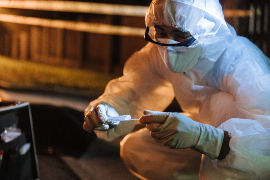
Imagine a world where a single outbreak of disease in crops or livestock could disrupt food supplies, threaten economies, and endanger public health. Biosecurity Specialists stand guard against these threats, protecting our farms, food, ecosystems, and communities from invasive pests and harmful pathogens.
Biosecurity Specialists work daily by monitoring farms, processing plants, ports, and borders to detect and prevent biological threats. They collaborate closely with farmers, government agencies, scientists, and emergency responders to develop and enforce protocols that secure agricultural products and natural resources. Their efforts help prevent outbreaks that could devastate industries and livelihoods.
Using tools like diagnostic tests, surveillance software, and risk assessment models, Biosecurity Specialists analyze data and inspect environments to detect risks early. Their work is crucial to safeguarding food security, preserving biodiversity, and ensuring public safety by controlling and preventing the spread of diseases and invasive species.
- Protecting communities and ecosystems from devastating disease outbreaks.
- Working at the forefront of science and public safety to keep food supplies secure.
- Collaborating with diverse teams including farmers, scientists, and government officials.
- Making a tangible impact on global health and environmental conservation through prevention efforts.
Working Schedule
Biosecurity Specialists typically work full-time hours, often in office settings, laboratories, or field environments such as farms and border checkpoints. Their work can involve irregular hours, especially during outbreaks or emergencies when rapid response is critical. They may be employed by government agencies, research institutions, or private companies, and some work as consultants or contractors.
Typical Duties
- Conduct inspections of farms, processing plants, and ports to identify potential biosecurity risks.
- Develop and implement protocols to prevent introduction and spread of pests and diseases.
- Collect and analyze samples to detect pathogens or invasive species.
- Monitor compliance with biosecurity regulations and report violations.
- Train farmers, workers, and officials on biosecurity best practices.
- Coordinate with government agencies during outbreak investigations and emergency responses.
- Maintain detailed records and reports on biosecurity activities and findings.
- Use Geographic Information Systems (GIS) to track and map disease outbreaks.
- Participate in research on emerging threats and mitigation strategies.
- Evaluate and update biosecurity plans based on new scientific data.
Additional Responsibilities
- Organize community outreach programs to raise awareness about biosecurity.
- Assist in policy development related to agricultural and environmental health.
- Collaborate with international partners on cross-border biosecurity issues.
- Review and approve shipments of agricultural products for compliance.
- Stay current with scientific advancements and regulatory changes.
- Prepare presentations and reports for stakeholders and decision-makers.
- Support training and certification programs for biosecurity professionals.
- Manage biosecurity equipment and supplies inventory.
Mornings often start with reviewing surveillance data and laboratory results from the previous day to identify any signs of new threats. Specialists plan site visits or meetings with local farmers and officials to discuss recent concerns or updates.
Midday involves conducting field inspections, collecting samples, and training farm workers on sanitation and disease prevention methods. This hands-on work ensures that biosecurity measures are properly implemented to reduce risks.
Afternoons are typically spent analyzing data, writing reports, and coordinating with government agencies or research teams. During outbreak situations, the day may extend into evenings with emergency meetings and rapid response coordination to contain threats quickly.
Soft Skills
- Attention to detail
- Strong communication skills
- Problem-solving mindset
- Team collaboration
- Adaptability
- Critical thinking
- Patience and persistence
- Public speaking
- Conflict resolution
- Empathy and cultural sensitivity
- Organizational skills
- Decision-making under pressure
Technical Skills
- Understanding of biological and environmental sciences
- Laboratory sampling and testing methods
- Data analysis and interpretation
- Knowledge of biosecurity protocols and regulations
- Use of Geographic Information Systems (GIS)
- Risk assessment techniques
- Report writing and documentation
- Familiarity with diagnostic tools and software
- Emergency response coordination
- Use of personal protective equipment (PPE)
- Agricultural Biosecurity Specialist: Focuses on protecting crops and livestock from pests and diseases.
- Environmental Biosecurity Specialist: Works to safeguard natural ecosystems from invasive species.
- Border Biosecurity Officer: Monitors and inspects imports and exports to prevent contamination.
- Research Biosecurity Analyst: Studies emerging biological threats and develops prevention strategies.
- Public Health Biosecurity Specialist: Addresses biosecurity as it relates to human health and zoonotic diseases.
- Quarantine Officer: Enforces isolation measures to contain outbreaks and prevent spread.
- Pest Control Coordinator: Manages programs to control invasive pests impacting agriculture and environment.
- Biosecurity Compliance Officer: Ensures organizations meet legal and safety biosecurity standards.
- Government agriculture departments
- Environmental protection agencies
- Research institutions and universities
- Agricultural extension services
- Food safety and inspection agencies
- International organizations like the FAO or WHO
- Private agricultural companies
- Biotechnology firms
- Customs and border protection agencies
- Nonprofit environmental groups
- Public health agencies
- Consulting firms specializing in biosecurity
Biosecurity Specialists often face high-pressure situations, especially when disease outbreaks demand rapid response to protect public health and agriculture. The role requires vigilance and the ability to manage multiple priorities under tight deadlines.
Work environments can vary from comfortable offices and labs to outdoor agricultural sites, sometimes in challenging weather or remote areas. Fieldwork may involve physical activity like walking through farms or inspecting cargo containers.
The job can require flexibility with hours, particularly during emergencies or outbreaks when specialists might work evenings, weekends, or extended shifts. Maintaining up-to-date knowledge of evolving threats and regulations is a continuous responsibility.
- Increased use of digital surveillance and data analytics for early threat detection.
- Advancements in diagnostic testing technologies enabling faster identification of pathogens.
- Growing importance of biosecurity due to global trade and climate change expanding pest ranges.
- Integration of Geographic Information Systems (GIS) for mapping and managing outbreaks.
- Collaboration between international agencies to tackle cross-border biosecurity challenges.
- Development of automated monitoring tools such as drones and sensors.
- Emphasis on educating farmers and communities as frontline defense.
- Stricter regulations and certifications for agricultural imports and exports.
- Expansion of biosecurity roles into public health sectors addressing zoonotic diseases.
- Use of AI and machine learning to predict and model biological threats.
Many Biosecurity Specialists showed an early fascination with biology, animals, and the environment. They often enjoyed outdoor activities like gardening, hiking, or caring for animals, sparking a passion for protecting living things.
Curiosity about how diseases spread and a keen interest in science experiments or nature studies often pointed these individuals toward careers focused on health and safety in agricultural or environmental contexts.
Becoming a Biosecurity Specialist usually involves studying biology, agriculture, environmental science, or public health. Many start with a bachelor’s degree in fields like agricultural science, biology, or environmental health, followed by specialized training or certifications in biosecurity.
Students can take courses in relevant subjects such as:
- Biology and Microbiology
- Agricultural Science
- Environmental Science
- Public Health
- Epidemiology
- Plant Pathology
- Animal Science
- Data Analysis and Statistics
- GIS and Remote Sensing
- Laboratory Techniques
Hands-on experience is key, so internships or cooperative education programs with government agencies, farms, or research labs are highly valuable. Building a strong portfolio of practical skills alongside academic credentials prepares students for the demands of this career.
- Take science courses like biology, chemistry, and environmental science.
- Join clubs related to agriculture or environmental conservation.
- Participate in science fairs or health-related competitions.
- Volunteer at local farms, botanical gardens, or animal shelters.
- Learn computer skills, especially data analysis and GIS software.
- Seek internships or summer programs with agricultural or health agencies.
- Develop strong communication and teamwork abilities.
- Explore certifications related to biosecurity or lab work.
- Attend workshops or seminars on disease prevention and safety.
- Research colleges offering degrees in agricultural science or public health.
- Look for programs with strong agricultural and biological science curriculums.
- Choose schools that offer hands-on labs and field experience.
- Seek programs that provide training in biosecurity protocols and emergency response.
- Consider institutions with partnerships for internships or cooperative education.
- Evaluate faculty expertise in biosecurity and related research.
- Check for access to modern laboratory and diagnostic equipment.
- Prioritize programs that teach data analysis and GIS skills.
- Find schools with active student clubs or organizations in agriculture and health.
- Look for flexible programs offering certifications alongside degrees.
- Verify that the curriculum covers current biosecurity laws and regulations.
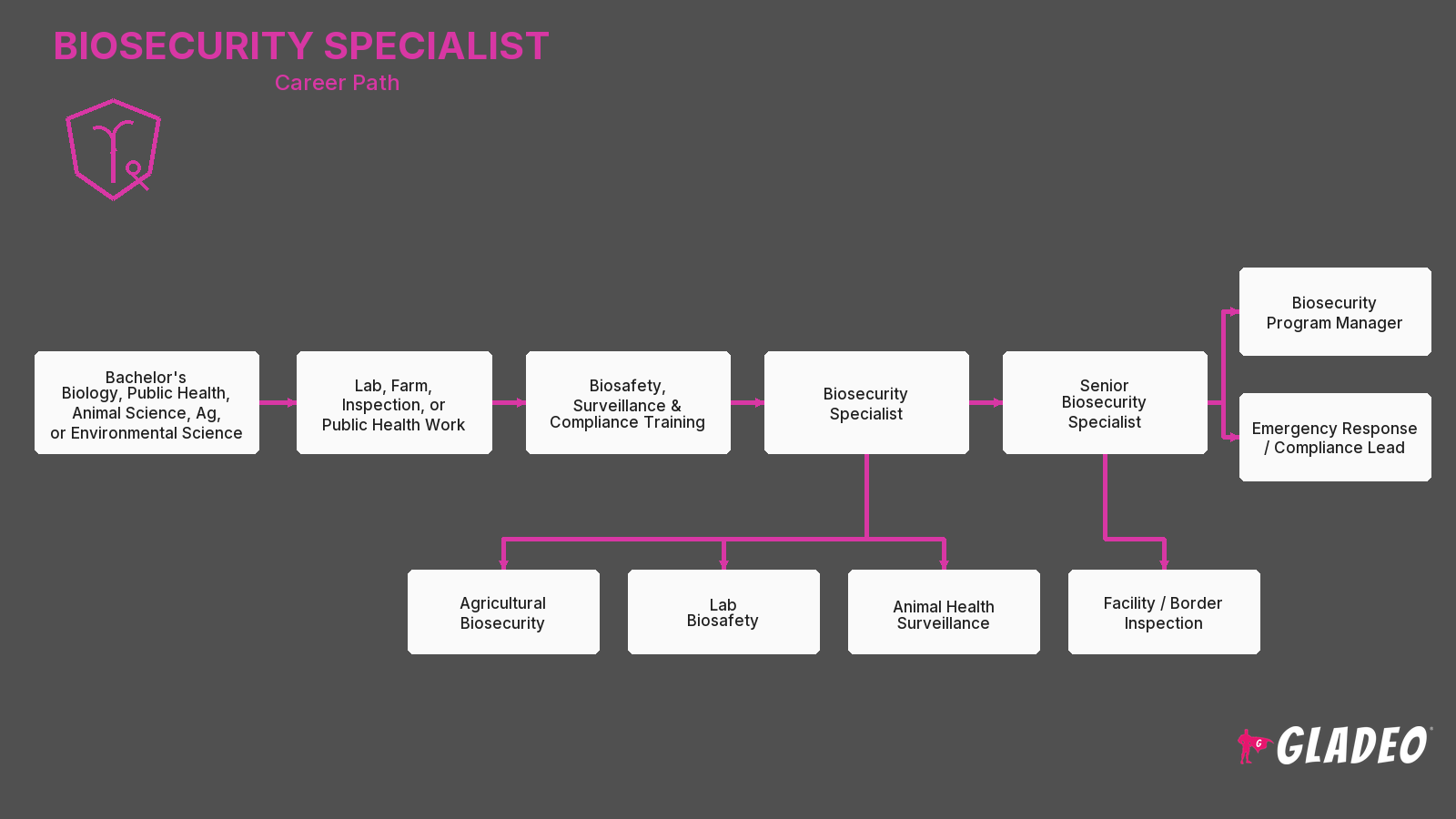
- Apply for internships or entry-level positions with government agricultural departments or environmental agencies.
- Build a portfolio highlighting relevant coursework, fieldwork, and any lab experience.
- Network with professionals through industry events, seminars, or online groups.
- Volunteer for projects related to disease prevention or environmental monitoring.
- Gain certifications in biosecurity, laboratory safety, or pest management.
- Develop strong report-writing and communication skills for documentation and collaboration.
- Learn to use GIS software and data analysis tools relevant to biosecurity.
- Seek mentorship from experienced biosecurity professionals.
- Stay informed about current outbreaks and emerging threats.
- Prepare for interviews by understanding biosecurity challenges and solutions.
- Demonstrate your ability to work both independently and in teams.
- Be ready to adapt to fieldwork and laboratory duties as required.
- Gain advanced certifications or a master’s degree in biosecurity or public health.
- Specialize in areas like epidemiology, pest control, or environmental biosecurity.
- Build a reputation through successful outbreak management or research contributions.
- Expand your network by joining professional biosecurity organizations.
- Take leadership roles in projects or teams to develop management skills.
- Stay updated with emerging technologies and regulatory changes.
- Pursue roles in policy development or international biosecurity coordination.
- Consider teaching or training roles to share expertise with the next generation.
Websites:
- International Federation for Biosafety Associations (IFBA) - ifba.bio
- Food and Agriculture Organization (FAO) - fao.org
- Centers for Disease Control and Prevention (CDC) - cdc.gov
- American Phytopathological Society - apsnet.org
- National Institute of Food and Agriculture (NIFA) - nifa.usda.gov
- Association of Public Health Laboratories (APHL) - aphl.org
- Society for Risk Analysis (SRA) - sra.org
- International Plant Protection Convention (IPPC) - ippc.int
- Biosecurity Queensland - biosecurity.qld.gov.au
- World Organization for Animal Health (WOAH) - woah.org
- Environmental Protection Agency (EPA) - epa.gov
- National Association of State Departments of Agriculture (NASDA) - nasda.org
- National Pest Management Association (NPMA) - pestworld.org
- American Society for Microbiology (ASM) - asm.org
Books:
- Biosecurity and Bioterrorism: Containing and Preventing Biological Threats by Jeffrey Ryan
- Introduction to Biosecurity: The Threats and Challenges of Emerging Infectious Diseases by Timothy R. Holtz
- Agricultural Biosecurity: Protecting Crops and Livestock by Richard K. Momol
- Manual of Environmental Biosecurity by Karen E. Barlow
- Disease Control Priorities in Developing Countries by Dean T. Jamison et al.
If you’re interested in protecting health and the environment but want to explore different paths, there are several related careers that share similar skills and goals.
- Environmental Scientist
- Epidemiologist
- Food Safety Inspector
- Agricultural Inspector
- Public Health Analyst
- Laboratory Technician
- Wildlife Biologist
- Pest Management Specialist
- Emergency Management Specialist
- Conservation Officer
Newsfeed

Featured Jobs
Online Courses and Tools