





Spotlights
Bike Mechanic, Bicycle Assembler, Cycle Technician, Bike Repair Specialist, Bicycle Service Technician, Bicycle Maintenance Technician, Cycle Mechanic, Bike Fitter, Bicycle Technician, Bicycle Assembly Technician, Bicycle Repair Specialist, Bike Shop Technician
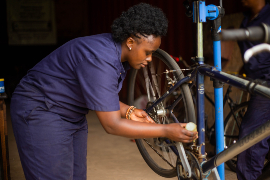
Every time a cyclist gears up for a ride, the smooth performance and safety of their bicycle depend on the precise work of a Bicycle Installer/Mechanic. Whether it’s a mountain bike tackling rugged trails or a sleek road bike speeding through city streets, these professionals ensure every bolt, brake, and gear functions flawlessly to deliver a safe, enjoyable ride.
Bicycle Installers/Mechanics spend their days assembling new bikes from delivered parts, diagnosing and repairing mechanical issues, tuning gears and brakes, and customizing bikes to fit individual riders. They collaborate closely with shop managers, sales staff, and cycling enthusiasts to provide expert advice and ensure every bike meets quality standards. Their work results in dependable, well-maintained bikes ready for adventure or daily commuting.
Using a range of specialized hand tools, diagnostic devices, and sometimes computerized fitting systems, Bicycle Installers/Mechanics blend mechanical know-how with a passion for cycling. Their role is vital because a bike’s performance and rider safety hinge on their attention to detail, technical skill, and commitment to quality craftsmanship.
- Helping people experience freedom and joy through safe, smooth rides.
- Solving mechanical puzzles and mastering bike technology every day.
- Seeing the direct impact of your work in happy customers and reliable bikes.
- Being part of a vibrant community of cyclists and outdoor enthusiasts.
Working Schedule
Bicycle Installers/Mechanics often work in bike shops or repair centers with regular business hours, but schedules can vary seasonally with longer hours during peak cycling seasons like spring and summer. Some work full-time, while others may be part-time or freelance. The work environment is typically hands-on and fast-paced, with occasional pressure to meet customer deadlines or prepare bikes for events.
Typical Duties
- Assembling bicycles from frames, wheels, and components according to manufacturer specifications.
- Inspecting bikes to diagnose mechanical problems and safety issues.
- Replacing worn or broken parts such as tires, chains, brakes, and cables.
- Adjusting gears, brakes, and suspension systems for optimal performance.
- Performing tune-ups and maintenance services to prolong bike lifespan.
- Custom fitting bikes to riders’ measurements and preferences.
- Testing bikes after repairs to ensure safety and functionality.
- Keeping detailed repair records and inventory of parts.
- Communicating with customers about repair needs and costs.
- Ordering parts and supplies as needed.
- Maintaining a clean and organized workspace.
- Providing advice on bike care and upgrades.
Additional Responsibilities
- Training junior mechanics or new staff.
- Handling warranty repairs and manufacturer recalls.
- Participating in community cycling events or bike safety workshops.
- Helping with sales by explaining bike features and maintenance.
- Developing expertise in new bike technologies and trends.
- Ensuring compliance with safety standards and shop policies.
- Managing customer service issues related to repairs and installations.
- Assisting in inventory management and stock ordering.
A typical morning starts by reviewing the day’s repair orders and assembling any new bikes scheduled for delivery. The mechanic inspects bikes brought in overnight and prepares tools and parts needed for the day. There may be quick customer check-ins to discuss urgent repairs or custom fitting requests.
Midday is focused on hands-on work: stripping down bikes, replacing components, tuning brakes and gears, and testing rides around the shop area. Mechanics collaborate with sales staff to provide technical details to customers and may troubleshoot unexpected issues that arise during repairs.
In the afternoon and evening, the mechanic wraps up ongoing repairs, updates customer records, and communicates with clients about completed work or further recommendations. They might also assist in prepping bikes for upcoming races or events, ensuring every detail meets performance standards before closing time.
Soft Skills
- Attention to detail
- Problem-solving mindset
- Good communication with customers
- Patience and persistence
- Physical stamina and dexterity
- Time management
- Teamwork and collaboration
- Customer service orientation
- Adaptability to new technologies
- Critical thinking
- Manual coordination
- Reliability and punctuality
Technical Skills
- Proficiency with hand and power tools
- Knowledge of bicycle components and mechanics
- Ability to interpret technical manuals and diagrams
- Skill in bike assembly and disassembly
- Experience with gear and brake adjustments
- Familiarity with wheel truing and tire repair
- Understanding of suspension systems
- Competence in bike fitting techniques
- Basic computer skills for inventory and orders
- Safety inspection and testing procedures
- Road Bike Mechanic: Specializes in lightweight, speed-focused bikes for paved surfaces.
- Mountain Bike Mechanic: Expert in rugged bikes designed for rough terrain and shocks.
- Electric Bike Technician: Works on e-bikes’ electrical systems and battery maintenance.
- Custom Bike Builder: Creates personalized bikes tailored to specific rider needs.
- Race Mechanic: Supports competitive cyclists with fast repairs and tuning at events.
- Bike Fitting Specialist: Focuses on adjusting bikes to maximize rider comfort and efficiency.
- Mobile Bike Mechanic: Travels to customers’ locations to perform repairs and maintenance.
- Vintage Bike Restorer: Repairs and preserves classic or antique bicycles.
- Bike shops and retail stores
- Sporting goods stores
- Cycling clubs and community centers
- Bicycle manufacturers
- Repair and service centers
- Outdoor recreation companies
- Bike rental agencies
- Professional racing teams
- Mobile repair services
- Educational programs and workshops
- Municipal bike programs
- Nonprofit organizations promoting cycling
Bicycle Installers/Mechanics often face pressure to complete repairs quickly without sacrificing quality, especially during busy seasons when demand peaks. They must balance speed with thoroughness to ensure customer safety and satisfaction.
Their work can be physically demanding, requiring long periods standing, bending, and using hand tools in tight spaces. They may encounter greasy, dirty environments and need to maintain focus despite repetitive tasks.
Sacrifices can include working evenings or weekends to meet customer needs or event deadlines. Consistently learning new bike technologies is necessary to stay current, which involves ongoing education beyond regular work hours.
- Growth in electric bicycles requiring new mechanical and electrical skills.
- Increasing demand for custom bike fitting to improve rider comfort.
- Use of digital diagnostic tools for complex bike systems.
- Rising popularity of bike-sharing and rental programs boosting repair work.
- Sustainable and eco-friendly bike manufacturing influencing repair materials.
- Integration of carbon fiber and lightweight materials needing specialized care.
- Mobile bike repair services expanding to meet urban cyclist needs.
- Online tutorials and virtual training enhancing mechanic education.
- Smart bike components with connected features becoming common.
- Growth of cycling as a health and environmental lifestyle choice increasing overall demand.
Many Bicycle Installers/Mechanics discovered their passion early by tinkering with bikes, fixing flat tires, or building bikes from parts they found or received as gifts. They often enjoyed hands-on activities, mechanical puzzles, and outdoor adventures that sparked curiosity about how things work.
As kids, they might have been the go-to person among friends and family for bike repairs or upgrades. A natural love for cycling combined with a knack for solving mechanical problems often pointed them toward this career path.
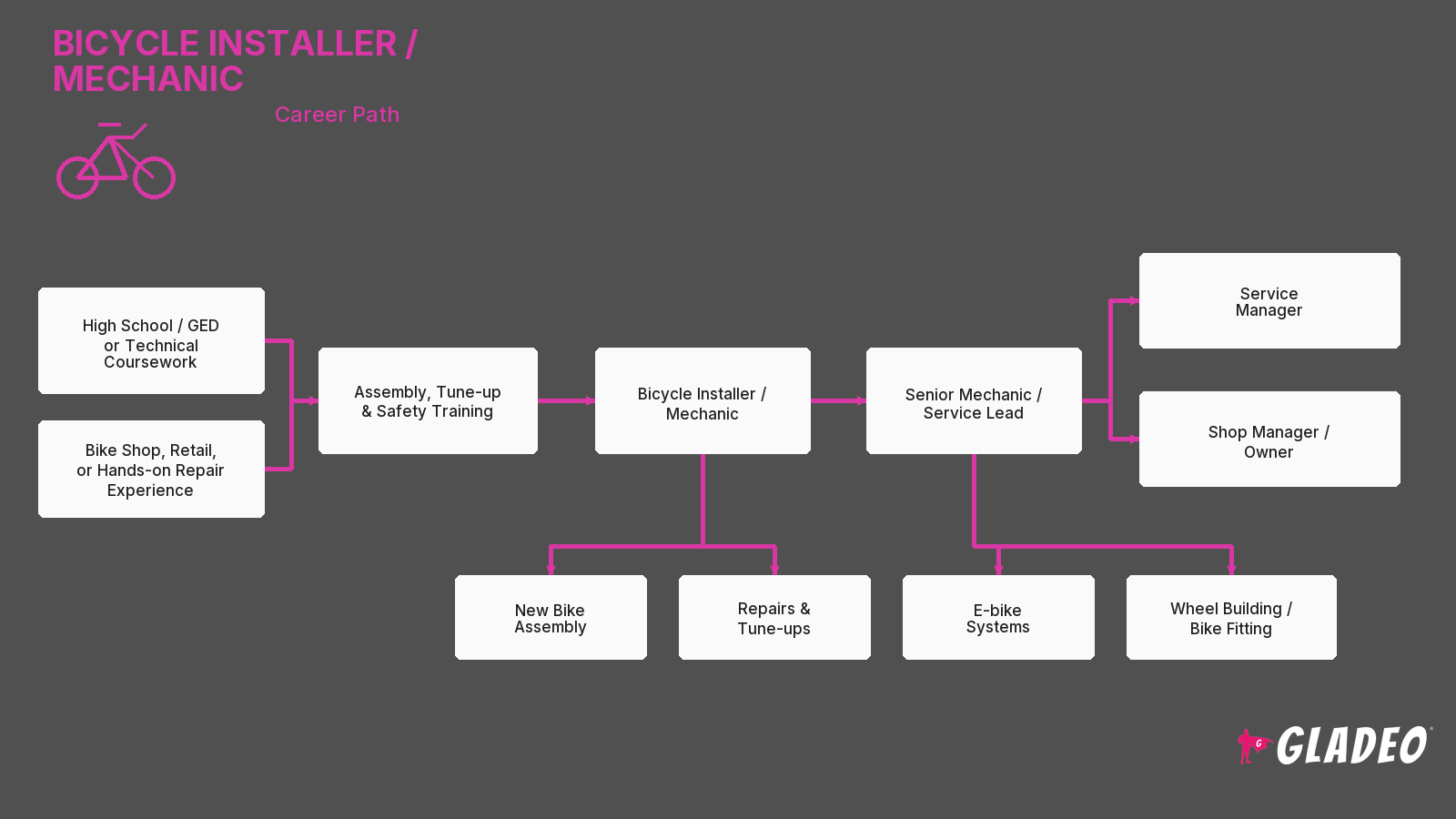
Most Bicycle Installers/Mechanics start their careers with a high school diploma or equivalent, combined with hands-on training. While formal degrees are not always required, vocational programs and certifications can boost skills and job prospects.
Students can take courses in relevant subjects such as:
- Bike maintenance and repair
- Basic mechanics and engineering
- Physics (focus on forces and motion)
- Computer skills for inventory management
- Customer service and communication
- Health and safety practices
- Tool use and safety
- Electric bike systems and batteries
- Technical drawing and schematics
- Business basics for small shops
Practical experience is crucial, so apprenticeships or internships at bike shops provide valuable on-the-job training. Building a portfolio of repairs and assembling projects helps demonstrate skill to employers and customers alike.
- Enroll in shop classes focusing on mechanics or automotive repair.
- Join cycling clubs or teams to deepen bike knowledge.
- Volunteer or work part-time in local bike shops.
- Take courses in physics and engineering to understand bike mechanics.
- Learn computer basics for managing repairs and inventory.
- Develop customer service skills through retail or volunteer roles.
- Attend bike maintenance workshops or camps.
- Practice building and repairing bikes on your own or with family.
- Research electric bike technology online and in courses.
- Explore certifications offered by cycling industry organizations.
- Network with local cyclists and mechanics for mentorship.
- Consider community college programs in bike technology or repair.
- Choose programs with hands-on bike assembly and repair labs.
- Look for instructors with professional bike mechanic experience.
- Verify the availability of internships or apprenticeships.
- Check if the program covers electric and specialty bikes.
- Ensure safety training is included in the curriculum.
- Find courses that teach computer skills for shop management.
- Look for programs connected to local bike shops or manufacturers.
- Choose schools offering up-to-date tools and technology.
- Seek programs with a focus on customer communication skills.
- Consider certification opportunities through recognized organizations.
- Check for small class sizes for personalized instruction.
- Look for programs offering continuing education options.
- Apply for entry-level positions at local bike shops or rental centers.
- Build a portfolio of personal bike projects and repairs.
- Attend bike repair workshops or certification courses.
- Volunteer at cycling events to gain hands-on experience.
- Network with experienced mechanics and shop owners.
- Master basic tasks like tire changes and brake adjustments.
- Develop strong customer communication skills.
- Learn inventory management and ordering processes.
- Practice time management to meet repair deadlines.
- Stay updated on bike technology trends.
- Ask for feedback to improve skills continually.
- Be reliable and punctual to build a good reputation.
- Gain certifications from recognized cycling industry organizations.
- Specialize in electric bike repair or custom fitting.
- Build relationships with bike manufacturers and suppliers.
- Take advanced courses in bike technology and diagnostics.
- Work toward shop lead or management positions.
- Develop skills in sales and customer relations.
- Expand into mobile repair services or own a shop.
- Stay active in cycling communities and events to build reputation.
Websites:
- International Bicycle Fund (ibike.org)
- PeopleForBikes (peopleforbikes.org)
- The National Bicycle Dealers Association (nbda.com)
- Park Tool Company (parktool.com)
- Sheldon Brown’s Bicycle Technical Info (sheldonbrown.com)
- United Bicycle Institute (bikeinstitute.com)
- Bicycle Retailer and Industry News (bicycleretailer.com)
- Bike Biz (bikebiz.com)
- Bicycle Repair Manual forums and communities
- Global Cycling Network (youtube channel and website)
- Professional Bicycle Mechanics Association
- International Mountain Bicycling Association (imba.com)
- Cycle Canada Magazine
- Electric Bike Review (electricbikereview.com)
Books:
- Zinn & the Art of Mountain Bike Maintenance by Lennard Zinn
- The Bicycle Repair Manual by Chris Sidwells
- Bicycle Maintenance & Repair for Dummies by Dennis Bailey and Keith Gates
- Park Tool Big Blue Book of Bicycle Repair by Calvin Jones
- The Complete Bike Owner’s Manual by DK Publishing
If becoming a Bicycle Installer/Mechanic doesn’t work out or if you want to explore related fields, there are many careers that use similar skills and interests.
- Automotive Service Technician
- Motorcycle Technician
- Small Engine Mechanic
- Outdoor Equipment Technician
- Industrial Maintenance Technician
- Assembly Technician
- Mobility Equipment Technician
- Ski and Snowboard Technician
- Sporting Goods Service Technician
- Mechanical Engineering Technician
- Bicycle Shop Manager
- Custom Bicycle Builder
Newsfeed

Featured Jobs
Online Courses and Tools