





Spotlights
Airbus Captain, Airline Captain, Airline Pilot, Captain, Check Airman, Co-Pilot, Commercial Airline Pilot, First Officer, Line Pilot, Pilot
Every time you board a flight, you are trusting a highly trained professional to guide a complex machine safely through the skies. Behind every smooth takeoff and landing is the skill, focus, and responsibility of Airline Pilots!
Airline Pilots fly and navigate fixed-wing aircraft on scheduled routes to transport passengers and cargo. They work as part of a flight crew with first officers, flight attendants, dispatchers, and air traffic controllers. From pre-flight inspections to final approach, they follow strict regulations, checklists, and flight plans to keep every journey safe and on schedule.
They use advanced avionics, navigation systems, and flight management software while monitoring weather, fuel, aircraft systems, and passenger safety. Whether flying regional hops or international long-hauls, Airline Pilots combine technical precision with calm decision-making under pressure.
- Traveling the world and seeing new cities from a unique perspective
- Earning strong compensation as you advance from first officer to captain
- Working as part of a tight-knit flight crew built on trust and communication
- Taking pride in safely transporting thousands of passengers each year
Working Schedule
Airline Pilots often work irregular schedules based on route assignments, seniority, and airline operations. Flights may depart early in the morning or late at night, and pilots can spend multiple days away from home on layovers. Federal regulations limit flight hours and require rest periods, but the job still demands flexibility and readiness to adapt when weather or delays change plans.
Typical Duties
- Conduct pre-flight inspections and review aircraft systems and weather briefings
- Operate aircraft controls during takeoff, cruise, and landing
- Monitor instruments, autopilot systems, and air traffic control instructions
- Communicate with co-pilots, cabin crew, dispatch, and ground personnel
- Respond to in-flight emergencies and system malfunctions using checklists
- Complete flight logs, incident reports, and post-flight documentation
- Adjust routes and altitudes based on weather, traffic, and fuel considerations
- Ensure compliance with Federal Aviation Administration (FAA) regulations
- Coordinate passenger safety briefings and cabin crew readiness
- Maintain currency on aircraft type ratings and recurrent training requirements
Additional Responsibilities
- Stay current on FAA rule changes, safety bulletins, and airline procedures
- Participate in simulator training and line checks throughout the year
- Support mentoring of junior pilots and first officers
- Manage crew resource management during high-workload phases of flight
- Coordinate with maintenance teams when mechanical issues are identified
- Prepare for international operations including customs and overflight requirements
A typical day begins hours before departure with a weather briefing, route review, and aircraft walk-around. Pilots meet the flight crew, confirm the flight plan, and complete pre-flight checklists before passengers board.
During the flight, the captain and first officer share flying duties, monitor systems, and stay in constant contact with air traffic control. They may alternate legs on multi-segment days and debrief after each flight.
After landing, pilots complete paperwork, discuss any maintenance items, and may travel to a layover hotel before the next assignment—or head home if the trip is complete. Delays, diversions, and weather changes can extend the day unexpectedly.
Soft Skills
- Strong situational awareness and decision-making under pressure
- Clear communication with crew, ATC, and ground teams
- Discipline and attention to detail with checklists and procedures
- Leadership and crew resource management
- Stress management during emergencies or adverse weather
- Teamwork with co-pilots and cabin crew
- Adaptability when schedules or conditions change
- Professionalism with passengers and airline representatives
- Time management across multi-leg trip sequences
- Commitment to continuous learning and safety culture
Technical Skills
- Instrument flight rules (IFR) navigation and autopilot systems
- Aircraft-specific type ratings and systems knowledge
- Flight planning software and electronic flight bags (EFB)
- Weather interpretation and route optimization
- Emergency procedure execution from memory and checklists
- Radio communication and transponder operations
- Performance calculations for takeoff, landing, and fuel planning
- Understanding of aerodynamics, engines, and hydraulics at operational level
- Regional Airline Pilots: Fly shorter routes for regional carriers, often building hours toward major airlines
- Major Airline Captains: Lead long-haul and high-traffic routes for national and international carriers
- First Officers (Co-Pilots): Support captains on all flight phases while building seniority
- Cargo Pilots: Operate freight aircraft on overnight and scheduled cargo networks
- Charter Pilots: Fly on-demand trips for private clients, corporations, or tour groups
- Check Airmen: Train and evaluate other pilots during simulator and line checks
- Major U.S. and international passenger airlines
- Regional and commuter airlines
- Cargo and freight carriers
- Corporate flight departments
- Charter and fractional ownership companies
- Flight training organizations
- Government and military contract aviation units
- Air ambulance and medical transport operators
Airline Pilots work in a safety-critical environment where there is zero tolerance for careless errors. Training never stops—recurrent simulator sessions, medical certifications, and check rides are part of the career for decades.
The lifestyle can be demanding: overnight layovers, time away from family, jet lag, and fatigue management are ongoing challenges. Junior pilots often start on reserve schedules with less control over when and where they fly.
Despite the sacrifices, pilots who love aviation describe unmatched pride in commanding an aircraft and connecting people and goods across the world.
- Next-generation aircraft with advanced avionics and fuel efficiency
- Increased use of electronic flight bags and data-linked communications
- Ongoing pilot demand following industry retirements and travel recovery
- Enhanced focus on mental health and fatigue risk management programs
- Sustainable aviation fuel research and emissions reduction initiatives
- Automation-assisted flying with continued emphasis on human oversight
- Diversity and pathway programs to widen the pilot pipeline
- Advanced simulator training for rare emergency scenarios
Many Airline Pilots were fascinated by airplanes from an early age—building model kits, visiting airports, or tracking flights on apps. They often loved maps, science, and understanding how machines work.
Some flew with family on vacations and dreamed of sitting in the cockpit; others joined Civil Air Patrol, ROTC, or flight simulator clubs in high school. A common thread is curiosity, love of travel, and comfort with responsibility.
Airline Pilots need extensive flight training and FAA certifications. Most follow a path through private pilot, instrument, commercial, and airline transport pilot (ATP) certificates, plus a college degree from an aviation program or related field.
Students can take courses in relevant subjects such as:
- Aviation science and flight theory
- Meteorology and weather for pilots
- Aircraft systems and aerodynamics
- Air traffic control procedures
- Aviation safety and human factors
- Navigation and flight planning
- College-level math and physics
Business or management (helpful for career advancement)
Flight hours are accumulated through flight schools, university programs, instructing, banner towing, cargo flying, or military service. Airlines strongly prefer candidates with a bachelor’s degree and a strong safety record.
- Take math, physics, and computer science classes
- Join Civil Air Patrol or aviation explorer programs if available
- Visit local flight schools and schedule an introductory flight
- Research FAA Part 141 vs. Part 61 training pathways
- Apply to college aviation programs with fleet access and career placement
- Earn private pilot certificate as early as affordable
- Build flight hours as a certified flight instructor (CFI) when eligible
- Network at aviation job fairs and airline pathway events
- Maintain excellent physical and medical certification readiness
- Study for FAA written exams throughout training milestones
- FAA-approved curriculum with clear path to commercial and ATP certificates
- Modern aircraft fleet and simulator access
- Strong airline partnerships or cadet pathway agreements
- Experienced instructors with line flying backgrounds
- Career services for graduate placement at regional carriers
- Financial aid and scholarship options for flight training costs
- Safety culture and well-maintained training equipment
- Opportunities to build multi-engine and instrument time efficiently
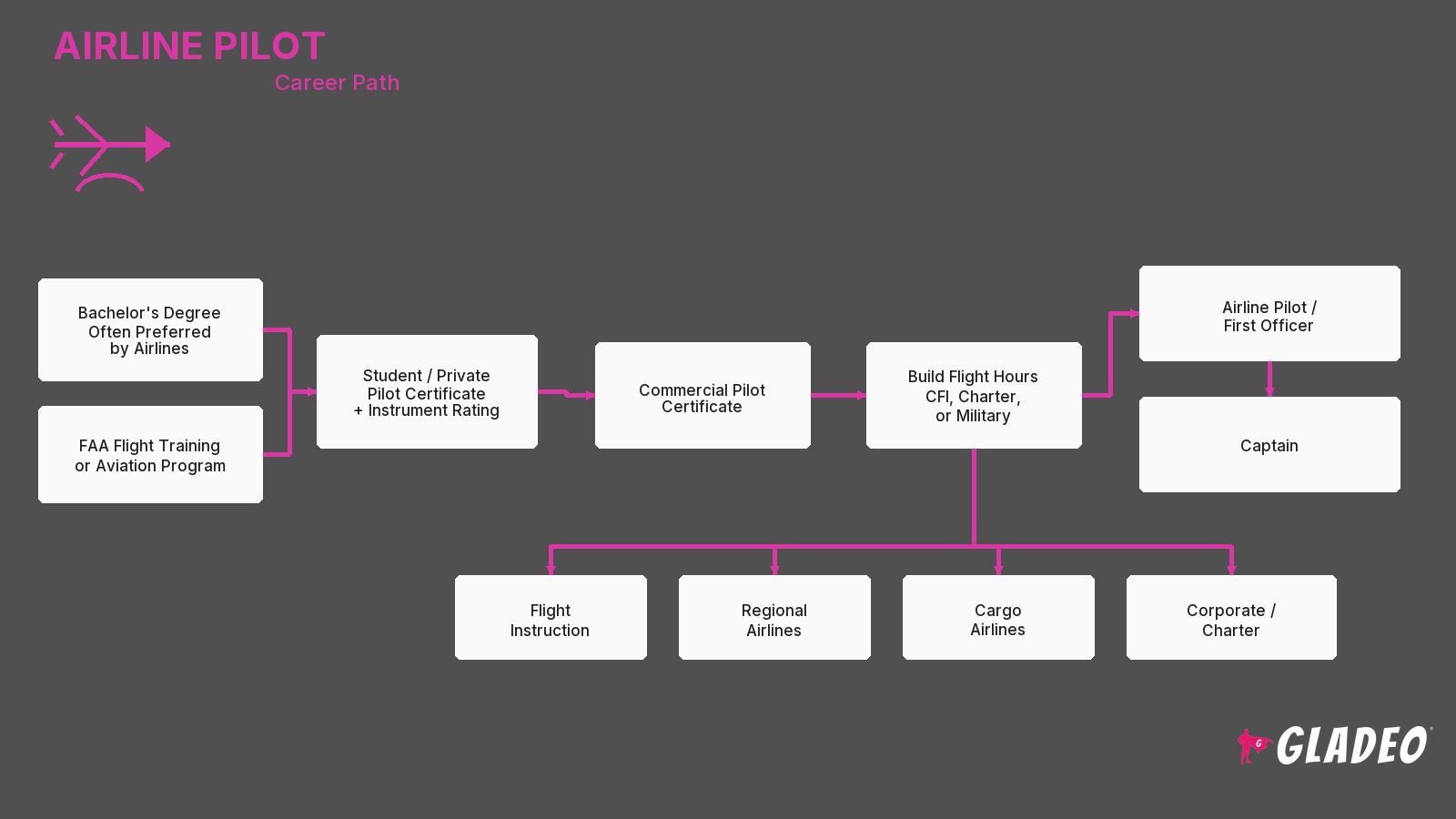
- Build flight hours through instructing, banner towing, skydive ops, or Part 135 cargo
- Target regional airlines with flow-through agreements to major carriers
- Apply on airline career portals, LinkedIn, and aviation job boards
- Entry-level titles: First Officer candidate, Regional FO, Cadet Program participant
- Prepare a clean logbook, certificates, and FAA records for review
- Practice simulator assessments and CRM-focused interview scenarios
- Maintain first-class medical certificate and ATP written completion
- Relocate flexibility can improve hiring odds at regional bases
- Use mentorship from airline pilots met through networking events
- Accumulate turbine PIC and multi-crew experience at regional airlines
- Build seniority—bid schedules and aircraft upgrades over time
- Excel on check rides and maintain impeccable safety standards
- Transition to major airlines when minimums and hiring windows align
- Pursue captain upgrade and type ratings on larger aircraft
- Consider leadership roles such as check airman or training captain
Websites:
- Federal Aviation Administration (FAA)
- Air Line Pilots Association (ALPA)
- AOPA — Aircraft Owners and Pilots Association
- FlightAware and ForeFlight learning resources
- Airline pilot forums and regional hiring threads
- University aviation program career centers
Books:
- Stick and Rudder by Wolfgang Langewiesche
- The Killing Zone by Paul Craig
- Weather Flying by Robert Buck
- Cockpit Confidential by Patrick Smith
If airline flying is not the right fit, related aviation and transportation paths include:
- Commercial Pilot (non-airline charter or corporate)
- Flight Instructor (CFI/CFII/MEI)
- Air Traffic Controller
- Aircraft Dispatcher
- Aviation Safety Inspector
- Drone/UAS Commercial Operator
- Airport Operations Manager
- Aerospace Engineer
Newsfeed

Featured Jobs
Online Courses and Tools