






Spotlights
Animal Care Technician, Livestock Specialist, Farm Technician, Agricultural Technician, Research Animal Technician, Animal Husbandry Specialist, Veterinary Assistant, Farm Animal Technician, Animal Science Technician, Agricultural Science Specialist, Livestock Manager, Animal Welfare Technician
Imagine a farm or research facility where the health and well-being of animals directly impact food safety, scientific discoveries, or sustainable agriculture. Agricultural Specialists and Animal Technicians play a crucial role in ensuring these animals thrive, supporting everything from food production to medical research that benefits communities worldwide.
Each day, Agricultural Specialists and Animal Technicians care for farm animals or research animals, monitor their health, feed and clean them, and assist with breeding or data collection. They collaborate closely with farmers, veterinarians, scientists, and farm managers to support animal growth, welfare, and productivity. Their work helps produce safer food, develop new medicines, or improve animal care practices.
Using tools like feeding equipment, health monitoring devices, and data recording software, these professionals apply scientific methods to track animal health and behavior. Their attention to detail and animal knowledge makes a difference in research outcomes and agricultural success, ensuring animals are healthy and cared for ethically and efficiently.
- Making a direct impact on animal health and welfare, which benefits food supply and research advancements.
- Working with animals daily, building a unique understanding and bond with them.
- Contributing to breakthroughs in agriculture, veterinary medicine, or science that improve lives.
- Being part of a team that supports sustainable farming and ethical animal care practices.
Working Schedule
Agricultural Specialists and Animal Technicians often work full-time, with schedules that can vary depending on the facility. On farms, early mornings and weekends might be common to care for animals around the clock. In research settings, regular business hours are typical but may include occasional overtime to meet deadlines or handle emergencies. The work environment can be outdoors or in controlled laboratory spaces, combining physical activity with detailed observation.
Typical Duties
- Feeding, watering, and caring for livestock or research animals daily.
- Monitoring animal health and behavior, reporting any signs of illness or distress.
- Cleaning and maintaining animal housing, equipment, and workspaces to ensure sanitary conditions.
- Assisting with breeding programs or artificial insemination under supervision.
- Collecting biological samples such as blood or tissue for research or health monitoring.
- Recording data related to animal growth, health, and environmental conditions accurately.
- Supporting veterinarians with routine health checks or treatments.
- Operating farm machinery or animal care equipment safely.
- Implementing biosecurity measures to prevent disease spread.
- Collaborating with team members to improve animal care protocols.
- Maintaining detailed records for compliance with regulations and research standards.
- Educating farm workers or research staff on proper animal handling techniques.
Additional Responsibilities
- Training new staff or interns on animal care procedures.
- Participating in research studies by following strict protocols.
- Assisting in the development of animal welfare policies.
- Maintaining inventory of feed, medical supplies, and equipment.
- Reporting to supervisors on animal care status and facility needs.
- Ensuring compliance with animal welfare and safety regulations.
- Troubleshooting issues related to animal health or facility operations.
- Contributing to sustainability efforts by managing resources efficiently.
The day often starts early with feeding and checking animals for any health issues. Agricultural Specialists prioritize ensuring animals have fresh food and water while scanning for any signs of illness or injury. They might also review records from the previous day to track progress or concerns.
Midday involves cleaning and maintaining animal housing, assisting vets or researchers with health checks, and collecting data. They work closely with colleagues to coordinate tasks, troubleshoot problems, and prepare for breeding or research activities. Communication and careful observation are key to keeping everything running smoothly.
Later in the day, they often record detailed notes, report findings to supervisors, and prepare for the next day’s duties. Sometimes they participate in training sessions or help maintain equipment. Their work ends with ensuring animals are settled safely for the evening, knowing they’ve contributed to their well-being and the success of agricultural or scientific goals.
Soft Skills
- Attention to detail
- Compassion and empathy for animals
- Strong communication skills
- Teamwork and collaboration
- Problem-solving abilities
- Patience and persistence
- Physical stamina and endurance
- Adaptability to changing conditions
- Organizational skills
- Critical thinking
- Observational skills
- Responsibility and dependability
Technical Skills
- Animal health monitoring
- Data recording and management
- Use of feeding and watering equipment
- Basic veterinary assistance
- Biosecurity protocols
- Operation of farm machinery
- Sample collection techniques
- Understanding animal behavior
- Knowledge of breeding practices
- Compliance with safety regulations
- Research Animal Technician: Focuses on caring for animals used in scientific experiments, ensuring ethical treatment and accurate data collection.
- Livestock Specialist: Works primarily with farm animals like cattle, pigs, and poultry to support breeding, feeding, and health management.
- Veterinary Assistant: Supports veterinarians by preparing animals for exams, assisting with treatments, and maintaining medical records.
- Animal Welfare Technician: Specializes in monitoring and improving animal living conditions and welfare standards.
- Farm Technician: Handles daily farm operations related to animal care, including feeding, cleaning, and equipment maintenance.
- Agricultural Science Specialist: Applies scientific principles to improve agricultural practices involving animals, often working in labs or field studies.
- Breeding Technician: Manages animal breeding programs, including reproductive health monitoring and record-keeping.
- Biosecurity Officer: Ensures disease prevention measures are strictly followed to protect animal populations.
- Agricultural research institutions
- University agricultural departments
- Veterinary clinics and hospitals
- Livestock farms and ranches
- Biotechnology companies
- Government agricultural agencies
- Animal welfare organizations
- Food production companies
- Pharmaceutical research labs
- Environmental conservation groups
- Agricultural equipment suppliers
- Animal breeding centers
Working with animals demands physical stamina and the ability to handle unpredictable behavior, which can be challenging but rewarding.
Long hours, especially on farms, may include early mornings, weekends, and holidays to provide consistent animal care and meet production deadlines.
The role requires attention to detail and patience as tasks like data collection and health monitoring must be precise to ensure valid results and animal welfare standards are met.
- Increasing use of technology like wearable health monitors for animals.
- Growing emphasis on animal welfare and ethical farming practices.
- Advancements in biotechnology impacting breeding and disease control.
- Sustainability becoming central to agricultural operations involving animals.
- Automation of routine tasks to improve efficiency and reduce labor intensity.
- Integration of data analytics to monitor animal health and productivity.
- Expansion of research into alternative protein sources like lab-grown meat.
- Stronger regulations and compliance requirements for animal care.
- Use of drones and sensors to manage livestock remotely.
- Collaboration between animal scientists and environmental experts to promote ecosystem health.
Kids interested in this career often loved caring for pets or helping with chores on family farms, showing early empathy and responsibility toward animals.
They might have enjoyed science and biology classes, fascinated by how animals grow and stay healthy, or spent time volunteering at animal shelters or farms to gain hands-on experience.
Becoming an Agricultural Specialist or Animal Technician usually involves a combination of formal education and hands-on training. Many professionals earn associate degrees or certificates in animal science, agriculture, or veterinary technology, while others gain experience through internships and on-the-job training.
Students can take courses in relevant subjects such as:
- Animal Science
- Biology and Zoology
- Agricultural Mechanics
- Veterinary Technology
- Animal Nutrition
- Farm Management
- Microbiology
- Genetics and Breeding
- Environmental Science
- Data Collection and Analysis
Hands-on experience is crucial in this field, so internships, volunteer work, or part-time jobs on farms or research labs help build valuable skills. Developing a strong portfolio of practical experience combined with classroom knowledge prepares students to succeed as Agricultural Specialists or Animal Technicians.
- Take science courses like biology, chemistry, and environmental science.
- Volunteer at local farms, animal shelters, or research centers.
- Join agriculture or animal science clubs at school.
- Attend workshops or summer camps focused on animal care.
- Develop basic computer skills for data tracking and reporting.
- Shadow professionals working in veterinary clinics or farms.
- Learn about farm equipment and safety procedures.
- Build communication skills through group projects and presentations.
- Explore internships or job shadowing in agricultural settings.
- Research colleges offering animal science or veterinary technology programs.
- Participate in FFA (Future Farmers of America) or 4-H programs.
- Stay informed about agricultural and animal welfare issues.
- Choose programs accredited by recognized agricultural or veterinary organizations.
- Look for hands-on learning opportunities such as labs, internships, or cooperative education.
- Consider programs that offer training in the latest animal care technologies and software.
- Check if the program covers biosecurity and animal welfare standards.
- Seek schools with strong connections to local farms or research institutions.
- Ensure the curriculum includes both theoretical knowledge and practical skills.
- Find out about faculty expertise and their industry experience.
- Look for programs offering certification preparation, like veterinary technician licenses.
- Consider class sizes for personalized learning and mentorship.
- Check the availability of career services and job placement support.
- Choose programs that encourage teamwork and communication skill development.
- Look for options that include business or farm management courses.
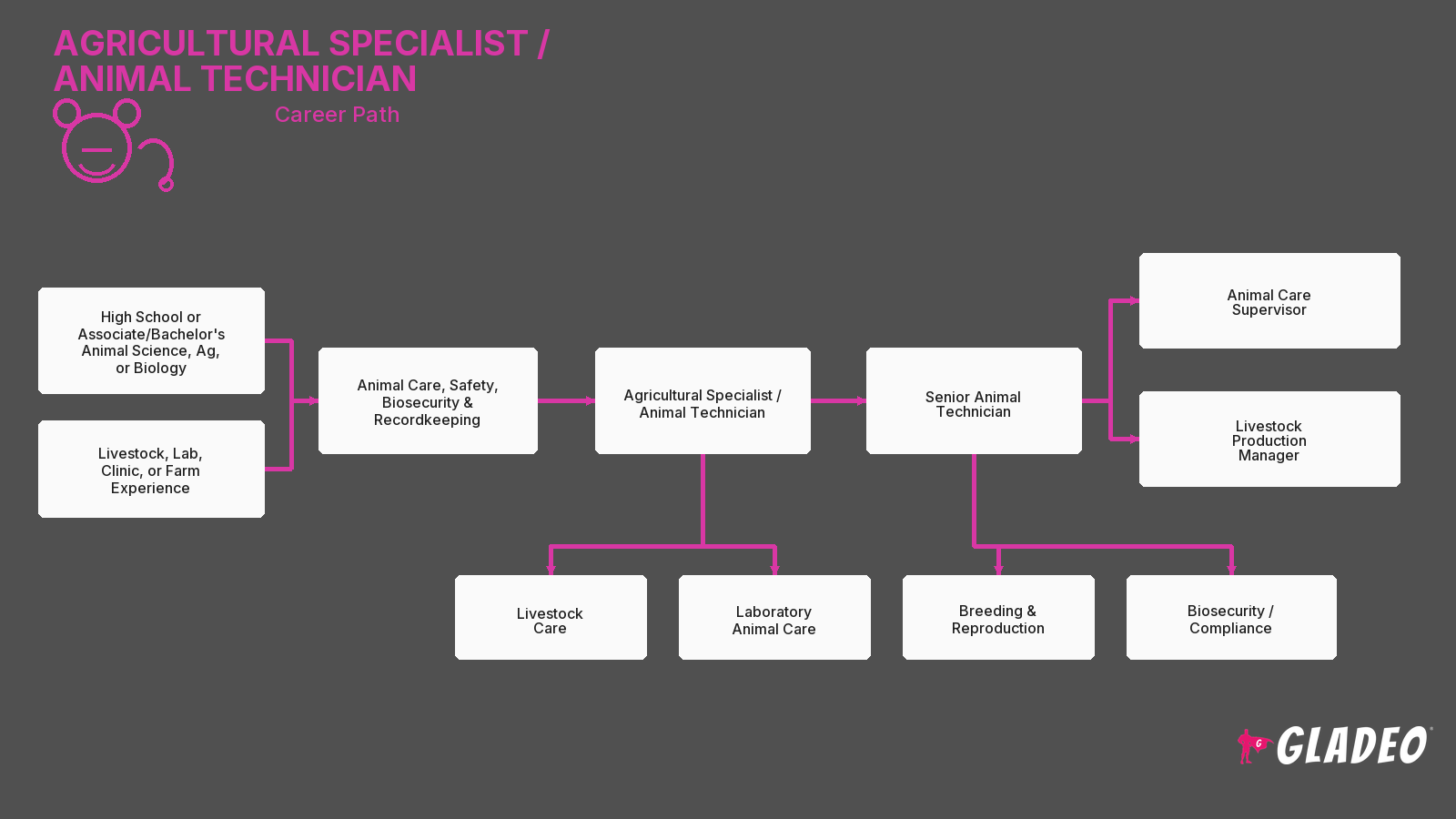
- Apply for internships or volunteer positions at farms, veterinary clinics, or research labs to gain experience.
- Build a portfolio documenting your animal care skills and responsibilities.
- Seek entry-level roles like Animal Care Assistant or Farm Hand.
- Network with professionals through agricultural fairs, clubs, or community events.
- Prepare for interviews by practicing common questions about animal handling and safety.
- Stay physically fit and ready for hands-on work.
- Develop reliability by showing up consistently and following instructions carefully.
- Learn basic record-keeping and reporting skills.
- Ask for feedback and be eager to learn on the job.
- Obtain certifications like CPR for animals or basic veterinary technician credentials.
- Use online job boards focused on agriculture and animal care.
- Consider seasonal work to build experience during busy farming periods.
- Continue education through advanced degrees or specialized certifications.
- Develop expertise in specific animal types or research areas.
- Build strong relationships with mentors and supervisors.
- Gain leadership experience by managing teams or projects.
- Stay updated on industry trends and technology.
- Pursue roles with greater responsibility, such as Livestock Manager or Research Coordinator.
- Network at industry conferences and professional organizations.
- Consider teaching or consulting roles based on accumulated knowledge.
Websites:
- National Agricultural Library (nal.usda.gov)
- American Association for Laboratory Animal Science (aalas.org)
- The Livestock Conservancy (livestockconservancy.org)
- Society for Range Management (rangelands.org)
- American Society of Animal Science (asas.org)
- Farm Journal (farmjournal.com)
- Veterinary Technician National Exam (vtnet.org)
- National FFA Organization (ffa.org)
- 4-H National Headquarters (4-h.org)
- Animal Welfare Institute (awionline.org)
- Agricultural Research Service (ars.usda.gov)
- National Institute of Food and Agriculture (nifa.usda.gov)
- The Humane Society of the United States (humanesociety.org)
- American Veterinary Medical Association (avma.org)
Books:
- Animal Science and Industry by James R. Gillespie
- Livestock Production and Management by R. Michael Fields
- The Complete Guide to Animal Care by Emma Stanley
- Introduction to Veterinary and Animal Science by Graham R. Duncanson
- Animal Welfare in Agriculture by John Webster
If you love working with animals or agriculture but want to explore other paths, there are many related careers that use your skills and passion.
- Veterinary Technician
- Farm Manager
- Wildlife Biologist
- Agricultural Equipment Operator
- Animal Behaviorist
- Environmental Scientist
- Food Safety Inspector
- Zoologist
- Agricultural Sales Representative
- Animal Nutritionist
Newsfeed

Featured Jobs
Online Courses and Tools